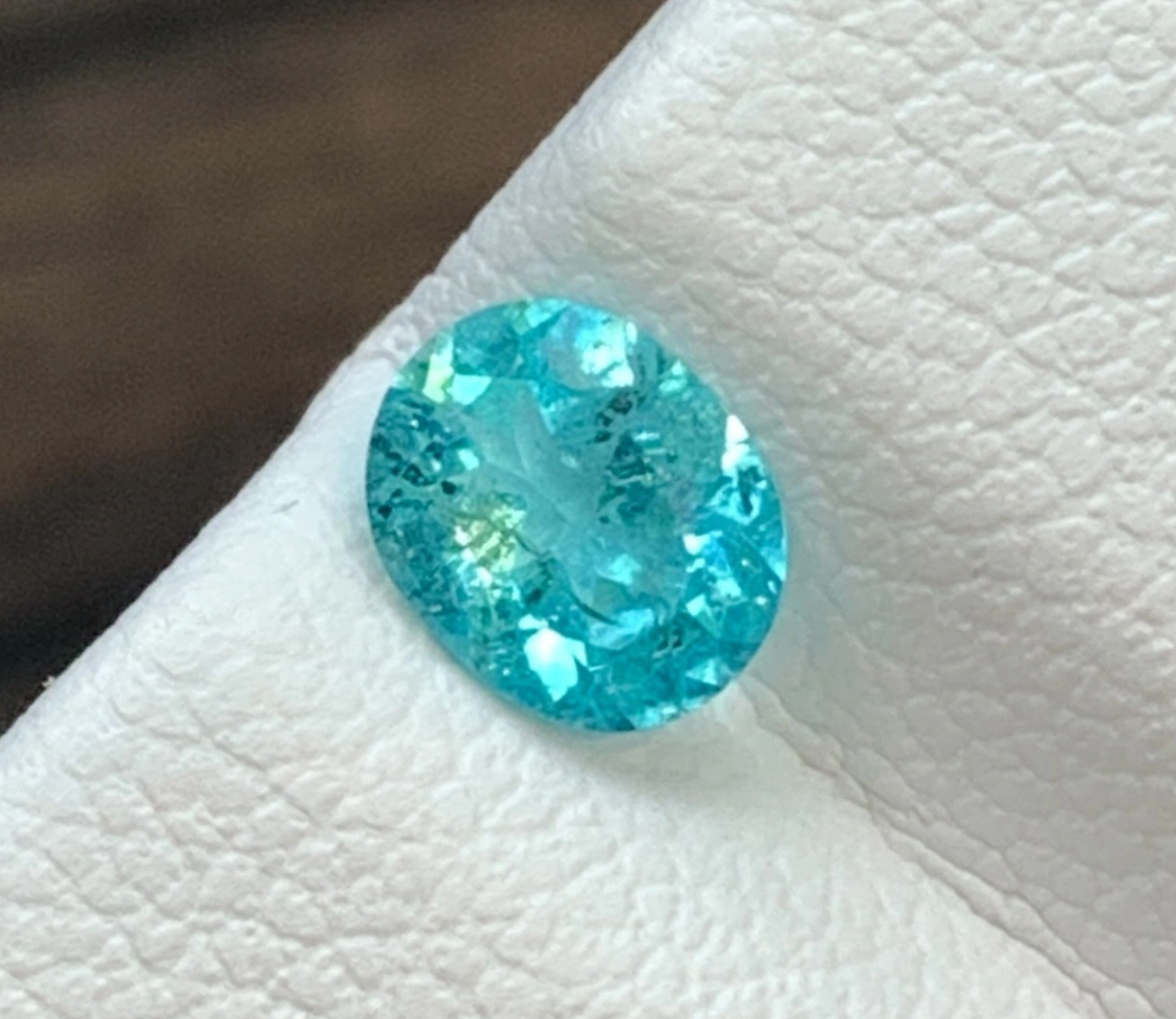
Paraíba Tourmaline: The Electric Blue Gemstone Making Waves in the Jewellery World
From the discovery of a remarkable new deposit in Ethiopia to a growing appetite for coloured gemstones, Paraíba tourmaline is capturing the attention of the international gem trade. Could this extraordinary gemstone be the next big thing in fine jewellery?
The gemstone world is always evolving, but every so often a discovery comes along that really gets people talking. Following the latest Gemmology conference in London, one gemstone in particular has been generating considerable excitement: Paraíba tourmaline. Famous for its extraordinary electric blue and vivid green hues, this relatively rare gemstone has captivated collectors and jewellers for decades. Now, the discovery of a significant new source in Ethiopia could bring some interesting changes to the market.
It is an exciting development, particularly at a time when customers are beginning to look beyond traditional diamonds and rediscover the appeal of coloured gemstones. With its unmistakable colour, fascinating chemistry and intriguing origins, Paraíba tourmaline certainly has a story worth telling.
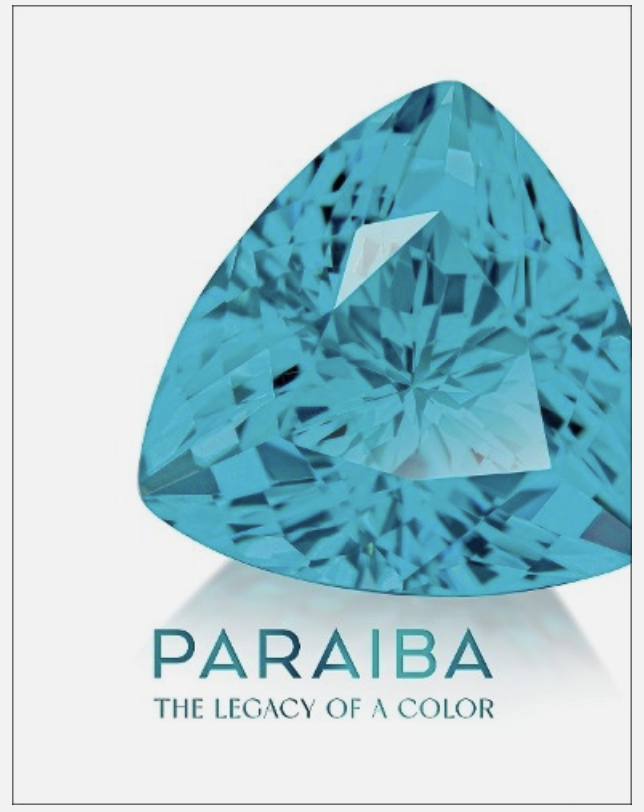
A Changing Gemstone Market
The diamond industry has experienced an interesting period of change. The ongoing debate between natural and synthetic diamonds, alongside falling prices in both markets, has prompted some customers to reconsider what they want from their jewellery.
Synthetic diamonds have become increasingly accessible and in large sizes, but their prices have continued to fall as production becomes more efficient and supply increases. Some industry predictions suggest that they may eventually occupy a similar market position to cubic zirconia: an affordable, readily available alternative for customers who prioritise appearance over rarity.
Natural diamonds, meanwhile, continue to offer something fundamentally different. Formed deep within the Earth over billions of years, they have a natural rarity and geological history that factory-grown stones cannot replicate. However, natural diamond prices have also faced pressure, and how the relationship between the two markets develops over the coming years remains to be seen.
Diamond companies are increasingly adapting their marketing to focus on the story behind natural stones: their connection to the Earth, their individuality and the romance of owning something formed naturally over geological time and the mining communities they help support. The emphasis is shifting towards the idea that a smaller natural diamond can carry a more meaningful story than a considerably larger synthetic alternative made in a factory.
At the same time, customers are showing renewed interest in coloured gemstones. Sapphires, in particular, are performing well in a variety of colours, with blue, teal, yellow and orange proving especially popular.
Rather than choosing a traditional diamond, many jewellery buyers are looking for something more individual: a gemstone with personality, colour and a story of its own. And this is where Paraíba tourmaline comes into its own.
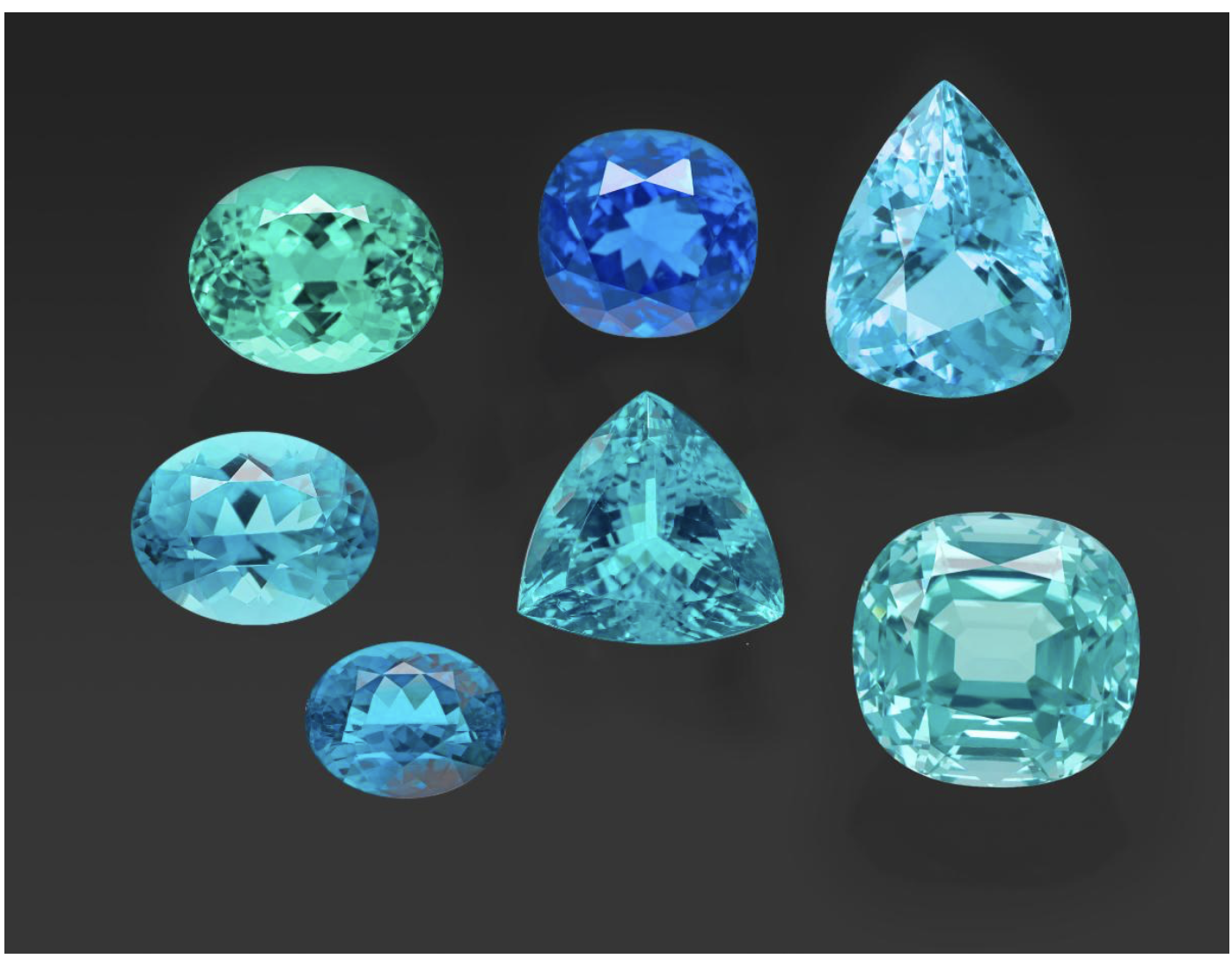
Variety of Paraiba Tourmaline Hues. Image courtesy of Jewellery Outlook
What Makes Paraíba Tourmaline So Special?
Tourmaline is one of the most wonderfully varied gemstone families. It occurs in an extraordinary range of colours, from delicate pinks and greens to rich reds, deep blues and even bi-coloured crystals.
However, few varieties create quite the same reaction as Paraíba tourmaline.
Its signature colours are often described as electric blue, neon blue, turquoise or vivid sea-green. These are not ordinary shades of blue. They have an almost luminous quality, appearing remarkably bright and vibrant even in relatively small gemstones.
The secret lies in the chemistry.
Tourmalines containing iron can naturally produce beautiful blue and green colours. Blue iron-coloured tourmaline is traditionally known as indicolite. These stones can be exceptionally attractive, ranging from softer blue tones to deep, saturated shades.
Paraíba tourmaline, however, owes its distinctive appearance primarily to the presence of copper, alongside manganese. This combination can produce the extraordinary neon blues and vivid minty greens that have made the gemstone so desirable.
It is worth noting that not every blue or green tourmaline containing copper qualifies as Paraíba. The concentration and influence of the colouring elements, together with the gemstone’s colour characteristics, are important in determining its classification.
This is where specialist gemmological testing becomes essential. Advanced spectroscopy can examine the way a gemstone absorbs light at particular wavelengths. In copper-dominated tourmalines, the absorption feature around 900 nanometres is particularly significant when compared with the feature around 700 nanometres.
Further chemical analysis can help establish the elements responsible for the colour and support the correct identification. It is not something that can reliably be determined simply by looking at a stone through a loupe.
The distinction matters because indicolite, copper-bearing tourmaline and Paraíba tourmaline can occupy very different price brackets. A beautiful blue appearance alone is not enough to establish that a gemstone is a Paraíba.
The Ethiopian Discovery: A New Chapter for Paraíba
Paraíba tourmaline takes its name from the Brazilian state of Paraíba, where the original deposits were discovered in the late 1980s. The discovery caused considerable excitement because the gemstones displayed colours unlike almost anything previously seen in the tourmaline family. The stones usually need heat treatment to induce the bright vivid neon blue but even in their rough state they are a shade of blue unlike most tourmalines.
Further deposits were subsequently identified in Nigeria and Mozambique, introducing more copper-bearing material to the international gemstone market.
Now, Ethiopia has entered the picture.
Reports of a new deposit began circulating in the summer of 2026, attracting considerable interest from gemstone dealers, researchers and laboratories. Following independent investigations, both the Gemological Institute of America (GIA) and Gübelin Gem Lab have confirmed Ethiopia as a new source of copper-bearing tourmaline that meets the accepted definition of Paraíba.
This is particularly exciting because Paraíba has traditionally been associated with limited availability and considerable exclusivity. Exceptional-quality stones can command extraordinary prices, with some of the finest examples reaching figures quoted in the hundreds of thousands of dollars per carat.
The arrival of additional material from Ethiopia could potentially change the market. Greater availability may offer buyers more choice, including the possibility of accessing attractive stones at more accessible price points.
However, it is important to remember that not all newly discovered material will be of exceptional gem quality and we do not know how much material there is yet. Colour, saturation, clarity, size and overall appearance will continue to influence value. Nor does a new source automatically mean that the finest stones will become inexpensive.
What it does offer is an exciting opportunity for the gemstone trade to explore a new supply of this remarkable material.
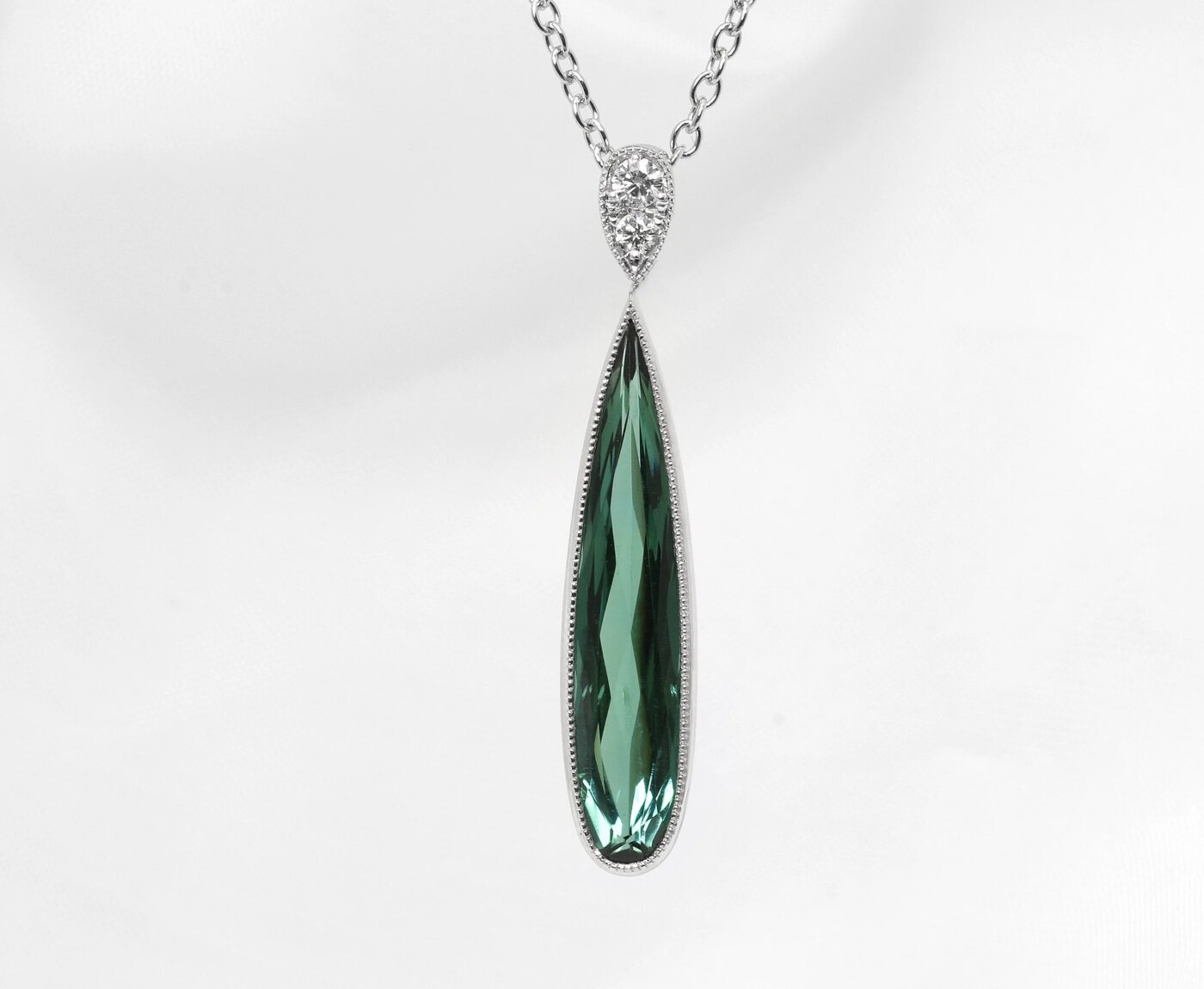
Why Gemmological Laboratories Matter More Than Ever
With new deposits emerging and gemstones travelling through increasingly complex international supply chains, determining their identity and geographical origin has become an important part of the gem trade.
Two gemstones may look remarkably similar but have different chemical compositions and geographical histories. Establishing where a gemstone originated can be particularly challenging when the chemical characteristics of different deposits overlap.
New analytical technologies are helping laboratories investigate these differences in greater detail. Techniques involving trace-element analysis, spectroscopy and increasingly sophisticated data analysis are improving our understanding of gemstone chemistry and geographical origin.
There is also growing collaboration between international gemmological laboratories. Greater consistency in testing methods, shared research and improved standardisation of reporting are all important developments. The aim is to provide more reliable information, giving jewellers and customers greater confidence in what they are buying.
The Ethiopian Paraíba discovery is an excellent example of why this research matters. Identifying the gemstone correctly is one thing; establishing its origin with confidence requires considerably more specialist work.
For customers purchasing an important coloured gemstone, an independent laboratory report can provide valuable reassurance about its identity and, where determinable, its geographical origin.
Could Paraíba Be the Next Coloured Gemstone Favourite?
There is no denying that Paraíba tourmaline has a certain presence. Its vivid colour is instantly recognisable, and it offers something quite different from the more traditional choices of sapphire, ruby and emerald.
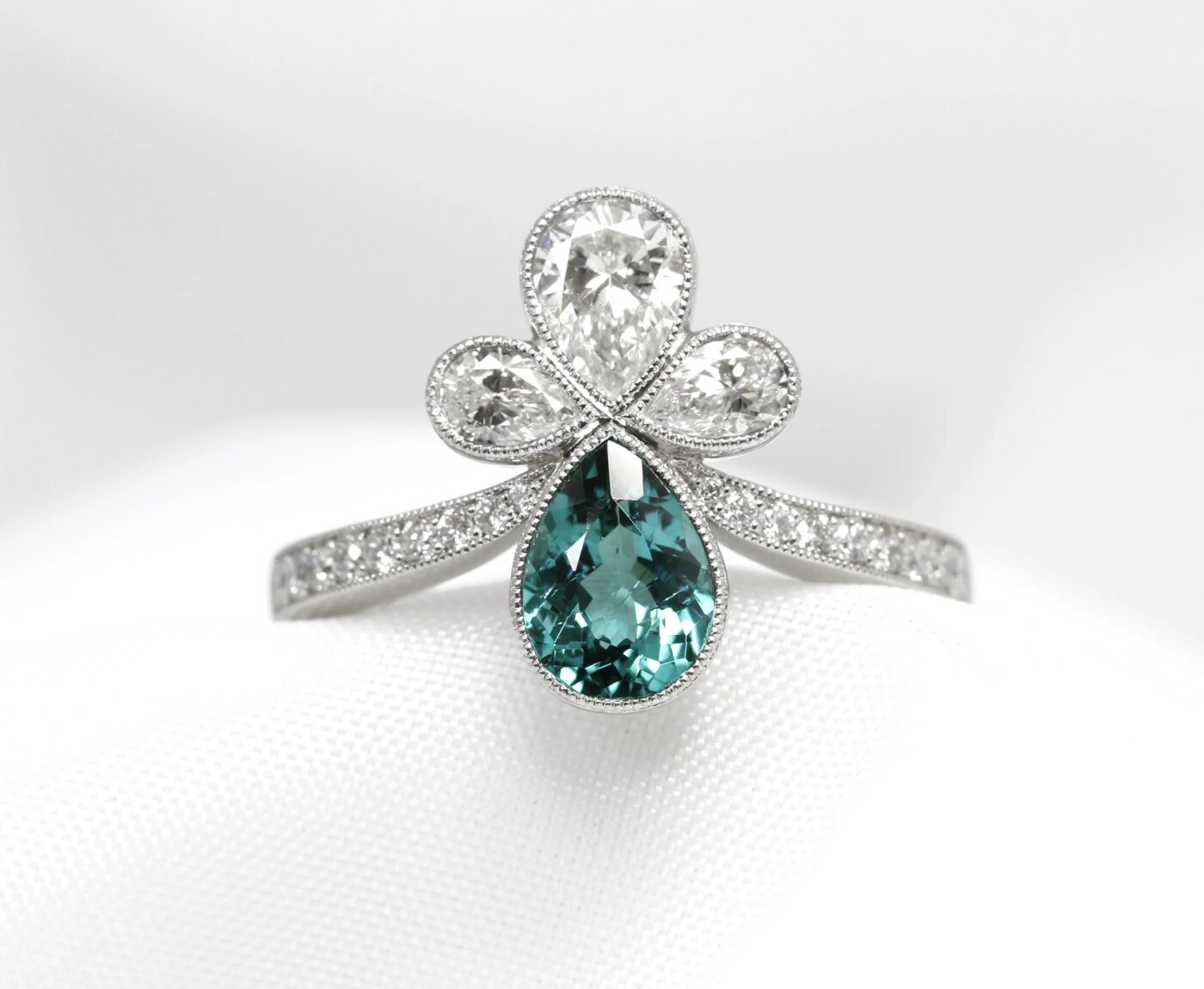
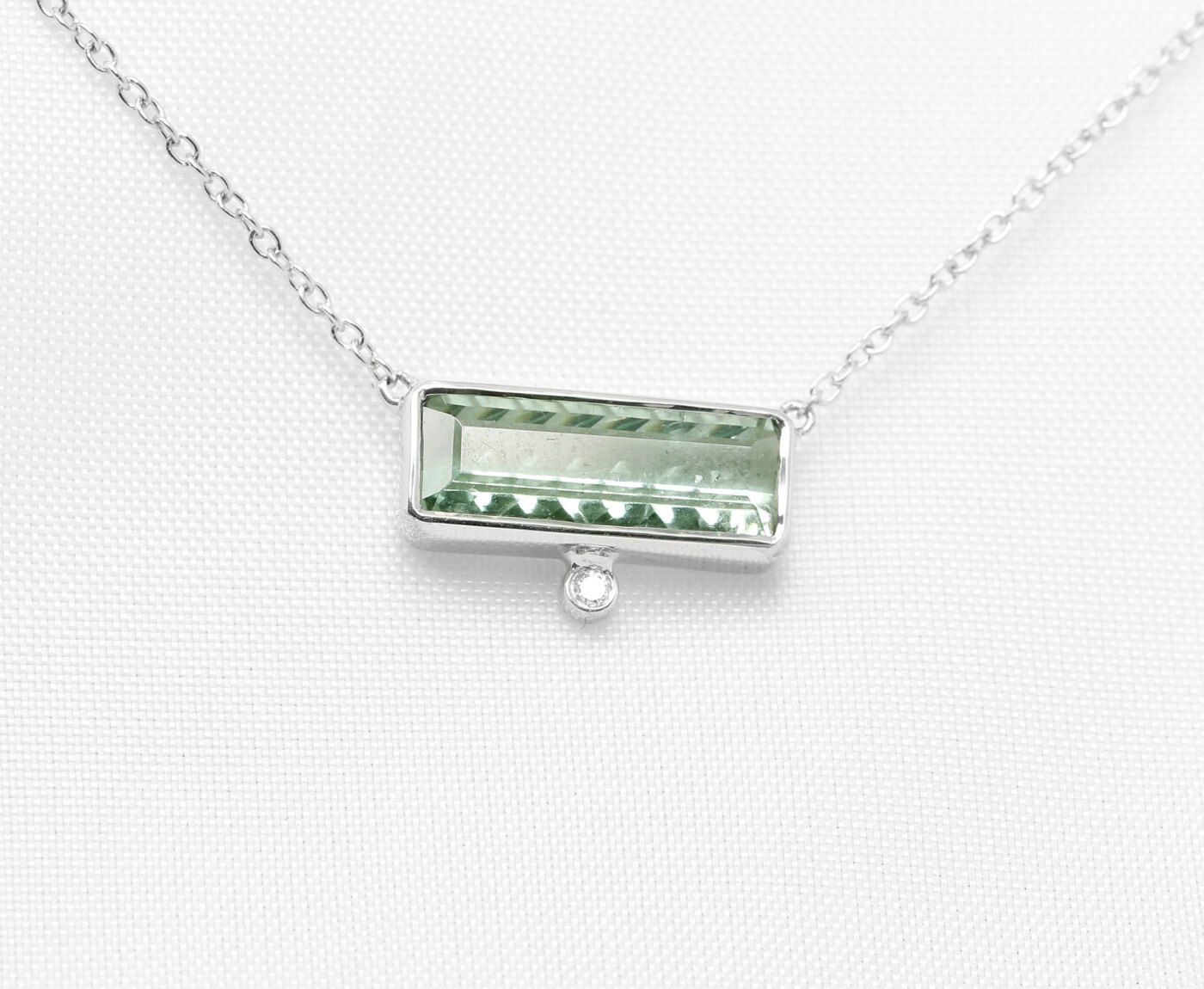
It is also a gemstone that lends itself beautifully to fine jewellery. A vivid blue Paraíba can make a striking centre stone in an engagement ring, while a softer mint-green example can look wonderfully elegant surrounded by diamonds. Its unusual colour palette offers plenty of scope for individual designs.
As customers increasingly seek jewellery that reflects their own tastes and personalities, gemstones such as Paraíba tourmaline offer an appealing alternative to more conventional diamond designs.
Of course, sapphires remain a wonderful choice, particularly with their extensive colour range and excellent durability. But the growing interest in unusual and distinctive gemstones suggests that customers are becoming more adventurous in their choices.
Whether Paraíba tourmaline becomes a mainstream favourite or retains its position as a particularly exclusive collector’s gemstone remains to be seen. The new Ethiopian source certainly gives the market something exciting to consider.
A Gemstone Worth Watching
The gemstone industry never stands still. Changing customer preferences, new discoveries and advances in gemmological science continually reshape the way we understand and appreciate precious stones.
The Ethiopian Paraíba discovery is one of the most interesting developments to emerge from the gemstone world this year. It brings fresh possibilities to a gemstone that has long been admired for its exceptional colour and rarity, while reminding us just how much there is still to discover beneath the Earth’s surface.
At Timothy Roe Fine Jewellery, we have always appreciated gemstones for their individuality, character and natural beauty. While diamonds will undoubtedly remain an important part of fine jewellery, we are delighted to see coloured gemstones enjoying renewed attention.
And as for Paraíba tourmaline? We are certainly keeping a close eye on this one. Its extraordinary colour has already captivated the international gemstone market, and we will be interested to see whether it captures the imagination of our customers here in Chichester, too.
After all, sometimes the most exciting piece of jewellery is the one that dares to be a little different.
If you have any questions about tourmalines or would like to create a new piece of jewellery with a Paraiba tourmaline book your free consultation here with us and browse our tourmaline jewellery collection in our online shop.

Related Posts