All About Malachite: Nature’s Green Masterpiece
There is something wonderfully distinctive about malachite (pronounced mal-a-kite). Its rich green colour, flowing bands and almost hypnotic patterns make it instantly recognisable, and unlike many gemstones, no two pieces of malachite ever look quite the same.
Often seen as polished beads, cabochons and carved ornaments rather than faceted gemstones, malachite has a character all of its own. It is a gemstone that feels both ancient and contemporary – equally at home in historic decorative objects as it is in a beautifully designed piece of modern jewellery.
So, what gives malachite its remarkable green colour, where does it come from, and how can you wear and care for this distinctive gemstone?
Long before malachite found its way into contemporary jewellery, its vivid green was being ground into pigment and used by artists. In many ways, the stone has always been both gemstone and artwork.
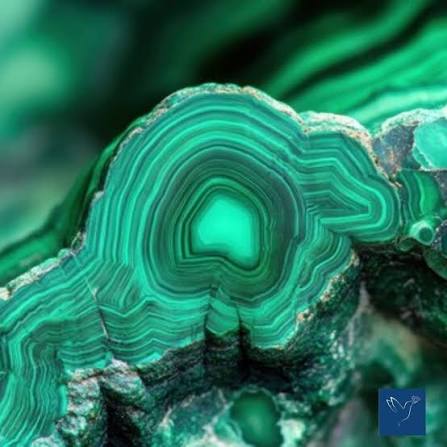
Malachite crystal in its pure natural rough form. Image courtesy of Vocal.Media.
What is malachite?
Malachite is a naturally occurring mineral and gemstone composed primarily of copper carbonate hydroxide. It forms as a secondary mineral in areas where copper ore has been exposed to water, oxygen and carbon dioxide, often developing in fractures and cavities within the surrounding rock.
It is particularly famous for its beautiful banding. When polished, malachite can reveal concentric circles, sweeping lines, wavy patterns and different shades of green, ranging from soft, almost pastel green through to intense emerald and deep forest green.
These markings are not painted or added to the stone – they are part of its natural formation. The result is a gemstone with an almost landscape-like appearance, which is one reason malachite has been so popular for decorative objects and carving throughout history. Unlike faceted gemstones, malachite is cut in cabochon or flat pieces as it is opaque.
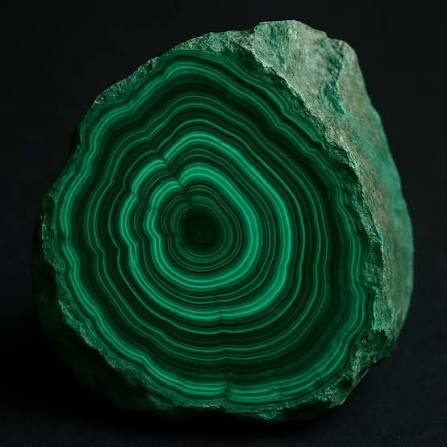
Malachite cross section showing the famous light and dark green concentric patterned banding. Image courtesy of www.charming-beads.co.uk.
Why is malachite green?
The answer lies in copper.
Malachite is a copper mineral, and it is the copper within its chemical structure that gives it its characteristic green colour. The concentration and arrangement of the mineral as it forms contribute to the different shades and patterns seen within individual pieces.
A useful everyday comparison is something you may have noticed on old church roofs, domes or bells. Copper itself is reddish-brown, but over time, exposure to air and moisture causes copper to oxidise and develop a green surface patina.
The Statue of Liberty is perhaps the most famous example: originally made from copper, its surface gradually developed the familiar green colour as it weathered.
Malachite is different chemically from the green patina found on copper, but the connection is the same: copper can produce some extraordinary shades of green.
It is also closely associated with another copper mineral, azurite. The two are often found together, with blue azurite and green malachite developing in the same copper-rich environments. In some circumstances, azurite can gradually alter into malachite as the mineral environment changes.
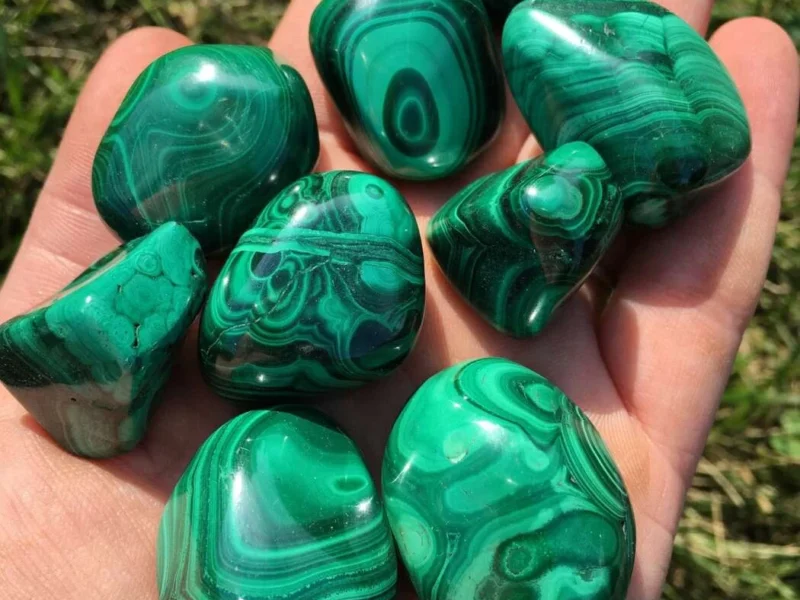
Tumbled Malachite Stones on Etsy.com
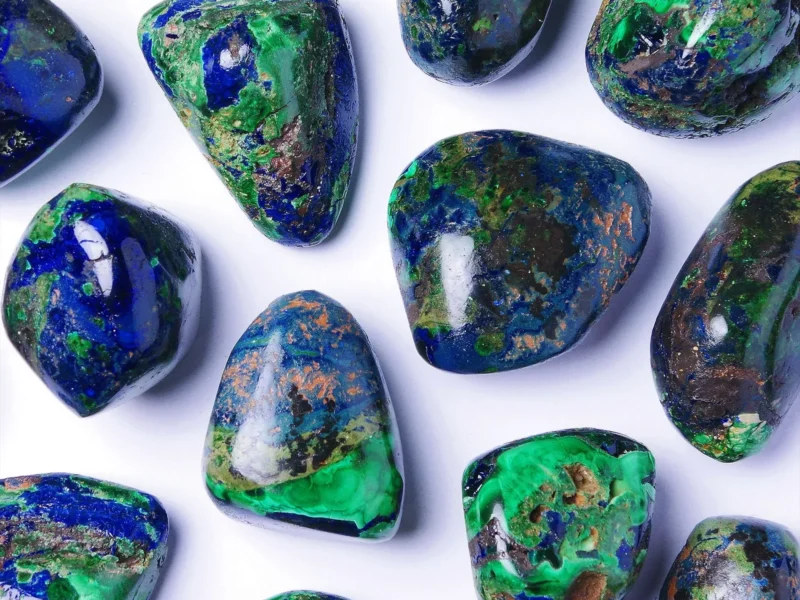
Azurite and Malachite Tumbled Stones. Image courtesy of le-comptoir-geologique.com
Where is malachite found?
Malachite occurs in copper deposits in various parts of the world, but one of the most important sources today is the Democratic Republic of the Congo. Significant malachite has also been found historically in the Ural Mountains of Russia, as well as in places including Zambia and other copper-producing regions.
Its connection with copper deposits explains why some of the world’s finest malachite has been found in areas that are also important for copper mining.
Malachite can form in some wonderfully unusual shapes underground. Rather than producing the clear, individual crystals associated with gemstones such as quartz or beryl, it commonly develops as rounded, botryoidal masses, fibrous formations, stalactitic shapes and layers. These natural structures are then cut and polished to reveal the beautiful patterns within. Some of these masses can weigh up to 45kg!
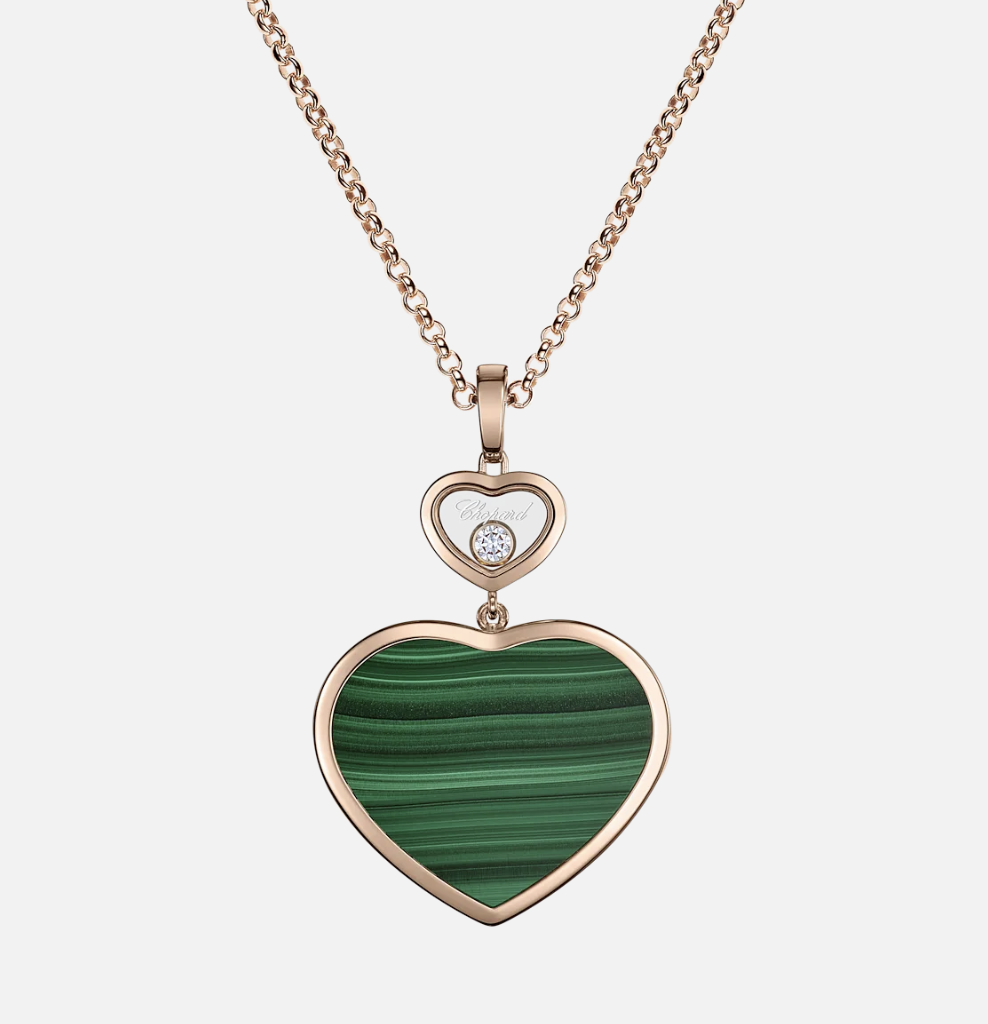
Malachite in jewellery
When we think about gemstones, it is easy to imagine beautifully faceted diamonds, sapphires and emeralds But malachite is not one associated with the top prized gems and many may not have even seen it before.
Because it is relatively soft – around 3½ to 4 on the Mohs scale – it is not particularly well suited to jewellery that receives a great deal of impact or abrasion. Instead, it is commonly fashioned into smooth cabochons, beads, pendants and decorative pieces, where its colour and natural pattern can take centre stage.
Malachite is also a wonderful material for carving because it is soft. Its attractive banding means that a skilled lapidary can orient the stone to make the most of its natural pattern, creating everything from simple polished forms to intricate ornamental objects.
This is part of the charm of malachite: it does not need faceting to show off. Its beauty comes from within the material itself a bit like rhodochrosite and turquoise.
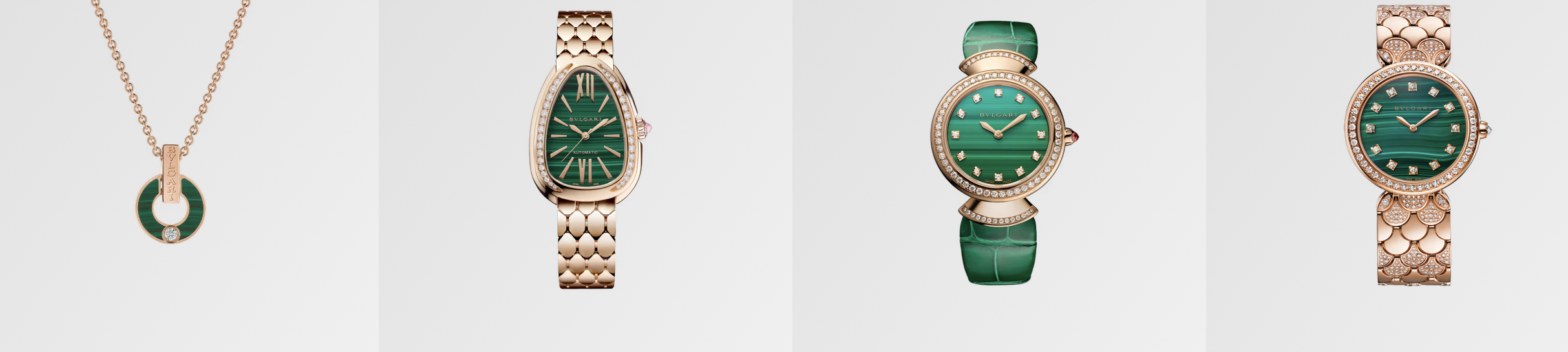
World renowned jewellery designers and design houses use malachite in various ways from watch faces to bangles and pendants pairing with dazzling diamonds. Bvlgari, Roberto Coin, David Yurman, Chopard, Dior, Faberge, Cartier and Boucheron to name a few design and include malachite in their jewellery collections for its strong assertive bold green colour and stunning patterns and it works well in both warmer tones of rose gold and yellow gold.
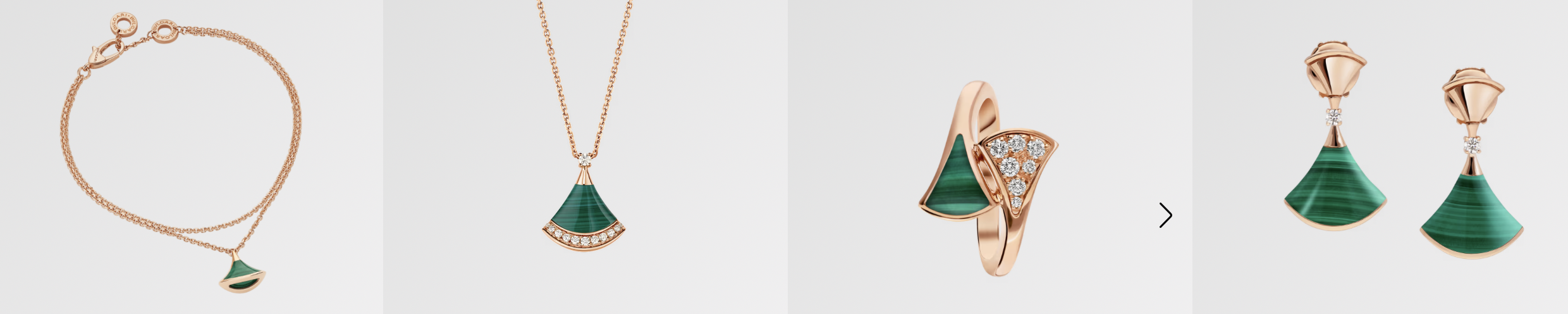
How to wear malachite
Malachite’s strong green makes it surprisingly versatile.
For a classic look, it pairs beautifully with yellow and rose gold. The warmth of the metal complements the rich green tones and creates a traditional, luxurious combination. White gold and platinum offer a completely different effect, providing a crisp contrast that makes the green appear particularly vibrant and cool.
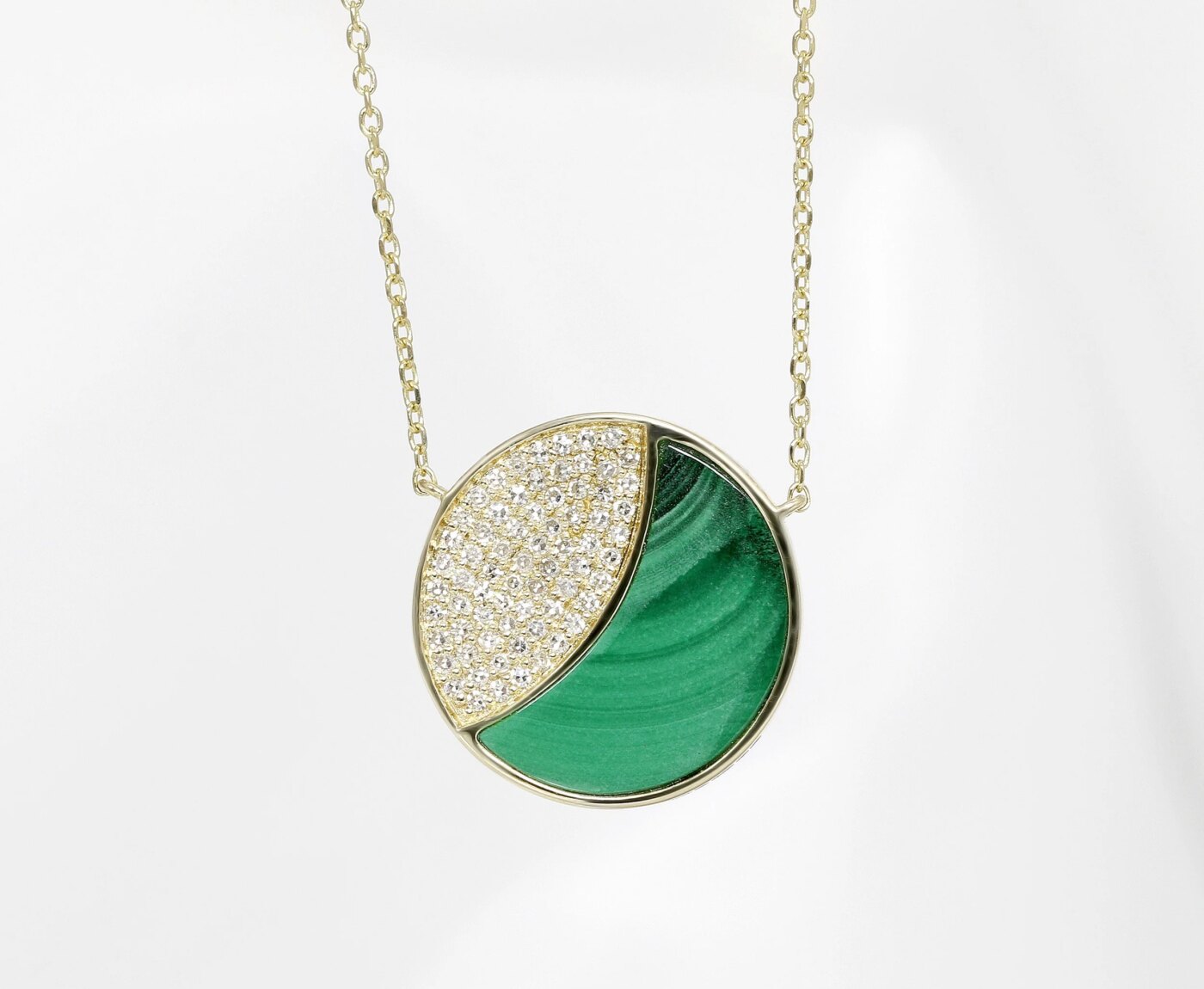
It can also look wonderful alongside diamonds. The contrast between the brilliance and sparkle of a diamond and the soft, organic patterning of malachite creates an interesting balance between precision and nature.
Our own diamond and malachite moon and stars necklace is a lovely example of this combination. The diamonds bring light and sparkle, while the malachite provides depth, colour and movement. The result is a piece that feels celestial but still grounded in the natural beauty of the gemstone.
Malachite also lends itself beautifully to layering. A simple malachite pendant can add a strong flash of colour to a collection of finer chains, while malachite beads can bring a more relaxed, artistic feel to an otherwise understated outfit.
Because every piece has its own pattern, choosing malachite is rather like choosing a miniature work of art. Look closely at the stone and you may find circles, waves, stripes or almost eye-like formations within it so let yourself be drawn to each piece and see which speaks to you.
Are there any synthetics or treatments?
Synthetic malachite is not commonly encountered in jewellery. However, imitation and composite materials do exist, so unusual or very inexpensive material should not automatically be assumed to be natural malachite.
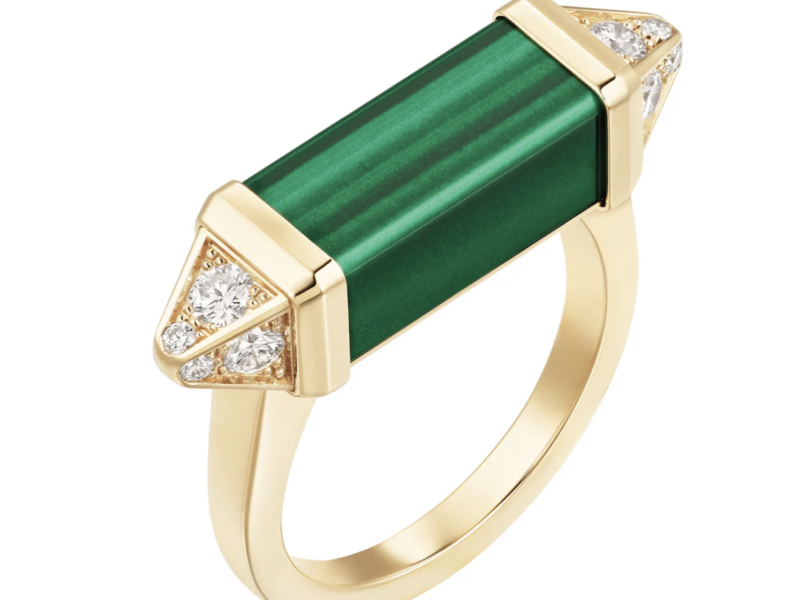
Cartier Malachite Ring in Yellow Gold. Image courtesy of Cartier.com
Malachite, like turquoise, may also be stabilised to improve its durability. This is particularly relevant because natural malachite is relatively soft and can be porous or fragile.
The history and lore of malachite
Malachite has been appreciated for thousands of years. Archaeological evidence shows that it was used in ancient Egypt, including as a green pigment and cosmetic material as far back as the predynastic period. It was also ground into pigment and used in artwork across different cultures and periods.
Its vivid green colour naturally gave it an association with nature, growth and renewal. Over the centuries, various traditions have attributed protective or healing qualities to malachite, and it has sometimes been described as a stone of transformation or protection.
As with much gemstone lore, these beliefs belong to cultural and historical traditions rather than established scientific properties. Nevertheless, they add another fascinating layer to a gemstone that already has such a long history.
Its use as a pigment is particularly interesting. Ground malachite was used to create green paint, with the intensity of the colour influenced by the size of the mineral particles. Artists used malachite pigment for centuries, and it can be found in historic artworks from Europe and Asia.
So malachite has not simply been admired as a gemstone – it has literally helped to add colour to art history.
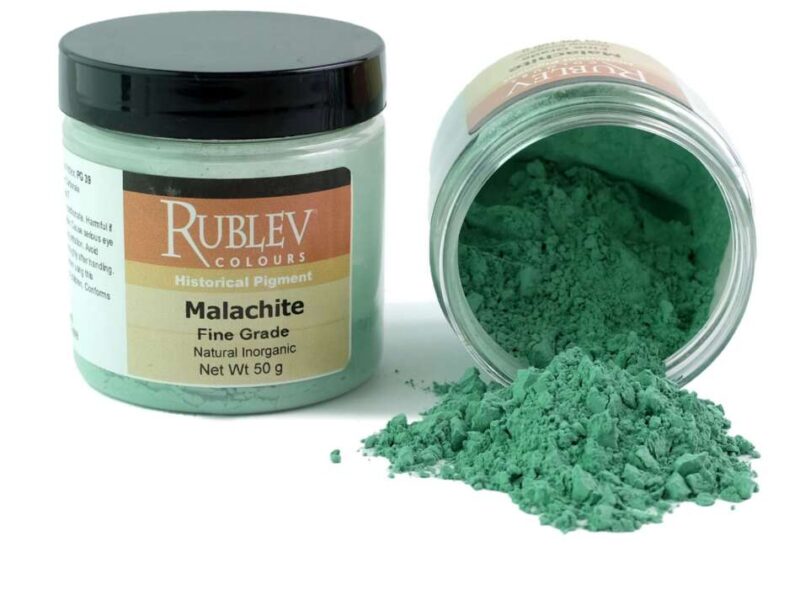
Crushed Malachite Artist Powder. Image courtesy of Natural Pigments.eu.
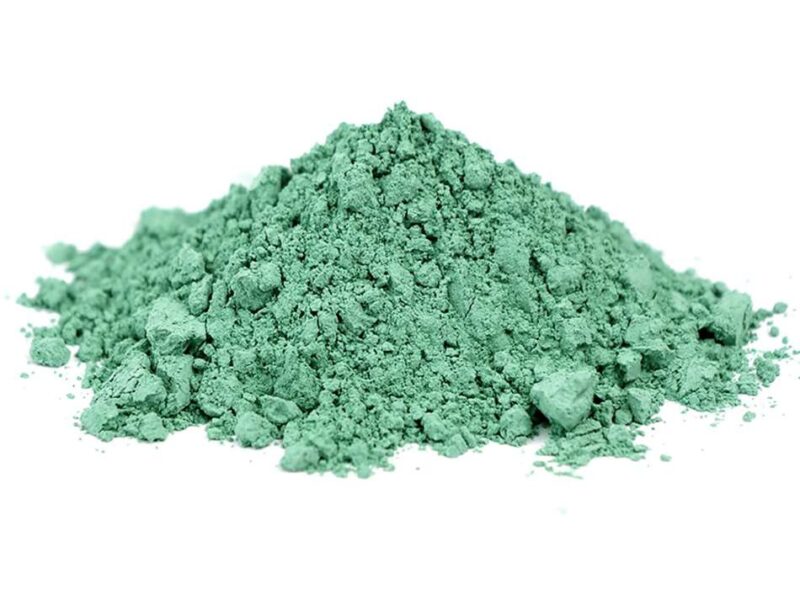
Crushed Malachite Artist Powder. Image courtesy of Natural Pigments.eu.
How to care for malachite
Malachite does require a little more care than harder gemstones such as sapphire, ruby or diamond.
Its relatively low hardness means that it can scratch if it comes into contact with harder materials, and prolonged wear can eventually dull its highly polished surface. Being a carbonate material it is inherently soft so acids and alcohol based products must be avoided. For this reason, malachite is particularly well suited to necklaces, pendants, earrings and brooches, while rings containing malachite are best treated as occasional pieces rather than everyday jewellery.
To keep your malachite looking its best:
- Store it separately from harder gemstones to avoid scratches.
- Keep it away from harsh chemicals, household cleaners and abrasive materials.
- Avoid prolonged exposure to water, particularly very hot water.
- Do not use ultrasonic or steam cleaners on malachite.
- Wipe it gently with a soft, slightly damp cloth and dry it afterwards.
- Put your malachite jewellery on after applying perfume, hairspray and cosmetics.
As with any fine jewellery, a little care goes a long way.
A gemstone with character
Perhaps the greatest appeal of malachite is that it does not try to look like anything else.
Its green colour is unmistakably its own, created by the copper within the mineral. Its bands and patterns are naturally formed, its history stretches back thousands of years, and its uses have ranged from ancient cosmetics and artists’ pigments to carved ornaments and contemporary jewellery.
For those who love gemstones with individuality, malachite offers something rather special. Rather than searching for perfect clarity or uniform colour, you are looking for character – the sweeping lines, changing greens and natural patterns that make one piece completely different from the next.
And that is exactly why malachite works so beautifully in jewellery. Paired with diamonds, gold or other gemstones, it brings an organic quality and a wonderful sense of movement.
Sometimes the most beautiful gemstones are not the ones that sparkle the most. Sometimes, they are the ones that simply make you stop and look.
Explore malachite jewellery with Timothy Roe Fine Jewellery or commission a bespoke piece and learn more about our artistry and craftsmanship by booking your free consultation here.
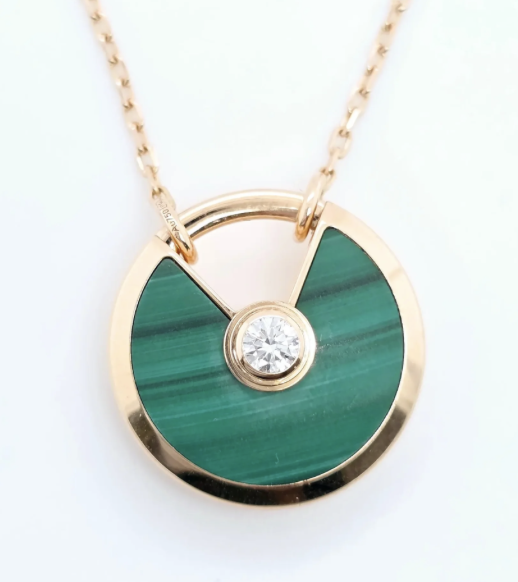
Cartier Malachite Pendant in 18ct rose gold. Image courtesy of Cartier.com
Related Posts