All About Lapis Lazuli: Blue and Gold
There is something wonderfully timeless about the rich, celestial blue of lapis lazuli. Flecked with golden pyrite and occasionally crossed by delicate pale veins of white calcite, this distinctive gemstone has captivated artists, rulers and jewellery lovers for thousands of years. Its striking colour is instantly recognisable, yet lapis lazuli has a fascinating story that reaches far beyond the jewellery box, from the treasures of ancient Egypt to the masterpieces of Renaissance art.
Often associated with wisdom, royalty and the heavens, lapis lazuli remains a much-loved material for statement jewellery, carved ornaments and traditional signet rings. As one of December’s birthstones, it also makes a thoughtful and colourful gift for someone celebrating a winter birthday.
In this guide, we explore the history, geology and artistic legacy of lapis lazuli, how it is used in fine jewellery, and how to distinguish the genuine gemstone from its imitations.
What Is Lapis Lazuli?
Lapis lazuli is an opaque, richly coloured blue rock (it is not a gemstone!) prized for its intense colour and naturally occurring golden flecks. Unlike many familiar gemstones, lapis lazuli is a rock made up of several different minerals and not technically a gemstone.
Its principal blue component is lazurite, the mineral responsible for its characteristic colour. It commonly occurs alongside calcite, which appears white, and pyrite, which creates the beautiful metallic golden flecks that are so distinctive in fine lapis.
The balance of these minerals determines the appearance of each piece. The most desirable material often displays a deep, even royal blue, with attractive, finely distributed pyrite and little visible white calcite veins. However, the presence or absence of these features is a matter of personal taste, and some jewellery designs benefit from the more varied character of a naturally patterned stone.
Lapis lazuli is not a transparent gemstone that sparkles under the light. Instead, its appeal lies in its rich, velvety colour, subtle texture and the contrast between blue, gold and white. It has a wonderfully distinctive appearance that works equally well in traditional jewellery and contemporary designs.
Where Does Lapis Lazuli Come From?
One of the most historically important sources of lapis lazuli is the Badakhshan region of north-eastern Afghanistan, where the Sar-e-Sang deposits have been worked for thousands of years. This material has travelled vast distances throughout history, reaching ancient civilisations in Mesopotamia, Egypt and beyond.
Other sources include Chile, Russia and parts of Pakistan. Chilean lapis, in particular, can display noticeable white calcite veining, giving it a different appearance from the deep, relatively uniform blue traditionally associated with Afghan material.
The geological conditions required to form lapis lazuli are relatively unusual. It develops through metamorphic processes in which suitable rocks are altered by heat and chemical reactions, allowing lazurite and its associated minerals to form.
Each piece therefore has its own natural pattern. Even when two stones share a similar shade of blue, their distribution of pyrite and calcite gives them an individual character.
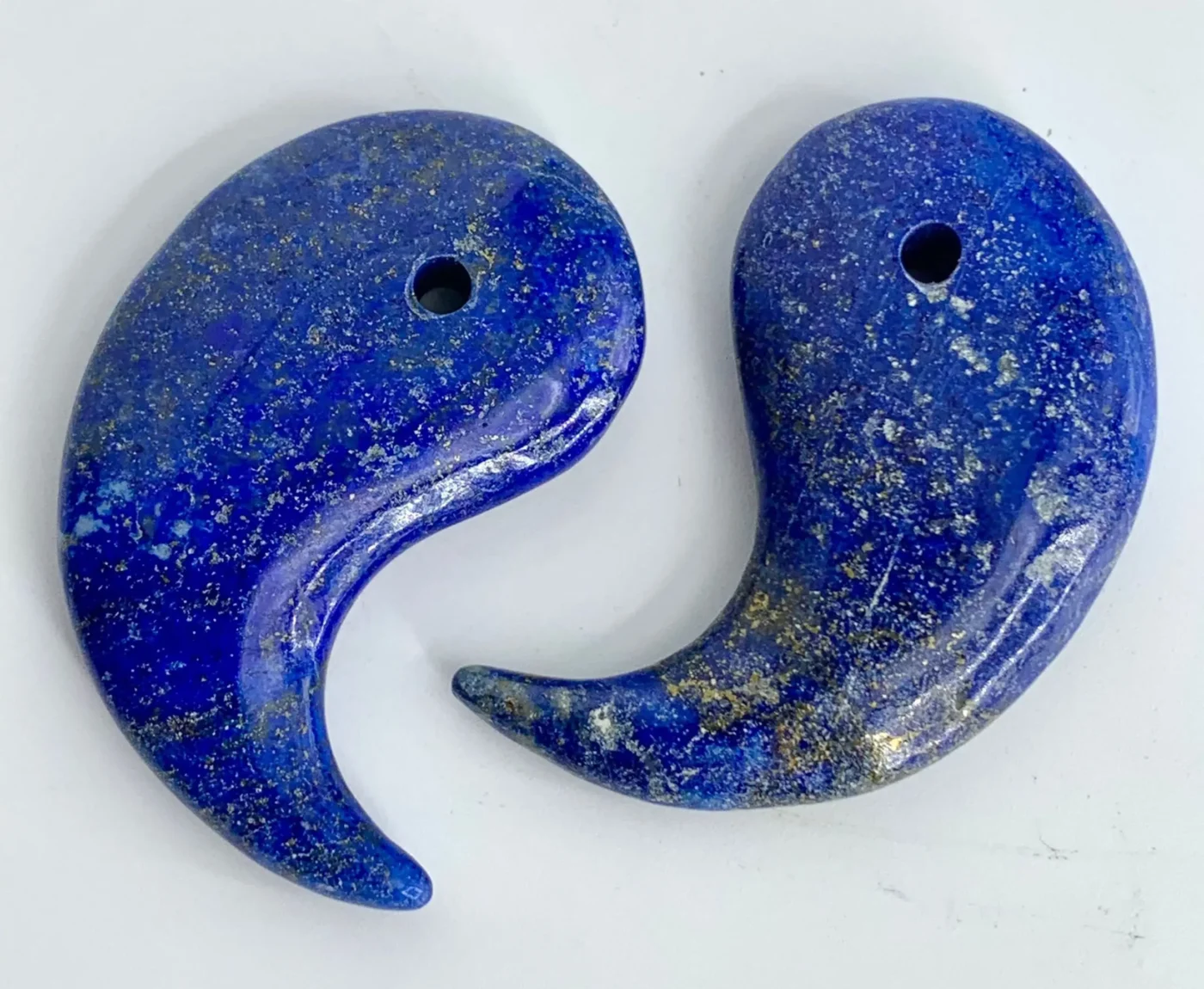
Lapis Lazuli polished beads. Image courtesy of Marie at Chalmer’s Gems.
A Gemstone Steeped in History
Lapis lazuli has been treasured for more than 6,000 years, making it one of the oldest ornamental materials used by humankind. Its vivid blue colour was particularly prized in ancient Egypt, where it appeared in jewellery, amulets, ceremonial objects and elaborate funerary treasures.
Perhaps its most famous historical association is with the treasures of Tutankhamun. Lapis lazuli-coloured details feature prominently in the celebrated funerary mask and other objects discovered in his tomb, although not every blue area is genuine lapis; other blue materials were also used.
The stone’s associations with the heavens and the divine made it especially significant in ancient cultures. Its deep blue colour could evoke the night sky, while its golden pyrite flecks suggested stars scattered across the darkness. It was valued not only for its beauty but also for the symbolism and status it conveyed.
In medieval Europe, lapis lazuli was imported over long trade routes and used in religious art and precious objects. Its rarity and the difficulty of transporting it from distant sources made it an exceptionally valuable material.
Today, lapis lazuli continues to connect us with this remarkable history. A piece of lapis jewellery carries a character that feels both ancient and enduring, making it an appealing choice for those who appreciate gemstones with a story to tell.
From Gemstone to Pigment: Lapis Lazuli in Art
One of the most fascinating aspects of lapis lazuli is its connection to the history of painting. For centuries, it was ground into a fine powder to create ultramarine, an exceptionally prized blue pigment.
The name ultramarine comes from the Latin ultramarinus, meaning ‘beyond the sea’, reflecting the pigment’s journey into Europe from overseas trading regions.
Producing natural ultramarine was a painstaking process. The lapis was ground and processed to separate the precious blue lazurite from unwanted minerals, creating a pigment whose intensity and stability made it highly desirable to artists. The finest natural ultramarine could cost more than gold by weight, making it one of the most expensive pigments available.
During the Renaissance, it was often reserved for the most important passages in a painting, particularly the robes of the Virgin Mary. Its vivid blue carried associations with holiness, dignity and heavenly purity.
Artists including Johannes Vermeer used ultramarine to remarkable effect, and the pigment can be found in celebrated works of European art. Its rich colour helped establish lapis lazuli as more than a decorative stone: it became an essential part of artistic history.
Natural ultramarine was eventually reproduced synthetically in the nineteenth century, making this beautiful blue far more accessible. Today, synthetic ultramarine is widely used in paints and other products, while natural lapis lazuli remains prized for jewellery, sculpture and decorative objects.
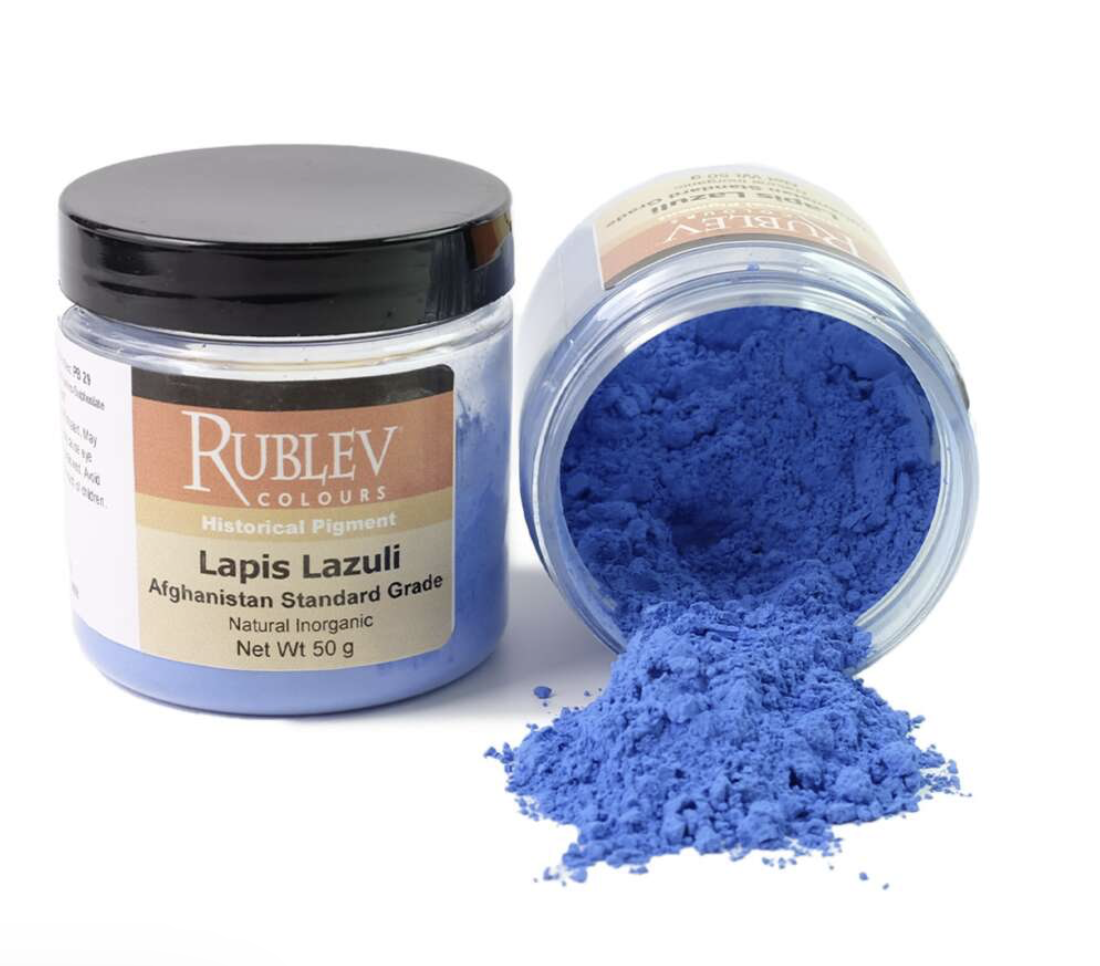
Crushed and ground lapis lazuli powder for artists. Image courtesy of Natural Pigments EU.
Lapis Lazuli in Fine Jewellery
Lapis lazuli offers something a little different from the sparkle of diamonds or the transparency of coloured gemstones. Its opaque surface creates a bold block of colour, making it particularly effective in designs where shape, craftsmanship and contrast take centre stage.
It is commonly cut into smooth cabochons, polished beads and flat inlays. Cabochons have a gently curved surface rather than the facets of a traditional diamond cut, allowing the stone’s colour and natural pattern to remain the focus.
In fine jewellery, lapis lazuli works beautifully in rings, pendants, earrings, bracelets and cufflinks. Set in yellow gold, its deep blue provides a warm, luxurious contrast but connects it to the warm golden pyrite flecks, while white gold and platinum create a cooler, more contemporary appearance.
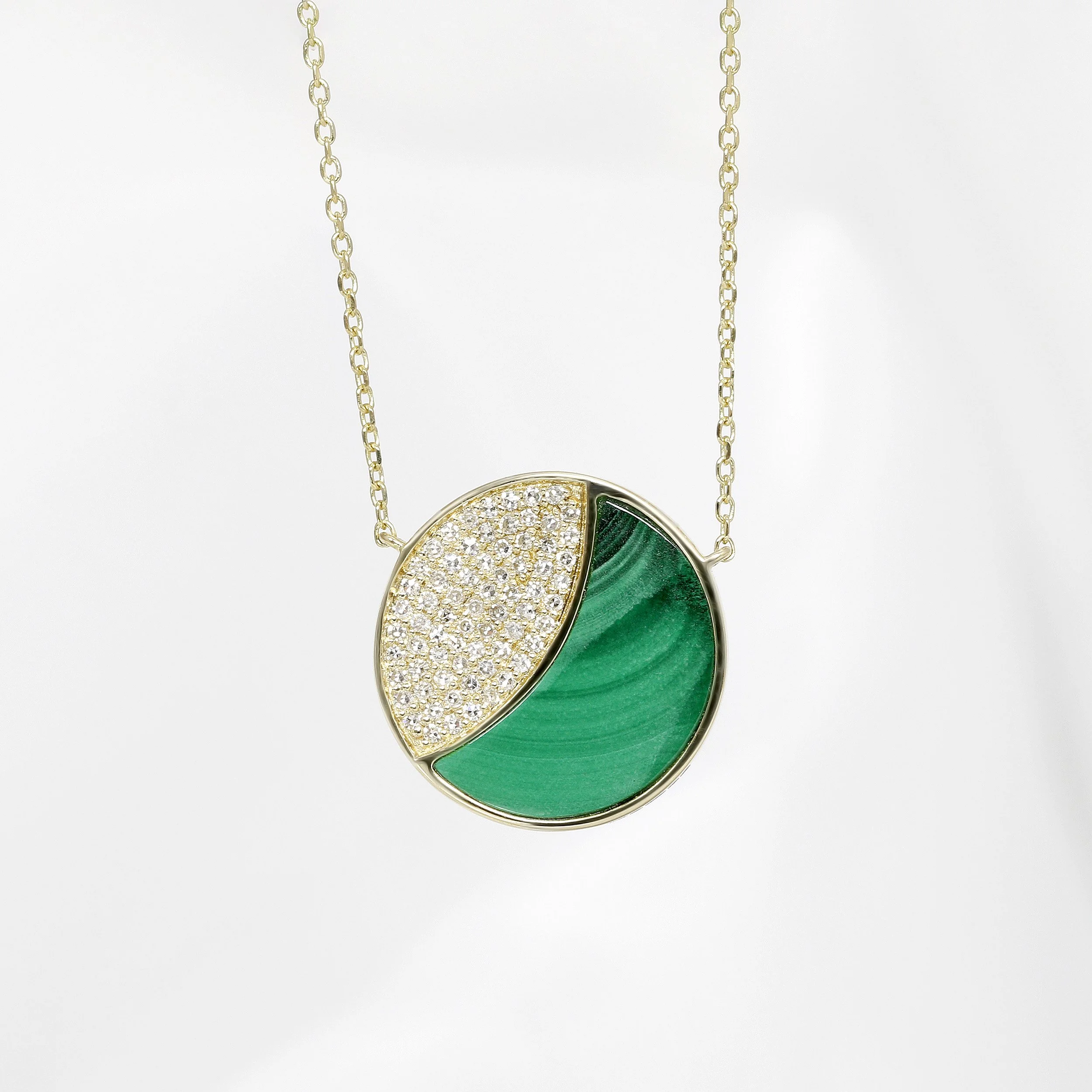
Lapis also pairs well with diamonds, whose brilliance adds contrast to the stone’s soft, opaque finish. A small diamond detail can lift a design without distracting from the blue centrepiece.
High end luxury jewellery designers and design houses such as Van Cleef et Arpels, Graff, Boucheron, Taffin, David Yurman, Michele della Valle, Isabella Roux, Auree London, Cartier, Bvlgari, Hermes, Aspinal of London to name a few also use lapis lazuli in their pieces.
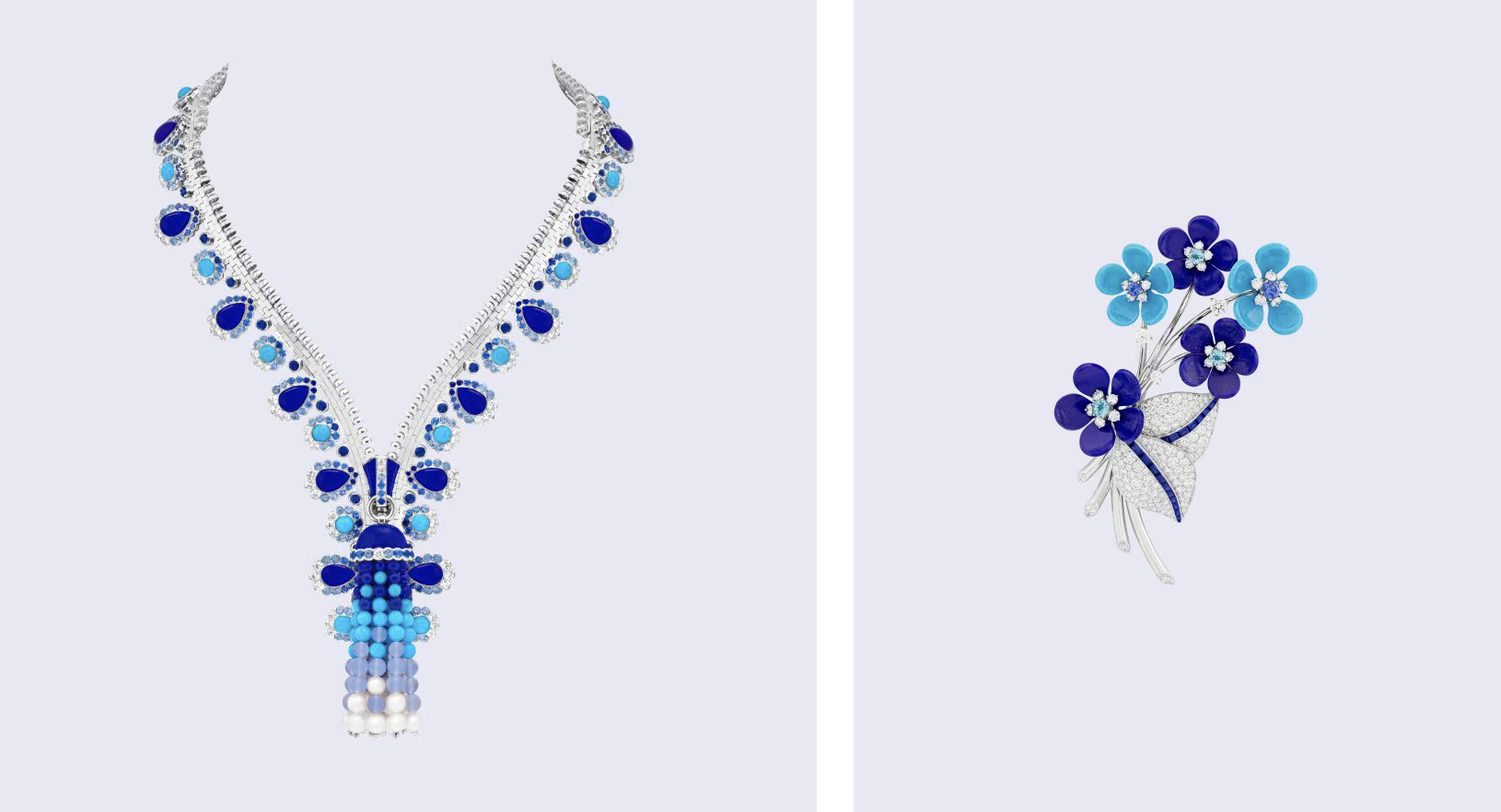
Van Cleef et Arpels lapis lazuli, turquoise, white sapphires, chalcedony, pearls and diamonds zip necklace in white gold. Image courtesy of Van Cleef et Arpels.
The Traditional Signet Ring
One of lapis lazuli’s most enduring jewellery uses is in the signet ring. Traditionally, signet rings featured a flat or gently curved surface engraved with a family crest, initials, coat of arms or personal emblem. The design could be pressed into sealing wax to authenticate letters and documents.
Lapis lazuli is well suited to this style because it can be cut and polished into a smooth surface that provides a strong contrast for engraved details. Its rich blue colour also provides a sense of formality and distinction, the colour blue representing trust and professionalism, calmness, stability, and reliability.
Whether engraved with a traditional crest, a simple set of initials or keeping it plain and natural, a lapis signet ring can be both personal and practical, connecting a modern piece of jewellery with a centuries-old tradition.
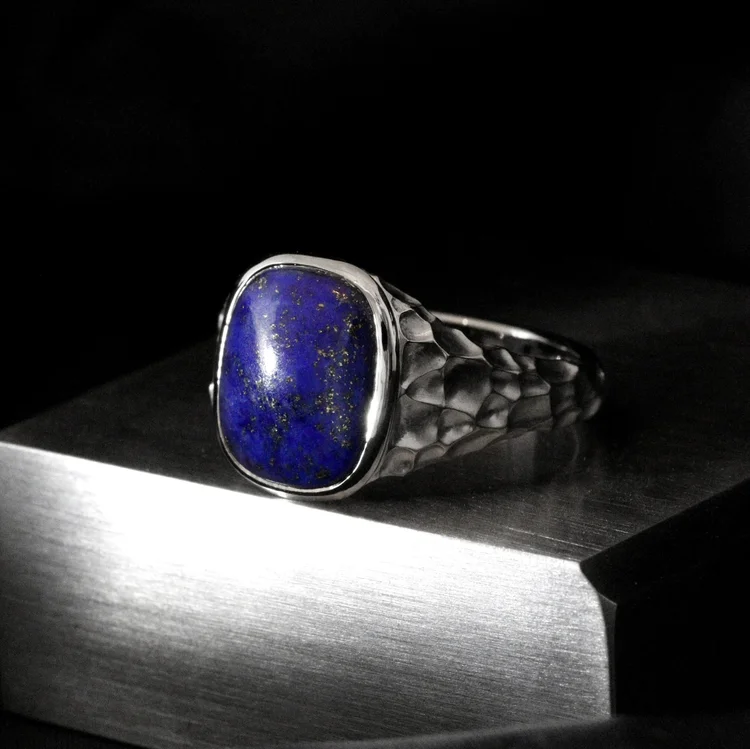
Timothy Roe Bespoke Commission August 2024 – Lapis Lazuli in Gent’s Hammered Palladium Signet Ring
Carved Ornaments and Decorative Objects
Lapis lazuli is also popular for carved objects, from small animals and decorative figures to bowls, beads and intricate inlays. Its relatively uniform blue areas can provide a beautiful background for sculptural shapes, while natural pyrite adds interest to the finished surface.
Because it is opaque and can be polished to a smooth finish, lapis is particularly effective for objects that rely on colour and form rather than transparency. It has been used in everything from ancient amulets to elaborate decorative pieces, and it remains a favourite among collectors of ornamental stones.
In jewellery, carving can introduce a further level of craftsmanship. A carved lapis pendant or an engraved signet ring showcases not only the stone itself but also the skill required to work with it.
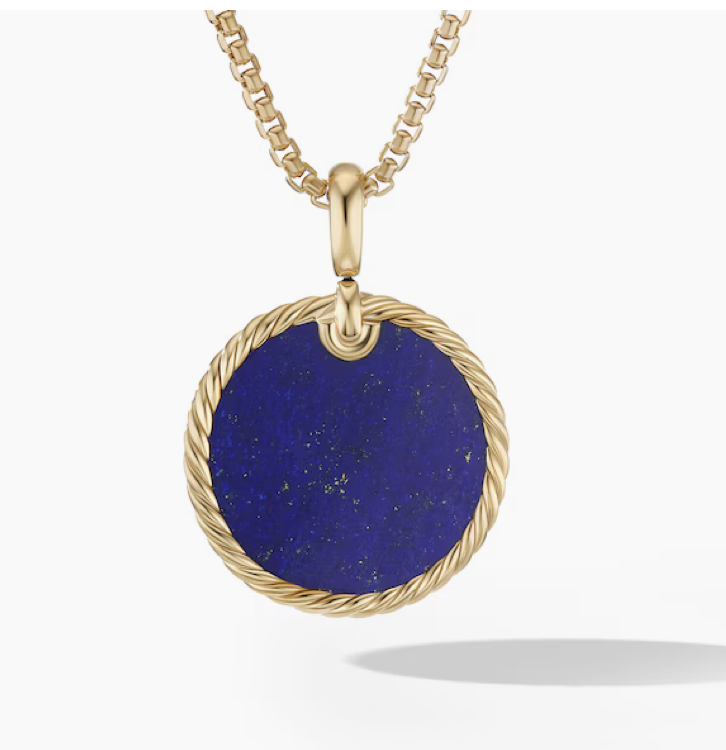
Lapis lazuli pendant in 18ct yellow gold by David Yurman. Image courtesy of Mappin and Webb.
Lapis Lazuli and Sodalite: How Can You Tell the Difference?
Lapis lazuli is sometimes confused with sodalite, another blue mineral that can have a very similar appearance. Both may display rich royal-blue colours and white veining, so distinguishing them can be difficult when looking at a finished piece of jewellery or tumbled polished stones.
The most useful visual clues are their characteristic mineral patterns.
Lapis lazuli typically contains bright royal blue lazurite and may show small golden flecks of pyrite. It can also contain white calcite, but fine-quality material often has a relatively even blue colour with little visible white. Lapis is also opaque. When pulled hard across an unglazed porcelain plate it will leave a blue streak behind. This is however, destructive and we would not advise this.
Sodalite is commonly an indigo blue with conspicuous white webbing or patches, often caused by calcite. It does not normally display the characteristic golden pyrite flecks associated with lapis lazuli and when you shine a strong torch through the stone from below it will be translucent and let some light through. On a streak test the colour will be white. It also will glow orange-red under UV light whilst lapis does not. If lapis lazuli has any fluorescence it will be dull, mottled and from the mineral inclusions not from the lazurite itself.
However, these are guidelines rather than infallible rules. Some genuine lapis contains plenty of white calcite, while some sodalite is a deep, fairly uniform blue. Pyrite can also be absent or inconspicuous in genuine lapis.
For a valuable piece, appearance alone is not enough to confirm identity. Gemmological testing can help distinguish the materials, particularly when the stone has been polished or treated.
Imitations and Synthetic Lapis Lazuli
Because of its popularity, lapis lazuli has been imitated for centuries. Some imitations are convincing at first glance, so it is useful to understand what may be offered under similar descriptions.
Common imitations include dyed howlite, dyed jasper and other pale or inexpensive stones coloured to resemble lapis lazuli. These may have a vivid blue appearance, sometimes with artificial golden flecks added to suggest pyrite.
Glass and composite materials can also be manufactured to imitate the colour and pattern of natural lapis. Reconstituted material may contain crushed lapis fragments mixed with a binding agent, while some products are made from other minerals combined to create a similar appearance.
There is also a distinction between synthetic lapis lazuli and imitation lapis lazuli. Synthetic materials are intended to reproduce the properties or composition of a natural material, whereas imitations simply look similar. Although synthetic ultramarine pigment is well established, that does not mean a blue ornamental stone made with the pigment is synthetic lapis lazuli. Synthetic lapis lazuli does however, exist; it is a factory-created material.
Natural lapis may also be dyed to improve its colour or appearance. Such treatments are not the same as creating a synthetic gemstone, and reputable sellers should disclose relevant treatments where known.
If you are buying lapis lazuli jewellery, ask whether the stone is natural and whether it has been treated. For an important or high-value purchase, seek advice from a trusted jeweller or qualified gemmologist.
One of December’s Birthstones
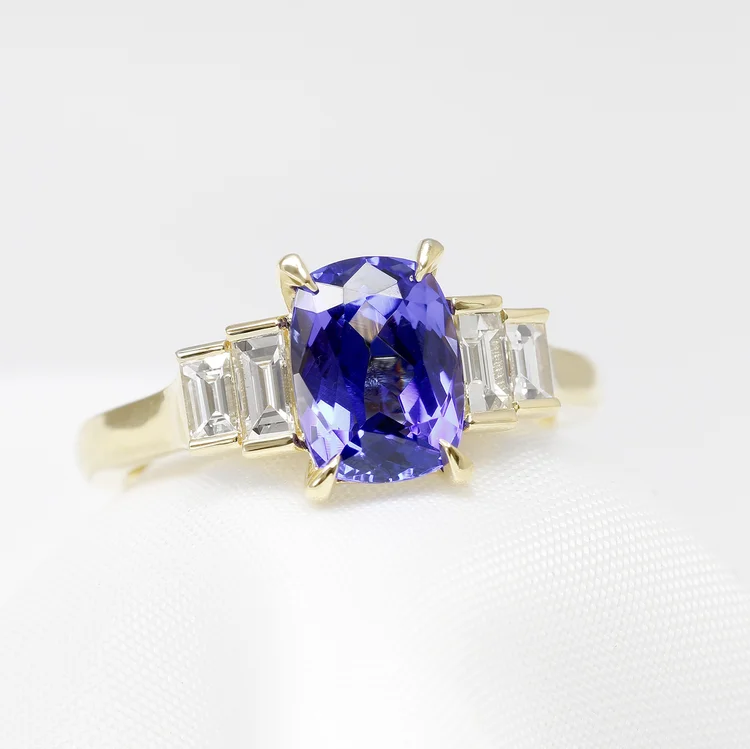
Lapis lazuli is recognised as a traditional December birthstone, alongside other stones associated with the month, including turquoise, zircon and tanzanite in modern birthstone lists.
Its rich blue colour makes it a particularly appealing choice for winter birthdays, offering a rich warmer blue to complement the pale snowy whites and light aquamarine blues during the colder months. It is also an excellent alternative for anyone who prefers an opaque gemstone with a distinctive history rather than a transparent, sparkling stone. It pairs well with diamonds and other blue tones.
Traditionally associated with wisdom, truth and protection, lapis lazuli carries symbolic meaning that makes it especially thoughtful as a gift. A pendant, pair of earrings or engraved signet ring can become a personal keepsake, particularly when chosen to reflect the recipient’s style.
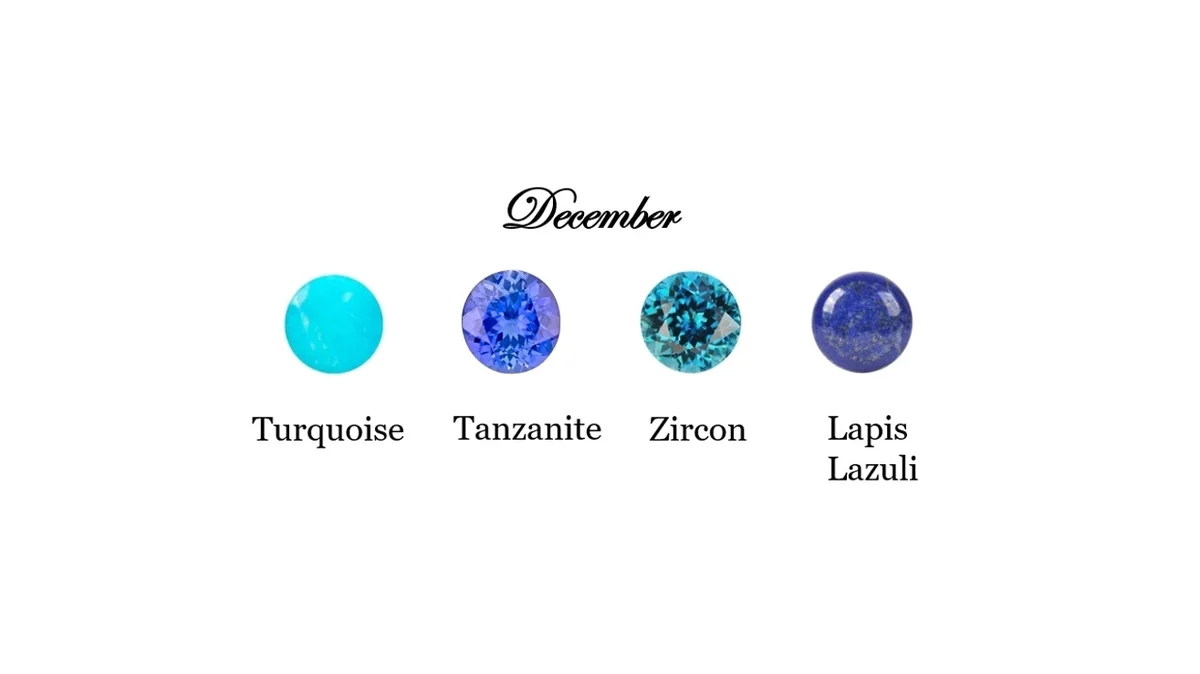
December’s Birthstones. Image courtesy of Natural Treasure Canada.
Caring for Lapis Lazuli Jewellery
Lapis lazuli is relatively soft compared with many precious gemstones, with a Mohs hardness of approximately 5 to 5.5. It can be scratched or damaged by knocks, so a little care will help preserve its polished surface.
We recommend removing lapis jewellery before household cleaning, exercise, gardening or other activities that could expose it to impact or abrasive materials. Avoid ultrasonic and steam cleaners, as well as harsh chemicals, prolonged soaking and sudden temperature changes.
For everyday cleaning, use a soft, slightly damp cloth and dry the stone promptly. Store lapis separately from harder gemstones, such as diamonds and sapphires, to prevent scratches.
As with all fine jewellery, regular checks of the setting are worthwhile, particularly for rings worn frequently.
A Timeless Blue with a Remarkable Story
From ancient royal treasures to Renaissance masterpieces, lapis lazuli has earned its place in history through its unmistakable colour and enduring appeal. Its journey from a mineral-rich rock to a prized pigment, a carved ornament or a beautifully crafted piece of jewellery reveals just how versatile this remarkable material can be.
Whether set into a traditional signet ring, polished into a striking pendant or chosen as a meaningful December birthstone, lapis lazuli offers something distinctive: a little piece of history, a rich depth of colour and a beauty that never needs to sparkle to stand out.
If you are thinking about creating a piece of jewellery using lapis lazuli please get in touch or book a free consultation here. We’d love to work with you!
Related Posts