The Different Types of Opals Explained
Opals: The Gemstone That Holds a Rainbow
There are few gemstones quite as mesmerising as opal. Unlike a sapphire, ruby or diamond, whose beauty comes primarily from colour, brilliance or sparkle, an opal can appear to change before your eyes. Tilt it towards the light and flashes of blue, green, yellow, orange or red can suddenly appear, disappear and reappear again.
It is little wonder that opals have inspired stories, legends and a fair amount of superstition throughout history. They have been described as holding rainbows, fallen from the sky with lightning and even possessing magical powers.
But behind all that folklore is some fascinating gemmology. Opal is an unusual gemstone with a structure unlike almost anything else in the jewellery box — and understanding that structure helps explain both its extraordinary beauty and why it needs a little more care than many other gemstones.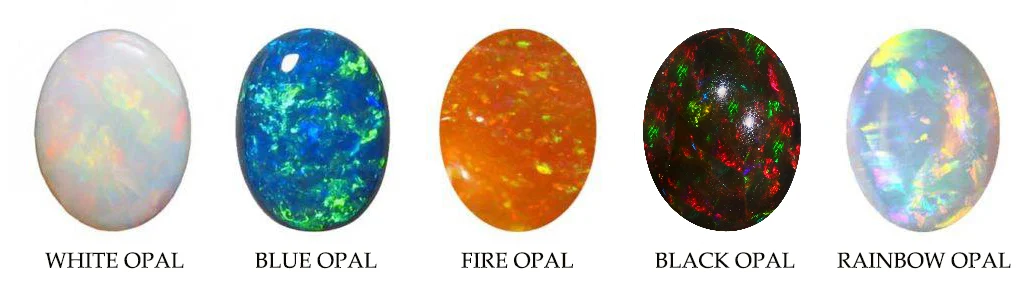
What is an opal?
Opal is a hydrated form of silica, formed when silica-rich water gradually moves through cracks and spaces within rock. As the water evaporates, microscopic spheres of silica are deposited layer upon layer over an enormous period of time.
It is the arrangement of these tiny silica spheres that gives precious opal its famous play-of-colour.
The spheres are remarkably uniform and, in precious opal, are arranged in a sufficiently regular pattern for light to interact with them in a very particular way. As white light enters the stone, it is diffracted and dispersed by the microscopic structure, separating the light into different colours.
The result is that extraordinary flash of colour that seems to move across the surface of the gemstone.
And this is important: not every opal displays play-of-colour.
Opals without this phenomenon are generally known as common opal or potch opal. They can still be beautiful, occurring in a wide variety of colours, but they do not display the spectral flashes associated with precious opal.
Explore our Opal Jewellery Collection
White, black and fire opals
Precious opals come in a wonderful variety of appearances, but three broad descriptions are particularly familiar.
White opals have a white or light-coloured body tone and may display flashes of many different colours. They are commonly associated with Australia, Ethiopia, Brazil and Mexico.
Black opals have a dark body tone, which can make their play-of-colour appear especially dramatic. Australian black opals are particularly famous and are highly prized.
Then there are fire opals, generally recognised by their warm yellow, orange or reddish-orange body colour. Mexican fire opals are particularly well known, although fire-coloured opals can also be found elsewhere.
The word “fire” can sometimes cause confusion. A fire opal does not necessarily have to show play-of-colour — the name primarily refers to its warm body colour. Some do display beautiful flashes of colour, while others do not.
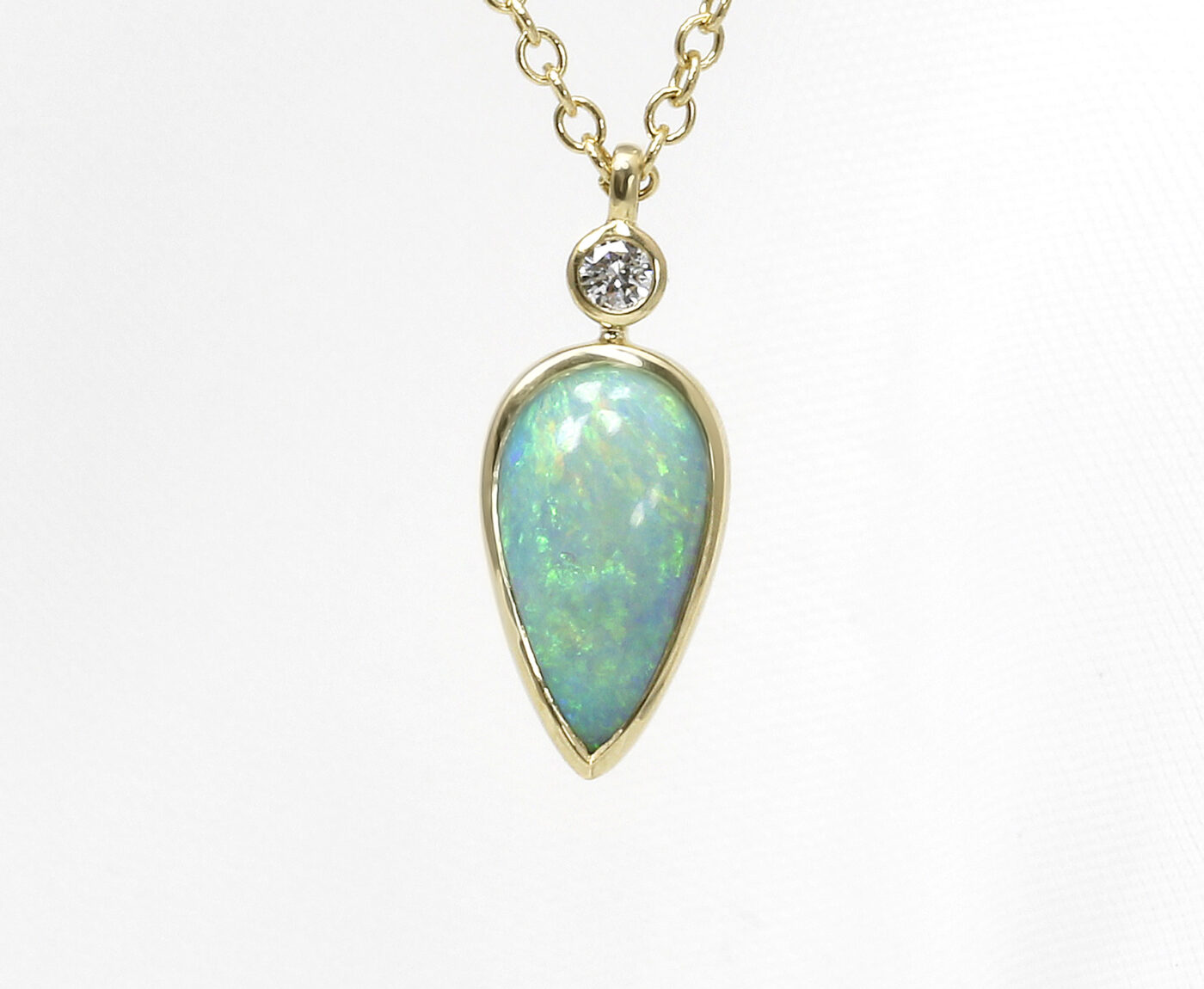
Pear Shape Australian Opal and Diamond Pendant
Boulder opal: beauty with a little bit of rock attached
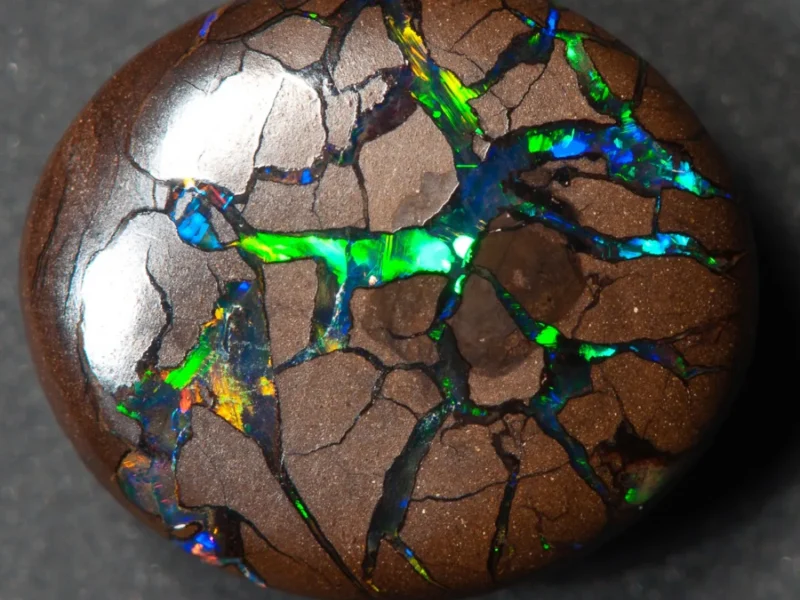
Boulder opal is one of the most distinctive varieties of Australian opal.
Rather than separating the precious opal completely from the rock in which it formed, the opal is cut with its natural host rock, usually ironstone, still attached.
This is partly practical. Boulder opal often occurs as relatively thin veins within the host rock, making it difficult to remove without losing the opal itself.
But what might once have been considered something to remove has become part of the appeal. The dark ironstone provides a wonderful natural contrast to the flashes of colour and each piece has its own combination of opal and earthy matrix.
It is a lovely reminder that gemstones do not always have to be perfectly uniform to be beautiful.
Australia or Ethiopia?
Two of the best-known sources of precious opal today are Australia and Ethiopia, and although both produce spectacular gemstones, they can behave quite differently.
Australian opals formed in ancient, dry environments, often associated with sandstone and mudstone. Their silica structure is generally more tightly packed, making many Australian opals relatively resistant to moisture.
Ethiopian opals are often hydrophane, meaning that they can absorb water and other liquids. They commonly formed in volcanic environments, within and around layers of volcanic rock and ash. They often look more watery/glassy.
When Ethiopian hydrophane opal absorbs water, its appearance can change dramatically. It may become more transparent or cloudy, and its play-of-colour can appear to change too.
This is one of the things that makes Ethiopian opal so fascinating — but it is also one of the reasons why it deserves particular care.
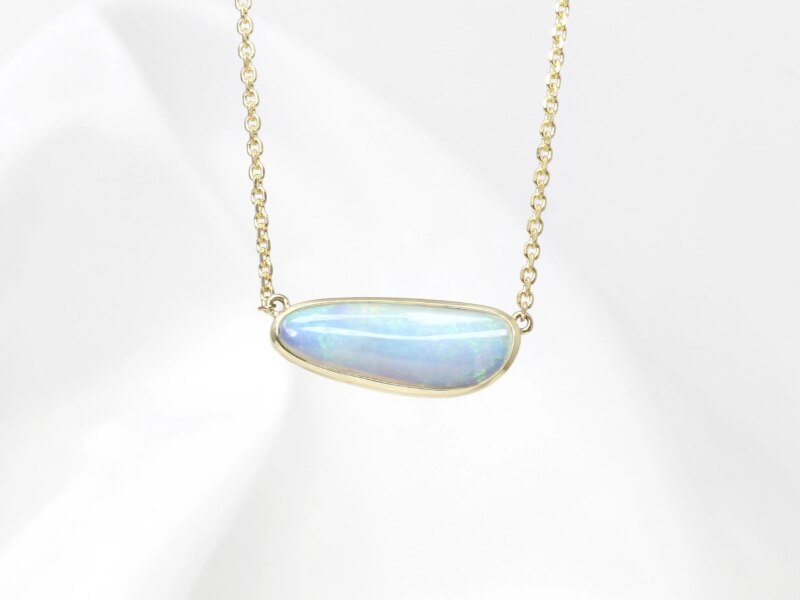
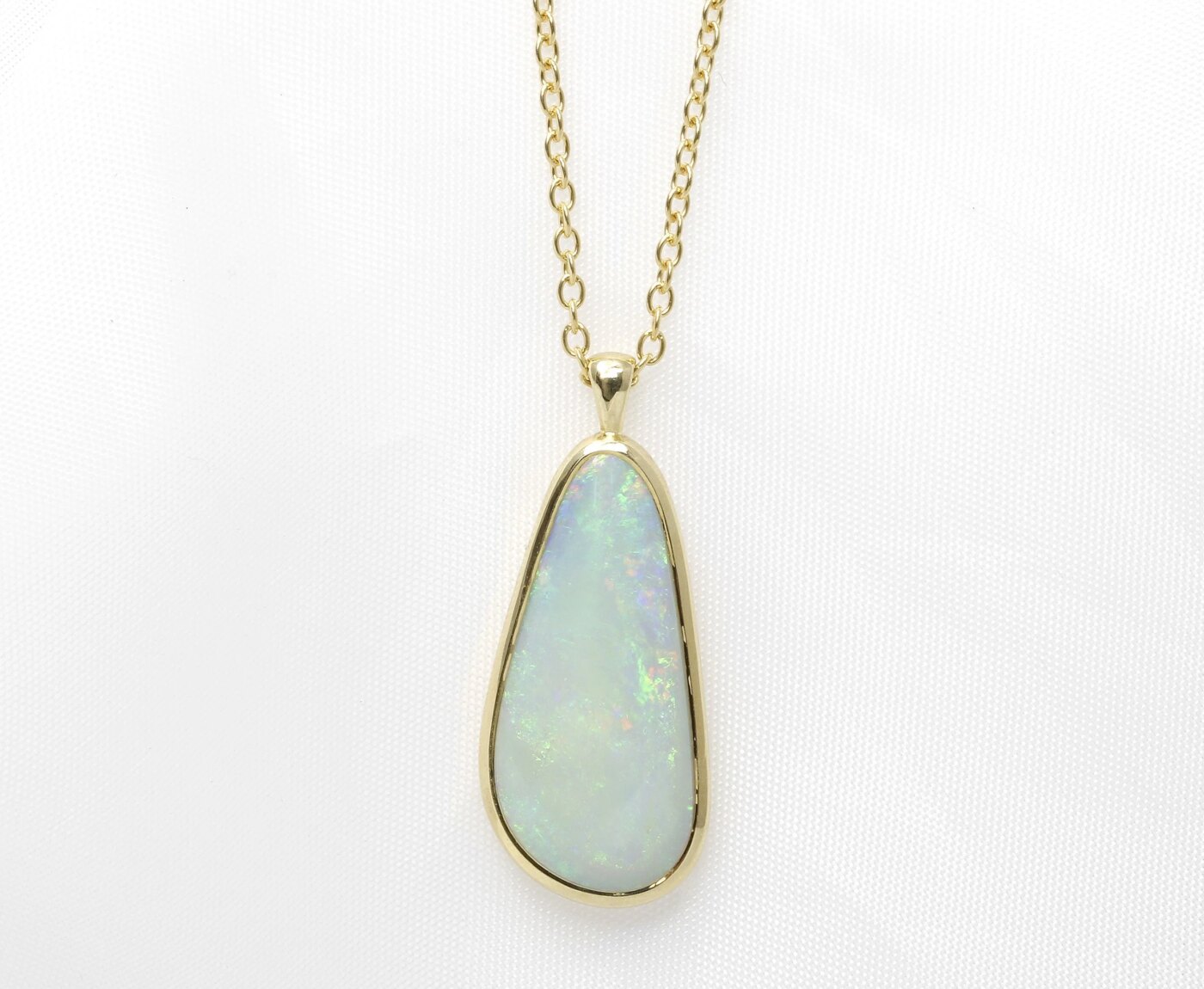
Australian Opal Necklace in 9ct Yellow Gold
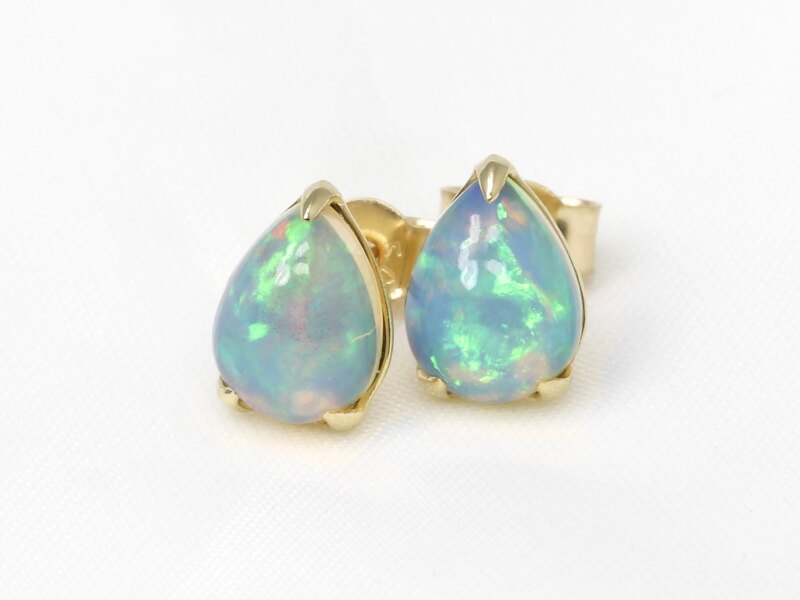
Ethiopian Pear Shape Opal Stud Earrings in 9ct Yellow Gold
Doublets and Triplets: what are they?
If you have ever seen a spectacularly colourful opal at a surprisingly accessible price, it may be a doublet or triplet.
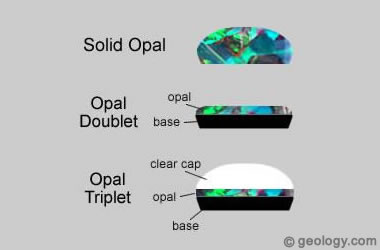
A doublet consists of a thin slice of natural opal attached to a darker backing material. The backing gives the impression of greater depth and, importantly, provides a dark background that can dramatically enhance the play-of-colour.
A triplet takes this a step further. A thin slice of opal is attached to a dark backing and then covered with a clear domed layer, often made from resin or another transparent material. The dome protects the opal and magnifies its appearance.
Neither is necessarily a bad thing. Doublets and triplets can be beautiful and offer an accessible way to enjoy opal. The important thing is simply to understand what you are buying so you also understand how best to care for them. It is important they are not submerged in water as this can separate the glued layers.
Natural, synthetic and imitation opal
There are also synthetic and imitation opals on the market.
Some are made from polymers or resins, while others can incorporate small pieces of natural opal within a manufactured material. There are also imitation materials designed to recreate the characteristic flashes of colour using various combinations of materials.
One well-known example is Gilson synthetic opal, which can look remarkably similar to natural white opal. Under magnification, however, its internal structure can reveal clues to its manufactured origin, including a distinctive columnar structure and a play-of-colour pattern that can have a somewhat “lizard skin” appearance.
This is why identification matters, particularly when buying valuable opal jewellery. A beautiful appearance alone does not tell you whether a stone is natural, treated, assembled or synthetic.
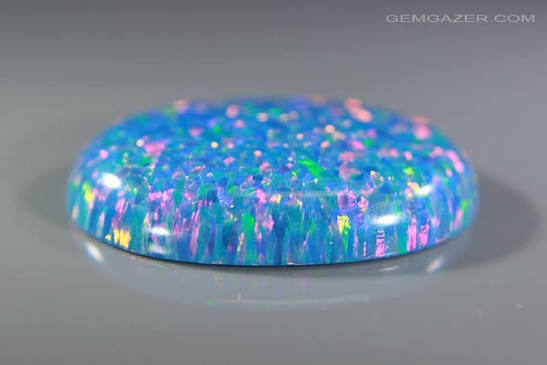
Imitation blue Gilson opal. Image courtesy of Gemgazer.com.
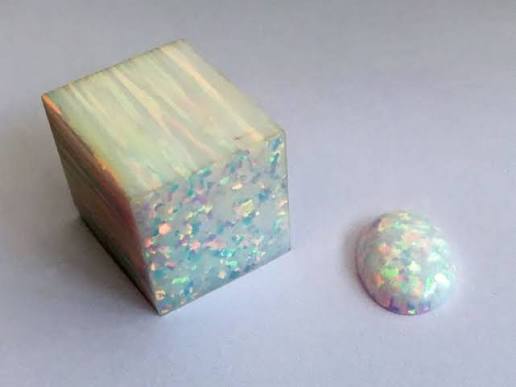
Imitation Gilson Opal Block and Cabochon Cut Opal. Photo by British Gemologist Sally Spencer
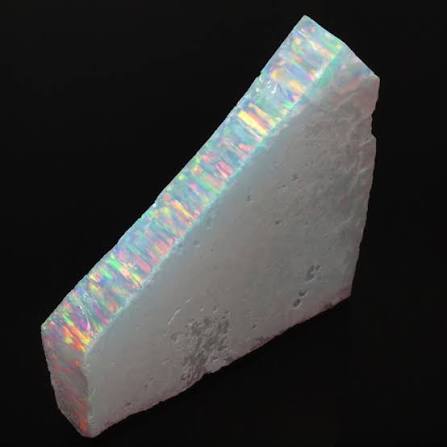
Imitation Gilson Opal Slice Showing Internal Columnar Structure. Image courtesy of Gilson-Opals.com
Why is opal so delicate?
This is perhaps the most important thing to know if you own an opal or are thinking of buying one.
Opal is relatively soft, generally around 5–6.5 on the Mohs scale, and it is also brittle. That combination means it can be vulnerable to scratches, knocks and sudden changes in temperature.
For this reason, we often recommend thinking of an opal in much the same way you would a pearl: wear it, enjoy it, but treat it gently. It is not recommended as an engagement ring nor jewellery you wear daily.
Opals are particularly vulnerable to harsh chemicals, heat and sudden temperature changes. In some circumstances, these can contribute to cracking or what is known as crazing, where a network of fine cracks develops within the stone.
Perfume, hairspray, creams and cleaning products are best kept well away from opal jewellery. Ethiopian hydrophane opals deserve particular care because of their ability to absorb liquids. This is why we cover the backs of our opals to protect them and we use a bezel (rubover) setting rather than claws as claws can scratch the opal’s surface.
And despite the old idea that opals need to be “kept hydrated”, you should never soak an opal in water to try to restore it. Water can enter the microscopic spaces within the stone and cause temporary or, in some circumstances, lasting changes in appearance.
If your opal accidentally gets wet, gently dry it with a soft cloth and allow it to dry naturally. If it has been submerged, give it plenty of time to dry before assessing its condition.
Opals are also generally better suited to jewellery such as earrings and pendants than rings that are going to experience heavy everyday wear. Of course, an opal ring can absolutely be enjoyed — it simply needs a little more consideration.
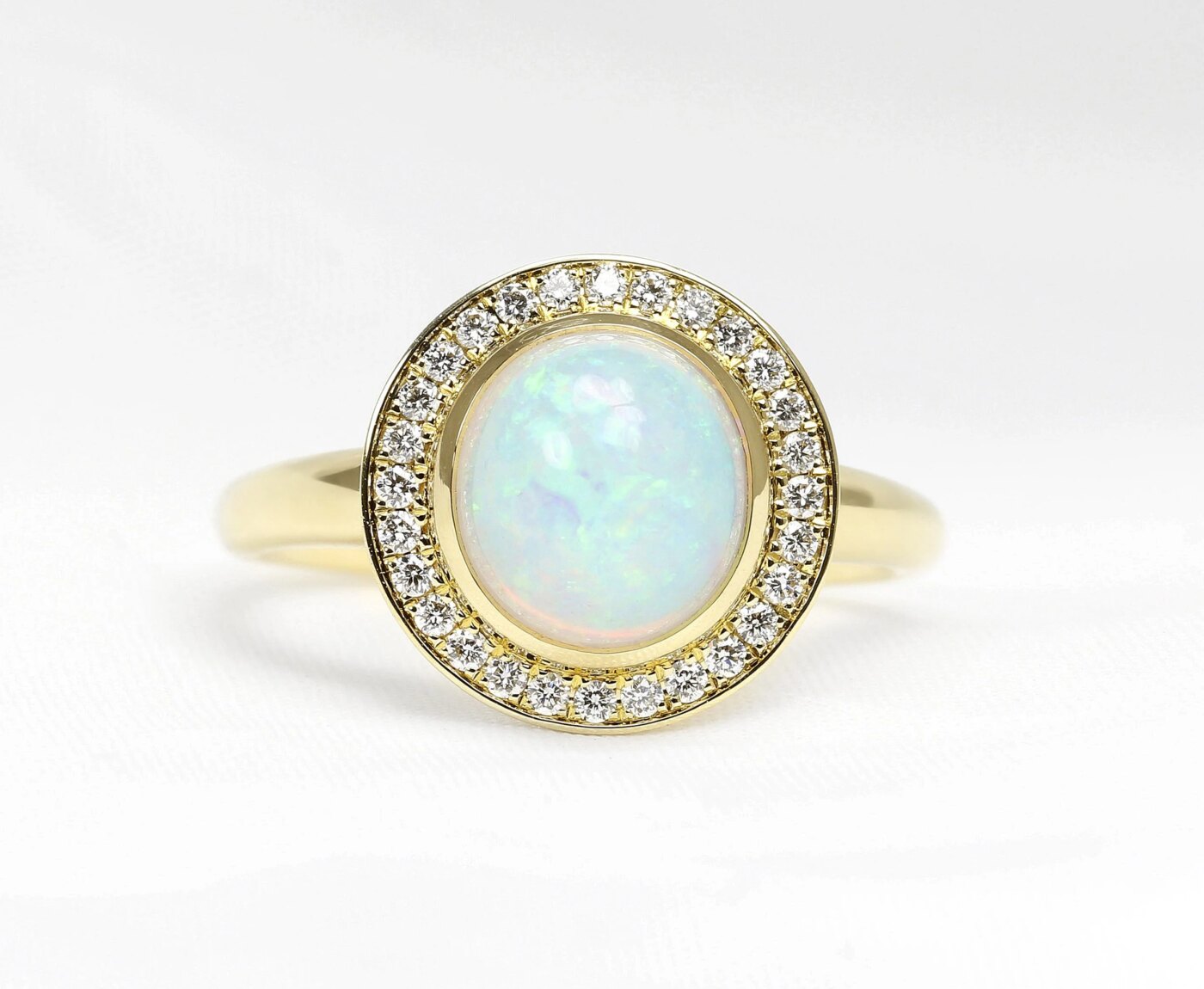
Opal & Diamond Halo Cluster in Yellow Gold
The myths and magic of opal
Perhaps because of its ever-changing appearance, opal has accumulated an extraordinary collection of stories.
The Ancient Greeks associated opal with prophecy and believed it could protect against illness. The Romans regarded it as a symbol of hope, purity and spiritual insight, and held the gemstone in particularly high regard.
Arabian folklore suggested that opals fell from the sky during flashes of lightning — a rather wonderful explanation for the rainbow-like colours appearing inside the stone.
Australian Aboriginal traditions contain their own beautiful stories connecting opal with rainbows, creation and the colours of the earth.
Yet opal has not always enjoyed such a positive reputation. During the Middle Ages, some European beliefs associated the gemstone with bad luck, while other stories suggested that opal could make its wearer invisible.
Perhaps the most famous person to challenge these negative associations was Queen Victoria, who embraced opals during her reign and is said to have given them as wedding presents.
Today, opal is much more commonly associated with creativity, imagination and individuality.
And perhaps that is fitting. No two opals are quite alike. Their colours move differently, their patterns are unique and their appearance can change depending on the light and the angle from which you see them.
Australian Opal Pendant in Yellow Gold
October’s mesmerising birthstone
Opal is the traditional birthstone for October and is also associated with the 14th wedding anniversary.
It is a gemstone that rewards looking closely. What first appears to be a simple white, black or orange stone can suddenly reveal an extraordinary spectrum of colour.
For us, that is part of what makes opal so special. It is not simply a gemstone that sparkles. It is a gemstone that moves, surprises and changes.
And perhaps the best way to appreciate one is to hold an opal in the light and watch what happens.
Because somewhere inside that little piece of silica is a rainbow, waiting to appear.
Browse our opal jewellery or start the process to have a bespoke opal piece made by booking your free consultation here.
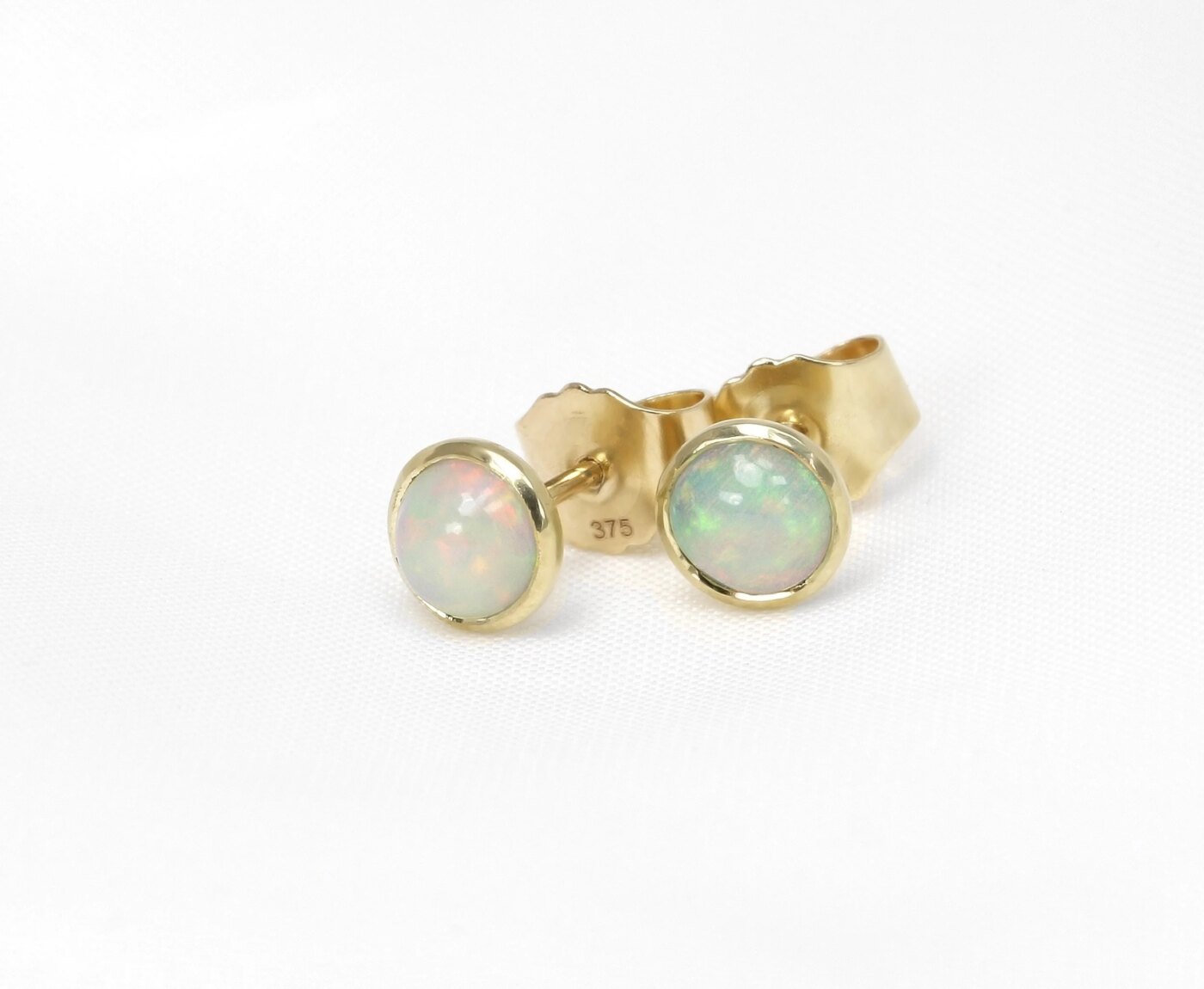
Opal Stud Earrings in 9ct Yellow Gold
If you liked this article you might like to read our Opal Care Guide
Related Posts