Types of Pearls Explained | Akoya, South Sea, Tahitian & Freshwater Pearls
A Guide to Pearl Types
For centuries, pearls have been treasured for their timeless elegance and understated beauty. Unlike diamonds or coloured gemstones that are mined from the earth, pearls are one of the very few gemstones created by a living organism and come from the sea or river, making them truly unique.
Whether you’re choosing your first pearl necklace, looking for a meaningful gift, considering pearls for bridal jewellery or simply curious about the different varieties available, understanding the differences between pearl types can help you find the perfect piece.
From the classic white Akoya pearl to the dramatic dark tones of Tahitian pearls, each variety has its own story, character and charm. Pearls also come in a surprising range of shapes—from perfectly round to wonderfully organic—which can completely change the look and feel of a piece of jewellery.
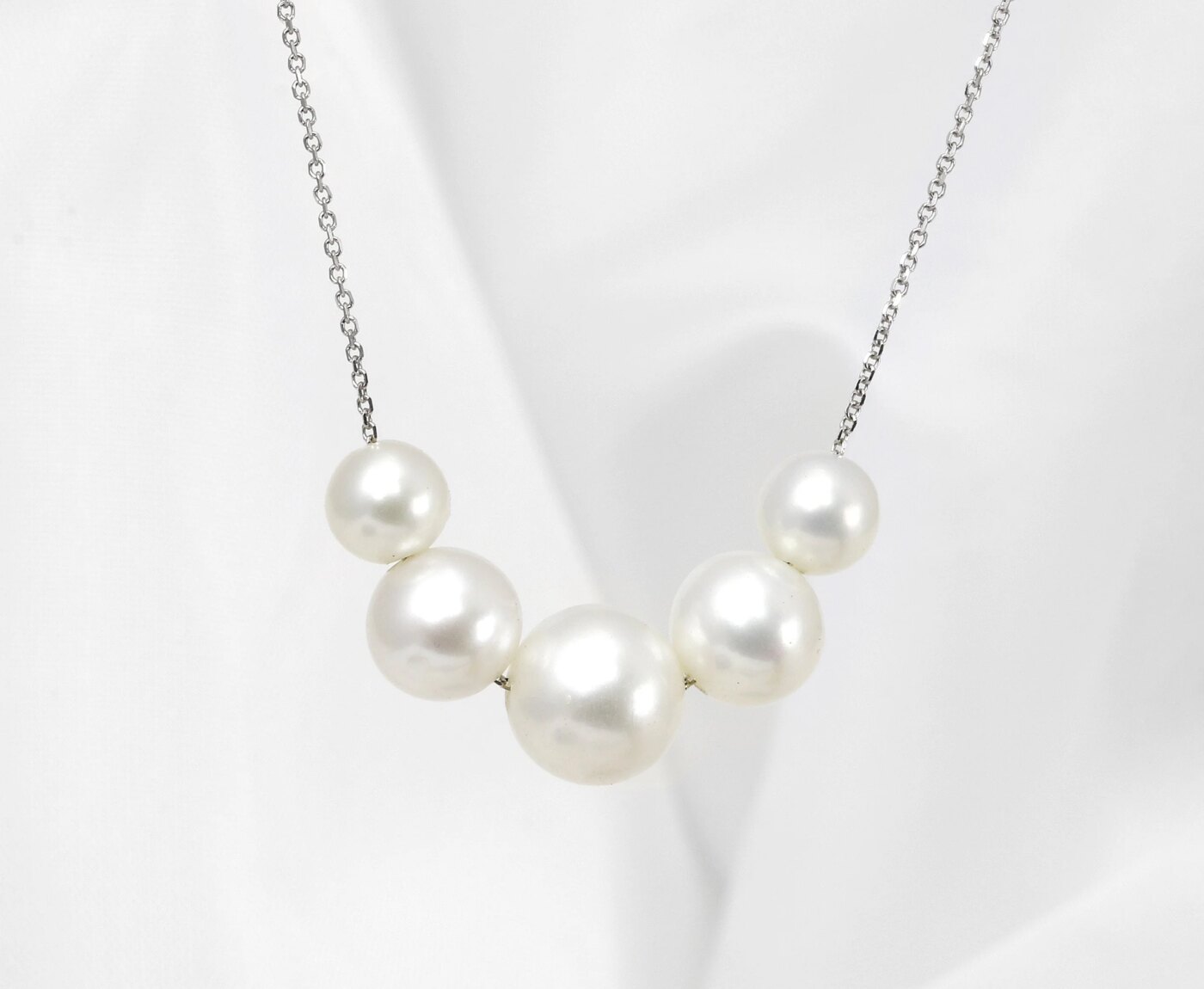
Pearl Slider Necklace in 18ct White Gold
How Are Pearls Formed?
Pearls are created inside certain species of oysters and mussels as a natural defence mechanism.
When a small irritant enters the shell, the mollusc protects itself by coating the object with countless layers of nacre (pronounced nay-ker), also known as mother-of-pearl. Over time these microscopic layers build up to create the lustrous gemstone we know as a pearl.
The thickness and quality of this nacre is what gives pearls their famous soft glow, known as lustre.
Because pearls are formed naturally rather than cut and polished like most gemstones, no two are ever exactly alike and it is very different to match shape, size and colour to create pairs or entire strands.
Natural, Cultured and Nucleated Pearls
One of the biggest misconceptions is that all pearls are natural. In reality, the vast majority of pearls available today are cultured.
Natural Pearls
Natural pearls form entirely by chance without any human intervention. They are exceptionally rare and historically were discovered by pearl divers searching wild oysters. Today, genuine natural pearls are highly sought after by collectors and museums.
Cultured Pearls
Cultured pearls are produced with careful human assistance. Pearl farmers introduce a tiny bead or piece of mantle tissue into the oyster or mussel, encouraging it to begin producing layers of nacre naturally.
This process allows beautiful pearls to be grown sustainably while protecting wild oyster populations.
Importantly, cultured pearls are still genuine pearls—they simply receive a helping hand to begin the process. Think of this process like IVF.
Nucleated Pearls
Many saltwater pearls are nucleated, meaning they begin with a small round bead placed inside the oyster. The oyster then coats this bead with nacre over several months or years.
Freshwater pearls are often tissue-nucleated rather than bead-nucleated, resulting in a wider variety of natural shapes and often excellent value.
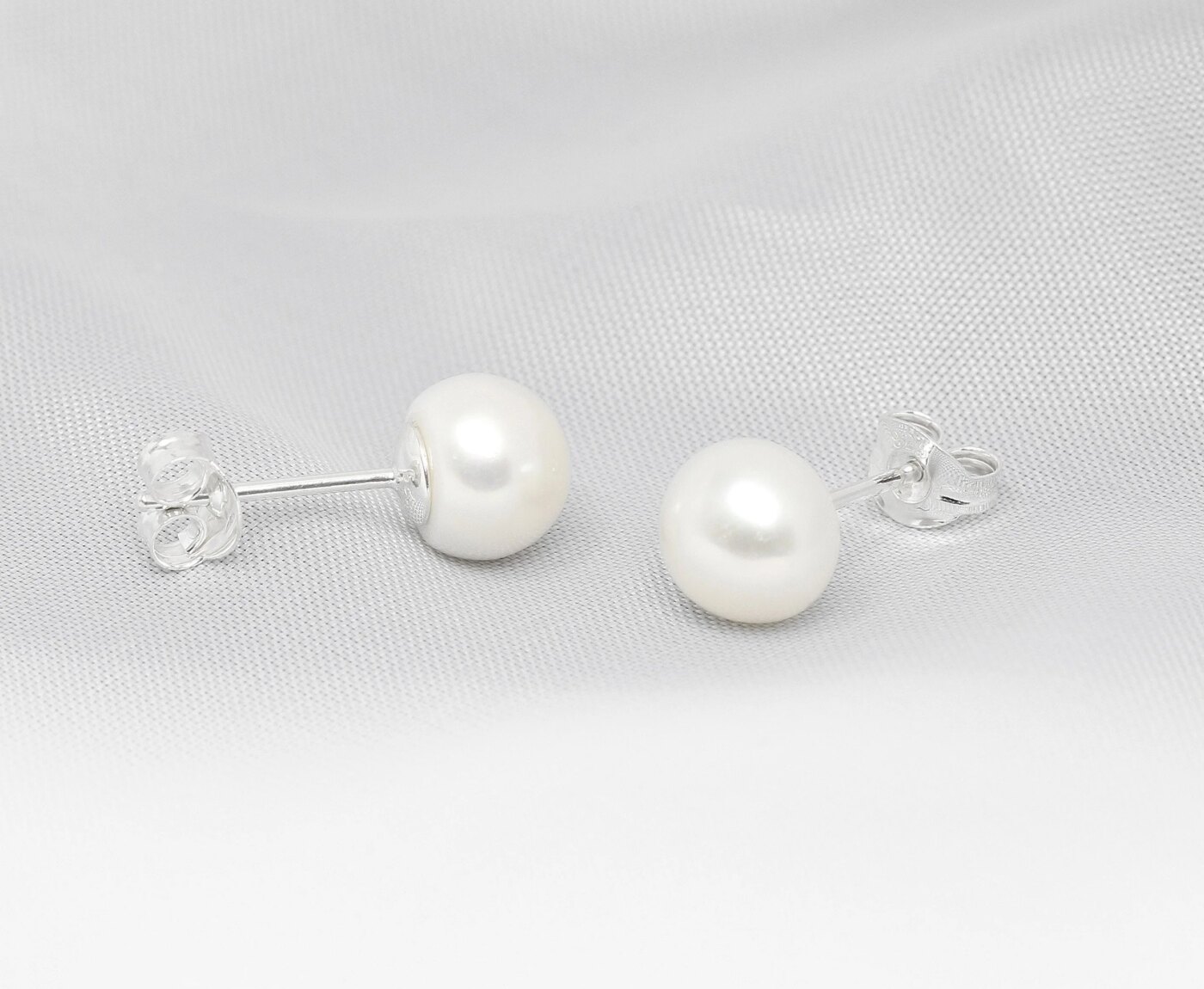
Pearl Studs With Silver Fittings
Saltwater vs Freshwater Pearls
Pearls can broadly be divided into two categories.
Saltwater (Marine) Pearls are grown in oysters living in oceans and seas. These include Akoya, South Sea and Tahitian pearls and tend to have a more metallic lustre.
Freshwater Pearls are grown in mussels that live in rivers and lakes, predominantly in China.
Neither is automatically “better” than the other. Each has its own characteristics, price point and appeal. The temperature and type of the water, the food supply and type of mussel/oyster will all affect the overall sheen and surface of the pearl.
Akoya Pearls – The Classic Choice
Akoya pearls are what most people picture when they imagine a traditional pearl necklace.
Typically cultivated in Japan and China, Akoya pearls are renowned for their beautifully round shape, crisp white appearance and exceptional mirror-like lustre.
They are usually:
- 5–9mm in size
- White or cream with subtle rose or silver overtones
- Highly spherical
- Bright and reflective
Akoya pearls are synonymous with classic elegance and have been worn for generations. Their refined appearance makes them ideal for weddings, anniversaries and formal occasions, although a simple strand looks equally stylish paired with a crisp white shirt or cashmere jumper.
South Sea Pearls – The Queen of Pearls
If Akoya pearls represent classic elegance, South Sea pearls are pure luxury.
Produced in the warm waters surrounding Australia, Indonesia and the Philippines, these pearls come from one of the world’s largest pearl oysters, allowing them to grow significantly larger than most other varieties.
South Sea pearls are prized for:
- Sizes between 9–18mm
- Thick nacre
- Beautiful satin-like lustre
- White, silver and rich golden colours
Golden South Sea pearls are particularly sought after and are among the most valuable cultured pearls available today.
Their larger size means they make an impressive statement whether worn as earrings, pendants or elegant single-strand necklaces.
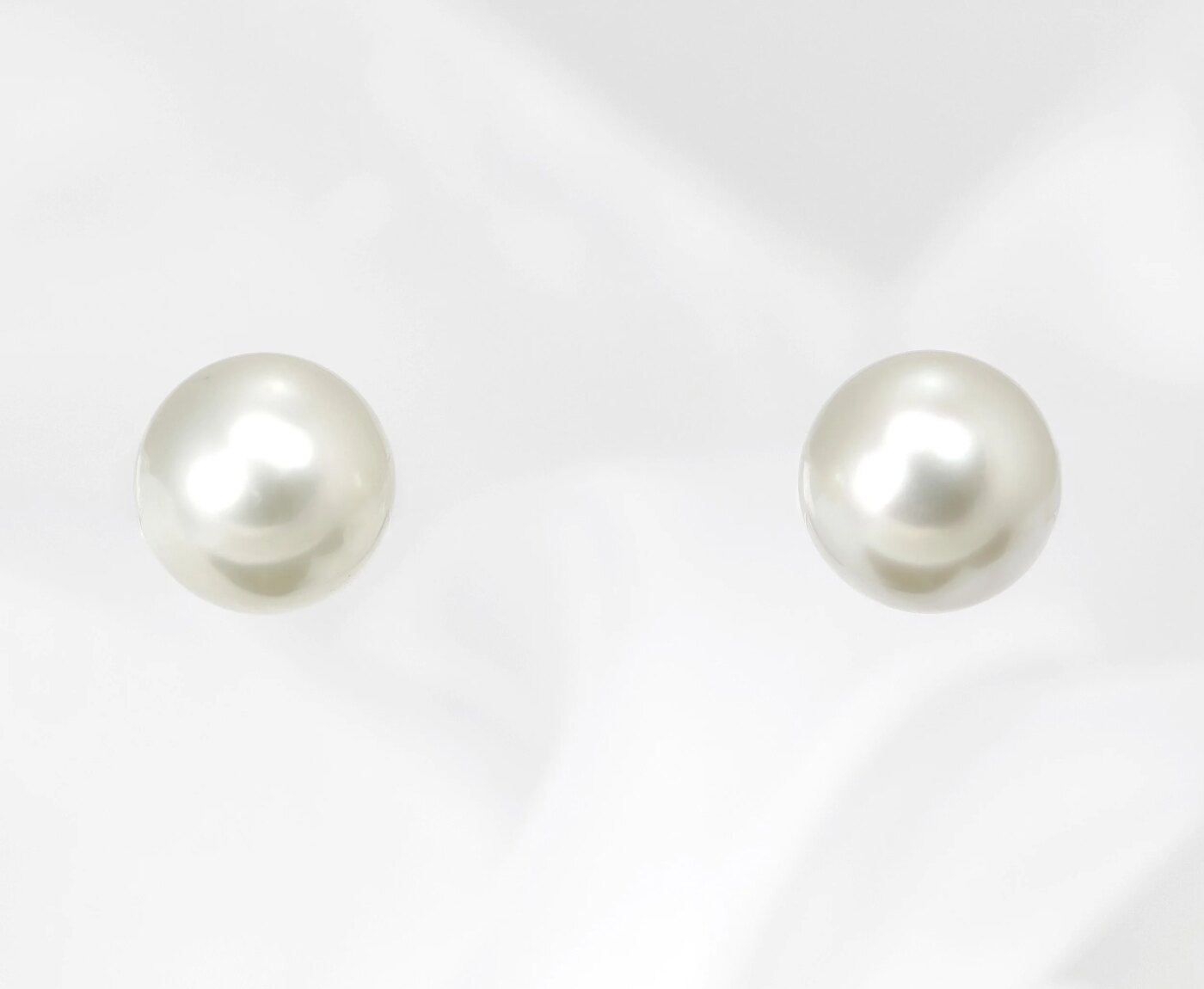
South Sea Pearl Stud Earrings
Tahitian Pearls – Naturally Dramatic
Despite often being called “black pearls”, Tahitian pearls actually display an extraordinary range of colours.
Cultivated primarily in French Polynesia, these pearls develop naturally dark body colours thanks to the black-lipped oyster from which they grow.
Their shades include:
- Charcoal grey
- Peacock green
- Deep blue
- Aubergine
- Bronze
- Silver
- Pistachio green
Tahitian pearls typically measure between 8–16mm and are loved for their exotic, contemporary appearance.
Their darker colours pair beautifully with white gold and platinum, creating striking modern jewellery that’s equally at home with evening wear or smart everyday outfits.
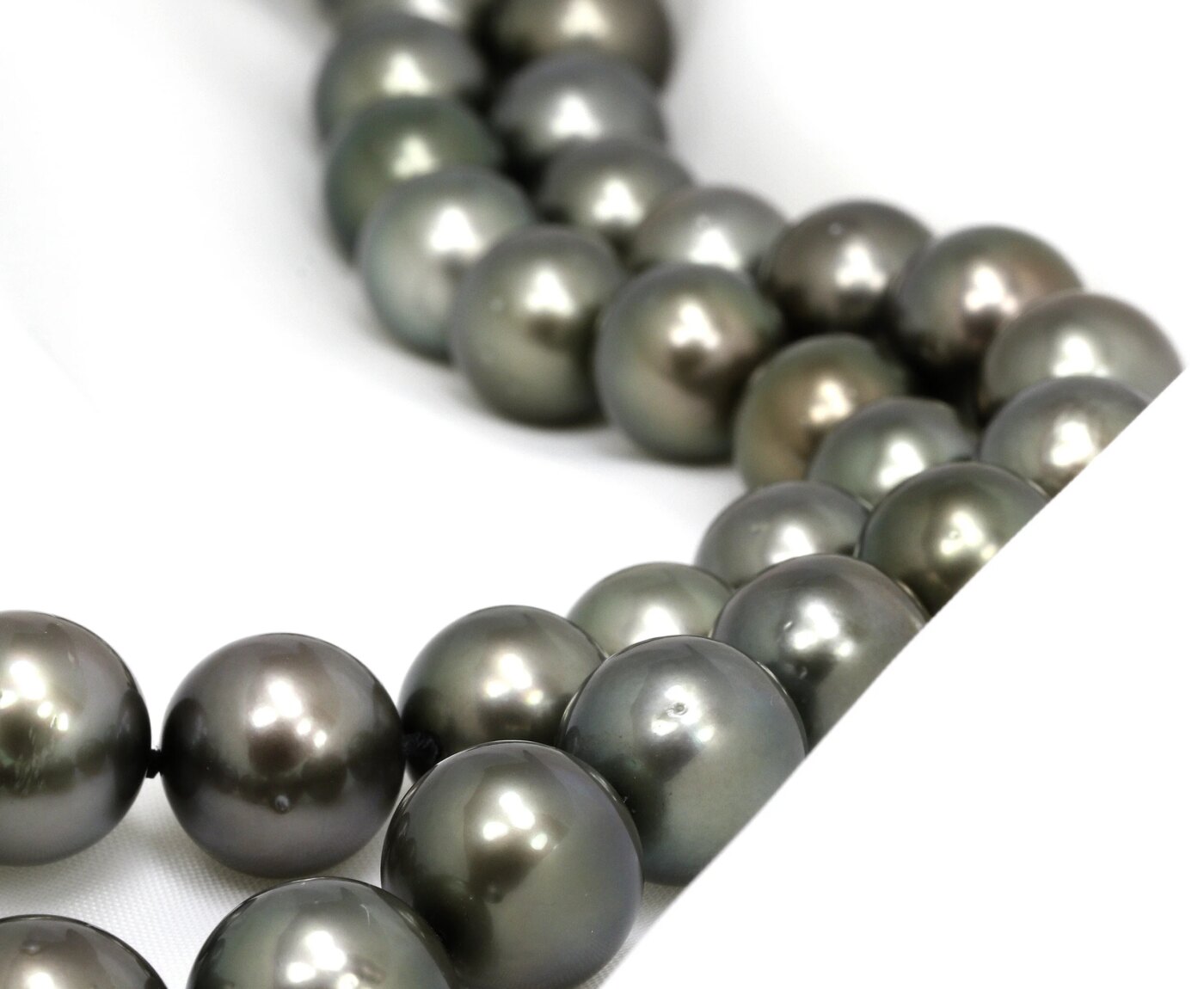
Tahitian Pearl Necklace
Freshwater Pearls – Versatile and Beautiful
Freshwater pearls have become increasingly popular over the last few decades thanks to improvements in cultivation techniques.
Modern freshwater pearls now rival many saltwater pearls in both lustre and quality while offering exceptional value.
They are available in an enormous variety of:
- Sizes
- Shapes
- Natural colours
- Price points
While white remains the most popular choice, freshwater pearls can also be found in soft peach, lavender, pink and cream tones.
Because they are produced in greater numbers, freshwater pearls offer fantastic flexibility for jewellery designers, allowing everything from delicate everyday earrings to bold contemporary statement necklaces.
Pearl Shapes: More Than Just Round
While many people picture perfectly round pearls, nature is wonderfully unpredictable. Pearls are available in a wide variety of shapes, each with its own character and appeal. These shapes can be found across different pearl types, although some are more common in freshwater pearls than others.
Round Pearls
Perfectly round pearls are the rarest and traditionally the most valuable. Their symmetrical shape makes them ideal for classic necklaces, elegant earrings and timeless jewellery designs.
Button Pearls
Button pearls are slightly flattened on one side, resembling a button. Their shape makes them particularly popular for earrings and rings, where they sit comfortably against the skin while still offering the beautiful lustre pearls are known for.
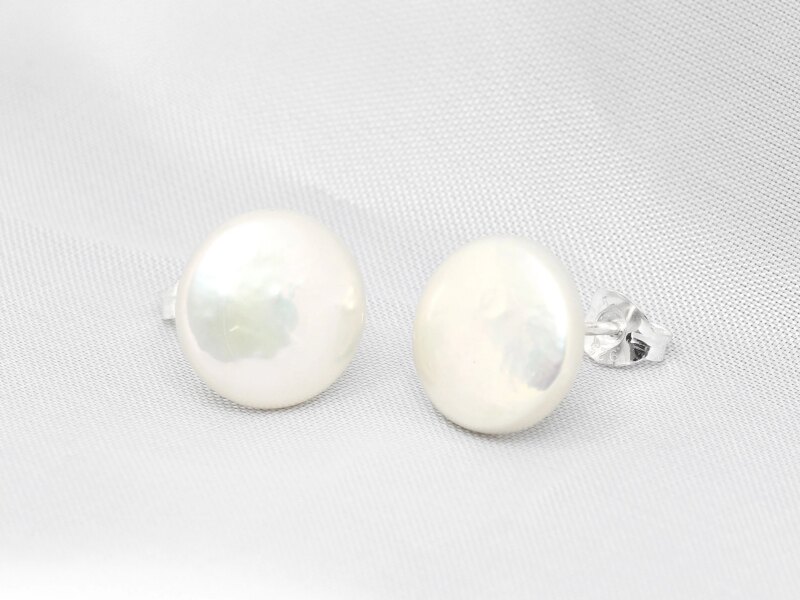
Cultured River Button Pearl Stud Earrings
Baroque Pearls
Baroque pearls celebrate individuality. Rather than being perfectly symmetrical, each pearl has its own unique organic shape, with flowing curves and sculptural forms.
No two baroque pearls are ever identical, making them a favourite for contemporary jewellery designers. Their artistic appearance works beautifully in modern necklaces, pendants and statement earrings, bringing personality and movement to every piece.
Keshi Pearls
Keshi pearls are among the most fascinating pearls available. They form as a by-product during the culturing process when an oyster rejects the nucleus but continues producing nacre.
Because they are composed almost entirely of solid nacre with no central bead, Keshi pearls often display exceptional lustre. Their irregular organic shapes and shimmering surfaces make them highly prized by jewellery lovers looking for something distinctive.
Rice Pearls
Rice pearls are small, elongated pearls that resemble grains of rice. They are often used in delicate necklaces, bracelets and multi-strand designs where their graceful shape creates lovely movement and texture.
Seed Pearls
Seed pearls are tiny natural or cultured pearls, typically measuring less than 2mm in diameter. They became especially popular during the Victorian and Edwardian eras, where they were intricately set into brooches, lockets, mourning jewellery and decorative borders.
Today, seed pearls continue to add delicate detail to both vintage-inspired and contemporary jewellery.
Whether perfectly round or delightfully irregular, every pearl shape has its own beauty. Choosing between them is simply a matter of personal style—whether you prefer timeless symmetry or embrace the individuality that nature creates.
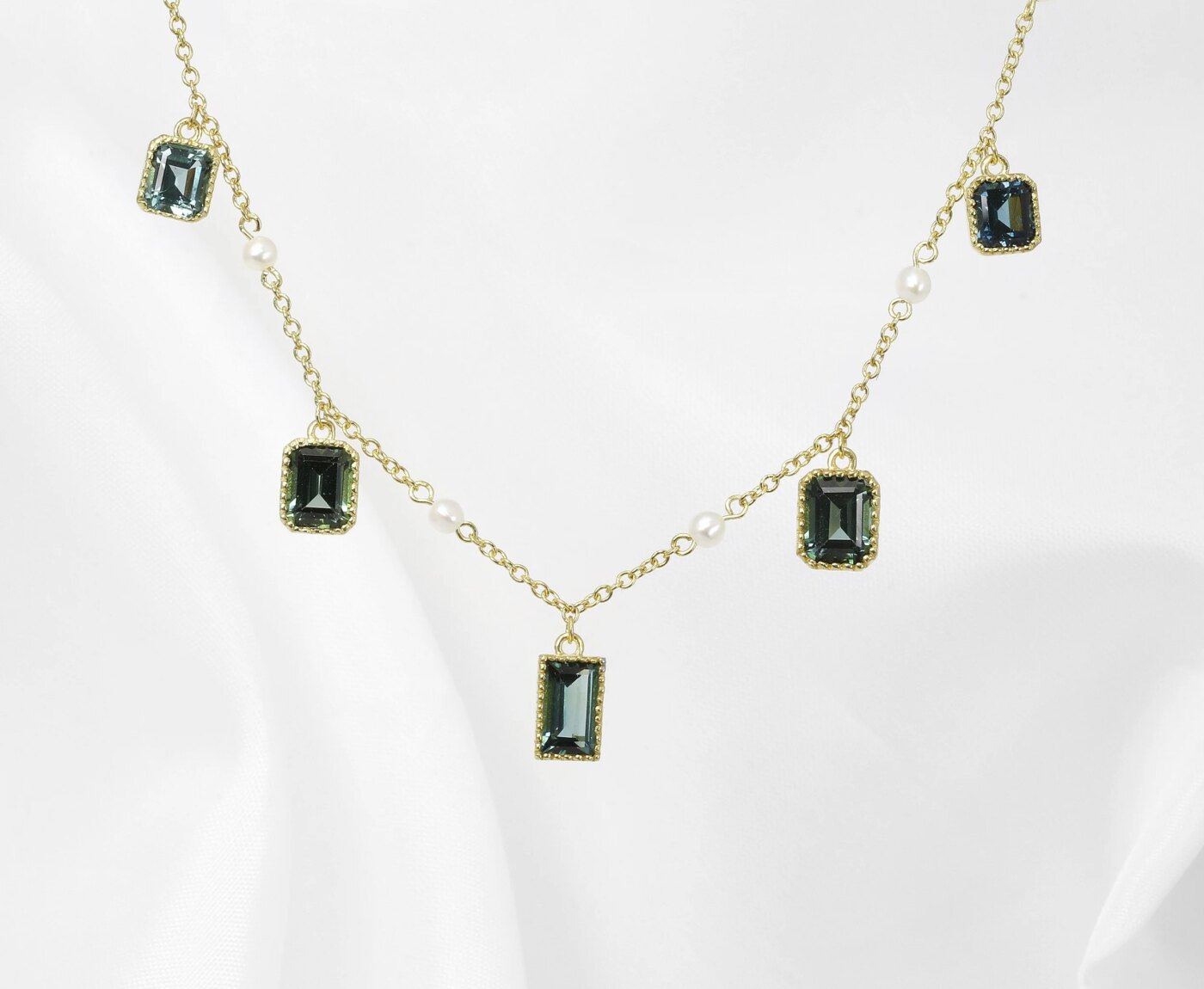
Tourmaline Multi-Drop Necklace with Seed Pearls in Yellow Gold
Are Pearls Treated?
Like many gemstones, some pearls are enhanced after they have been harvested to improve or alter their appearance. These treatments are widely accepted within the jewellery industry, provided they are properly disclosed.
Dyeing
One of the most common pearl treatments is dyeing. Freshwater pearls, in particular, are often dyed to create a wider range of colours, from deep black and peacock green to vibrant pinks, blues and even gold tones.
High-quality dyeing can produce beautiful, consistent colours that remain stable for many years. However, naturally coloured pearls—such as the dark shades of Tahitian pearls or the golden hues of South Sea pearls—are generally considered more desirable and command higher prices due to their rarity.
Irradiation
Some pearls, particularly freshwater pearls, may also undergo irradiation. This treatment alters the colour of the pearl, often producing attractive grey, silver or darker metallic tones. The process is completely safe, and the pearls are not radioactive after treatment.
Bleaching and Lustre Enhancement
Many white cultured pearls, especially Akoya pearls, are gently bleached after harvesting to create the bright, even white appearance that has become synonymous with classic pearl jewellery. Some pearls may also receive a mild polishing treatment to enhance their natural lustre.
Is Treatment a Bad Thing?
Not at all. Treatments such as bleaching and dyeing are common within the pearl industry and help create the wide variety of colours and styles available today.
What matters most is transparency. Reputable jewellers will always be open about whether a pearl has been treated, allowing you to make an informed choice. Naturally coloured pearls and untreated examples are generally rarer and often command higher prices, but beautifully treated pearls can still offer exceptional quality, durability and value.
As with any fine gemstone, buying from a trusted jeweller gives you confidence that you’re receiving honest advice and accurate information about your jewellery.
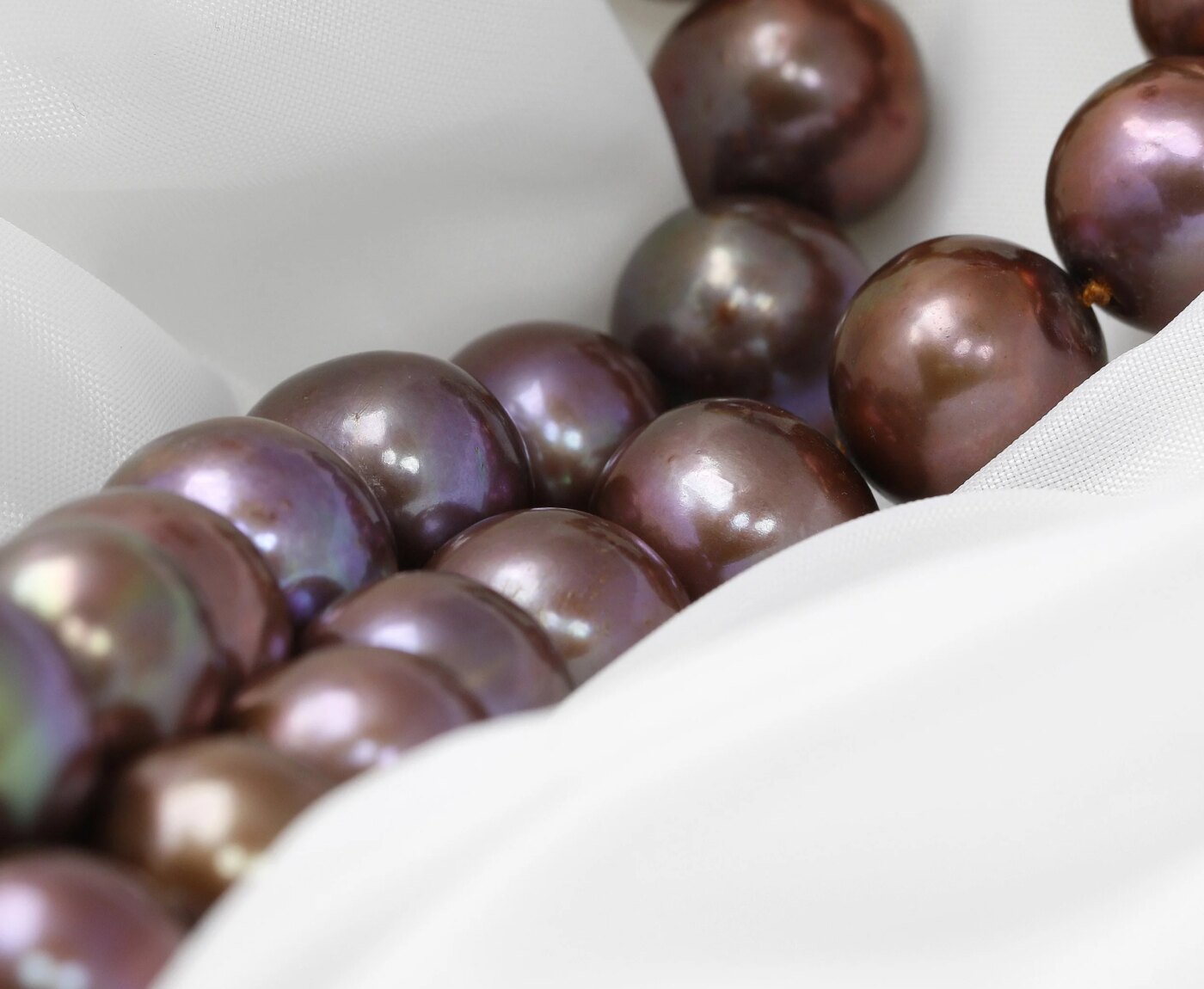
Cultured Dyed Pearl Necklace – Copper Colour
Choosing the Right Pearl for Your Style
One of the wonderful things about pearls is their versatility.
Classic Akoya pearls remain a wardrobe staple that never goes out of fashion and effortlessly complements business wear, bridal jewellery and elegant evening outfits.
South Sea pearls suit those who love understated luxury. A single South Sea pearl pendant or pair of earrings creates a sophisticated look that speaks for itself.
If you enjoy contemporary jewellery with a little personality, Tahitian pearls offer striking colours that pair beautifully with monochrome clothing, darker tones and modern designs.
Freshwater pearls are perhaps the easiest to wear every day. Layer delicate pearl necklaces with gold chains, mix pearl studs with diamond earrings or choose organic baroque pearls for a relaxed, modern look.
Today, pearls are no longer reserved for formal occasions. Designers increasingly combine them with yellow gold, textured finishes, colourful gemstones and contemporary settings to create jewellery that feels fresh, stylish and individual.
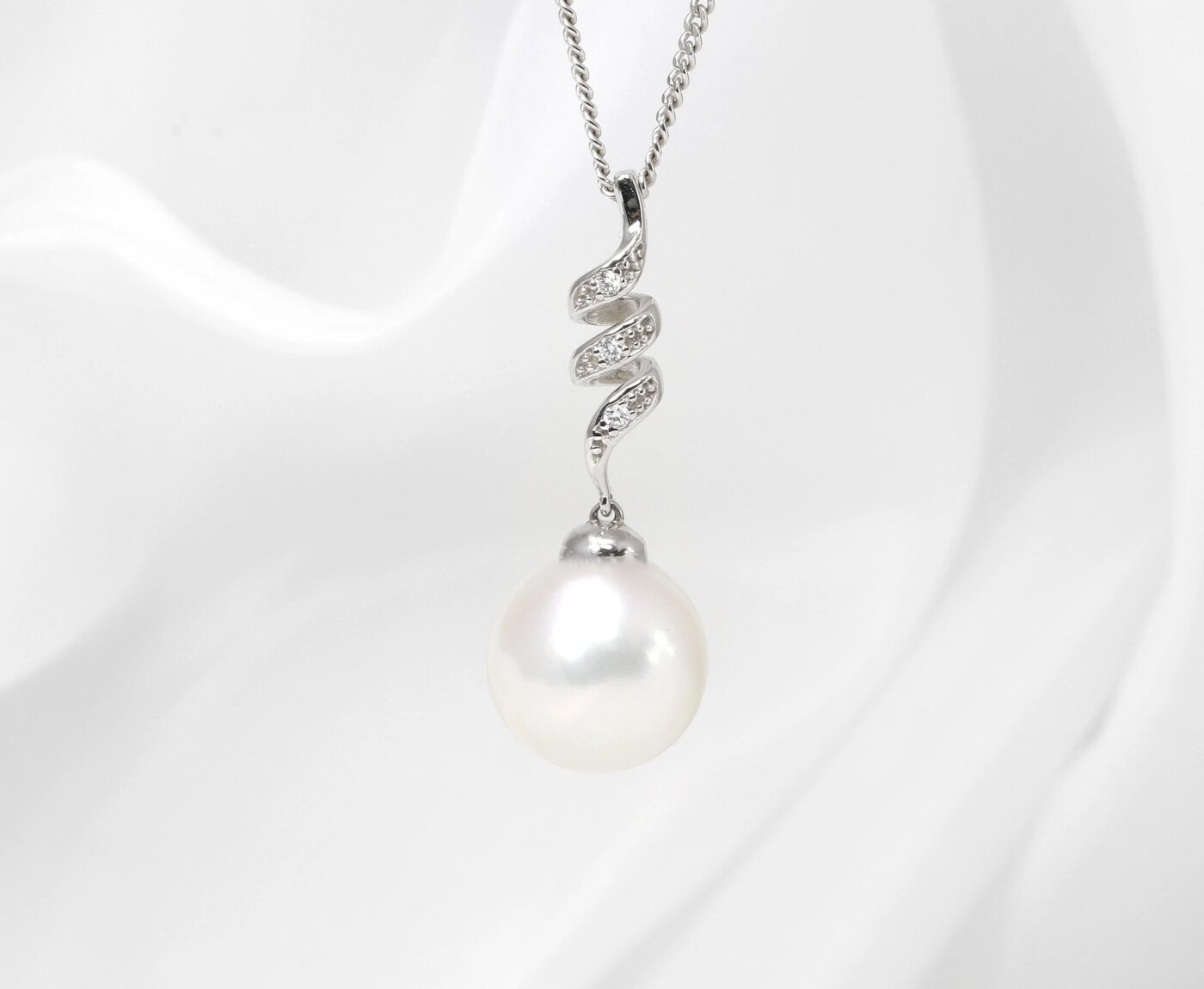
Freshwater Cultured Pearl and Diamond Pendant in 18ct White Gold
A Few Tips for Looking After Pearls
Because pearls are organic gemstones, they benefit from a little extra care.
Avoid exposing them to perfumes, hairspray or household chemicals, and store them separately from harder gemstones to help prevent scratches.
After wearing pearl jewellery, simply wipe it gently with a soft cloth before putting it away. Despite being created within shells in water, these gems should not be submerged or exposed to long periods in water.
If you’d like more detailed advice, we’ve put together a dedicated Pearl Care Guide, which covers cleaning, storage and professional maintenance to help your pearls stay beautiful for generations.
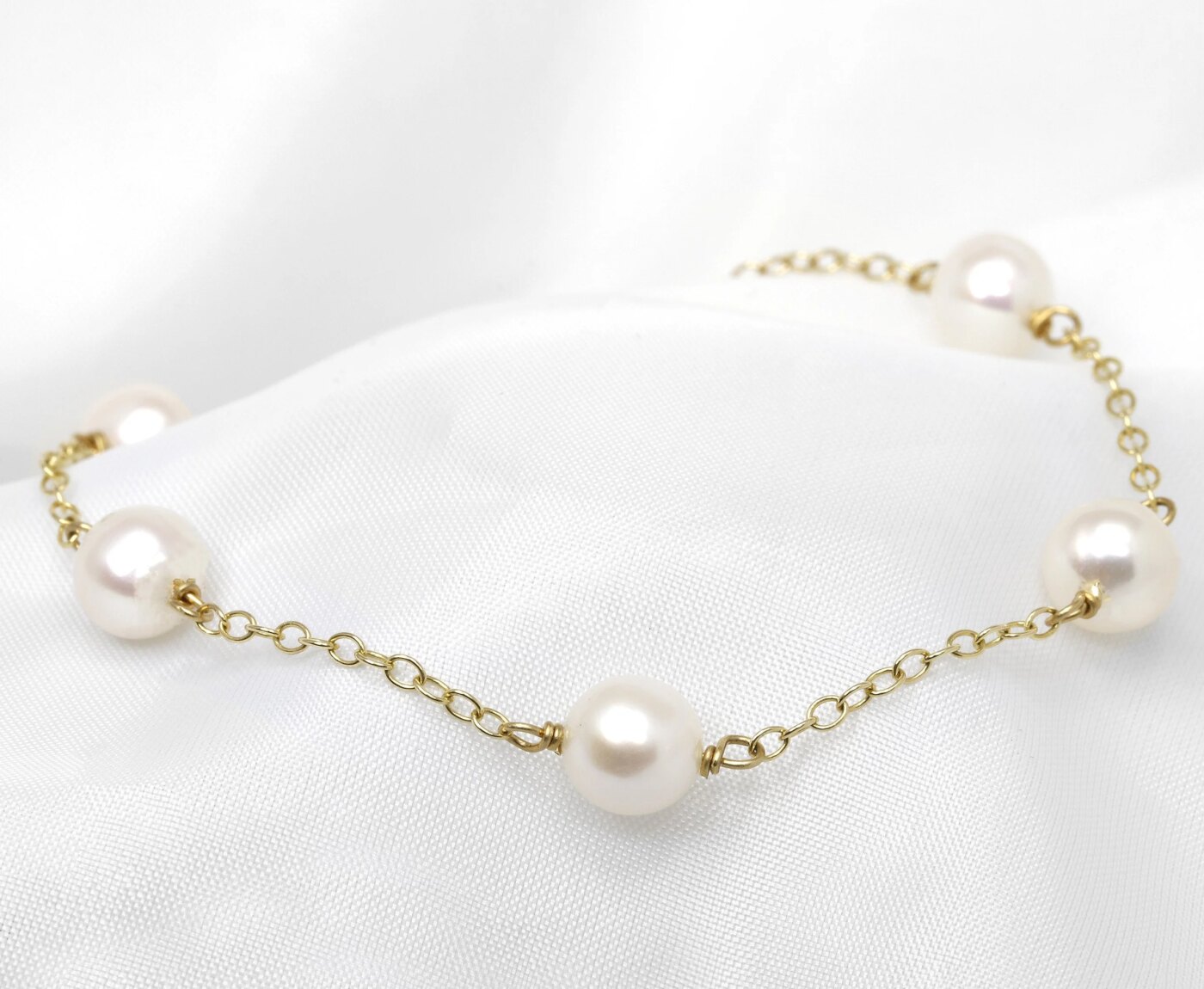
Pearl Station Bracelet in 9ct Yellow Gold
Timeless Beauty That Never Goes Out of Style
Few gemstones have enjoyed such enduring popularity as pearls. Their natural beauty, gentle lustre and remarkable formation make them unlike anything else in the jewellery world.
Whether you fall in love with the classic brilliance of Akoya pearls, the luxurious scale of South Sea pearls, the captivating colours of Tahitian pearls or the versatility of freshwater pearls, each offers its own unique personality.
Choosing pearls is ultimately about finding the style that reflects you. Their timeless elegance means they’ll remain just as beautiful decades from now as they are today, making them jewellery to treasure, wear and eventually pass on to future generations.
Pop in to our showroom to view our pearl collection or schedule a free consultation to design your own pearl jewellery.
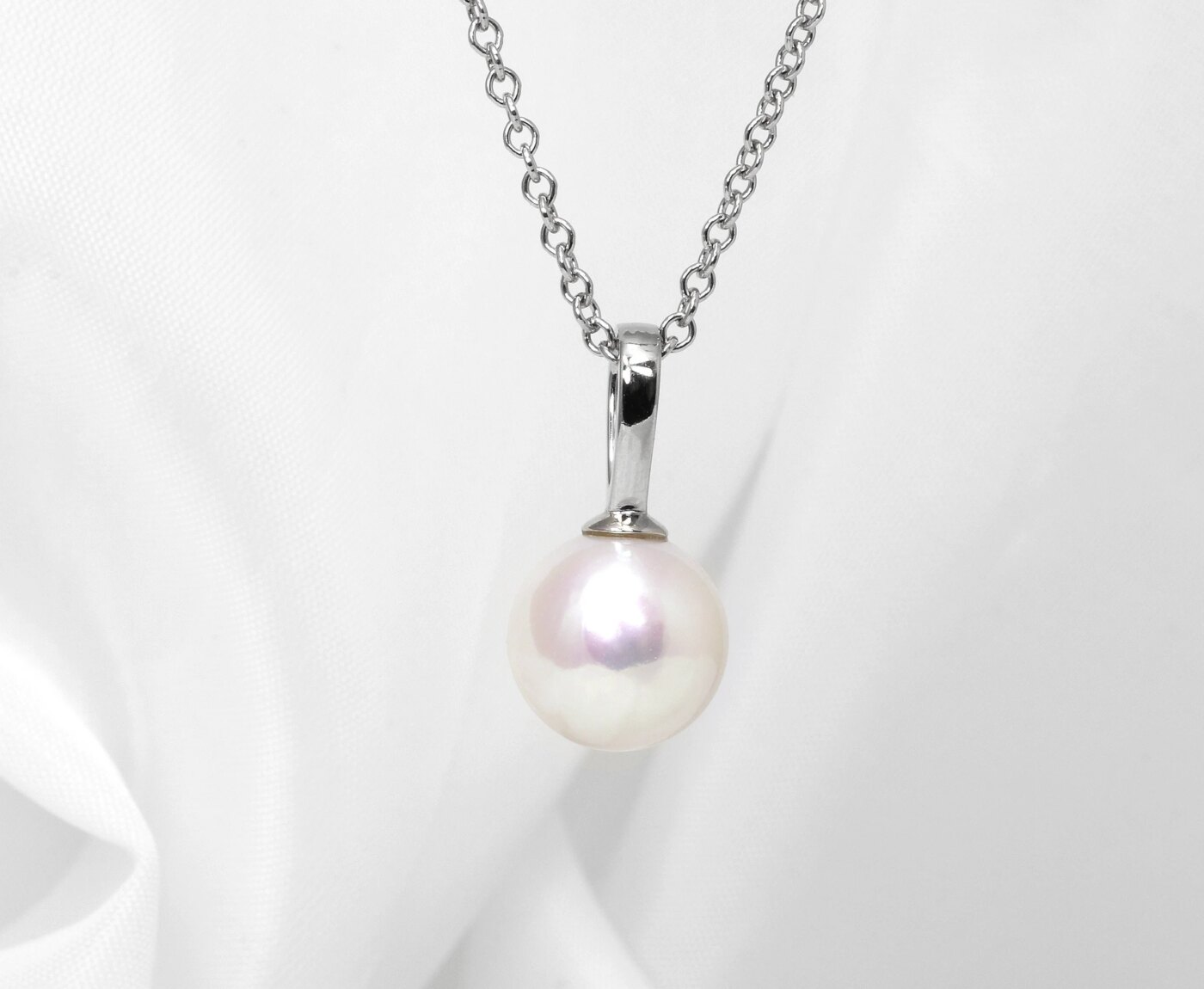
Cultured Freshwater Pearl Pendant in 9ct White Gold
Related Posts