All About Zircon: The Natural Gemstone That Isn’t Cubic Zirconia
When you hear the word zircon, you could be forgiven for thinking of cubic zirconia. The names are similar, but the two gemstones are actually very different.
Zircon is a natural gemstone, formed by geological processes over millions — and sometimes billions — of years. It is prized for its remarkable brilliance, beautiful range of natural colours and flashes of spectral colour that can rival a diamond.
And there is another reason zircon is particularly fascinating: some zircon crystals are among the oldest pieces of material ever found on Earth and have been found inside other gemstones as inclusions.
So, what exactly is zircon, and why should this beautiful gemstone have a place in fine jewellery?
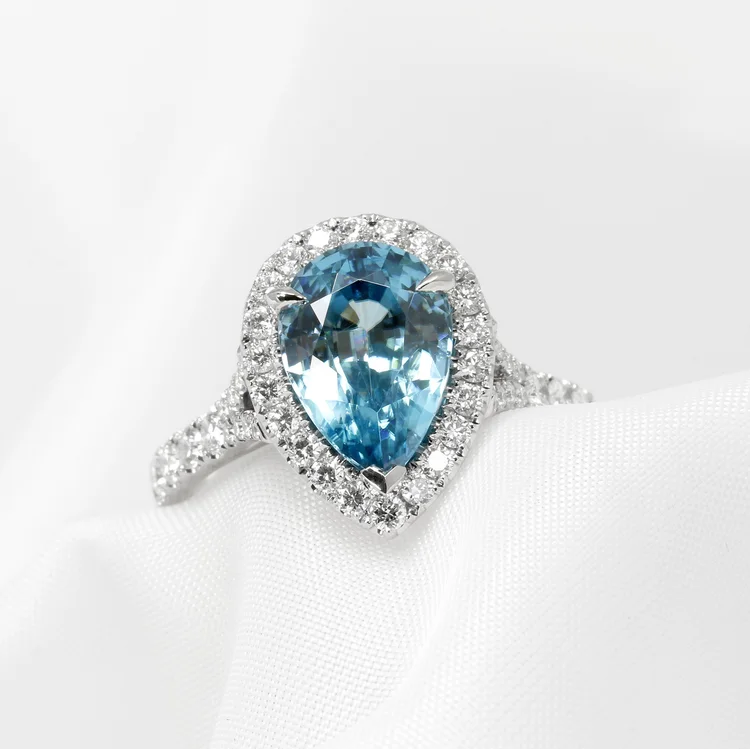
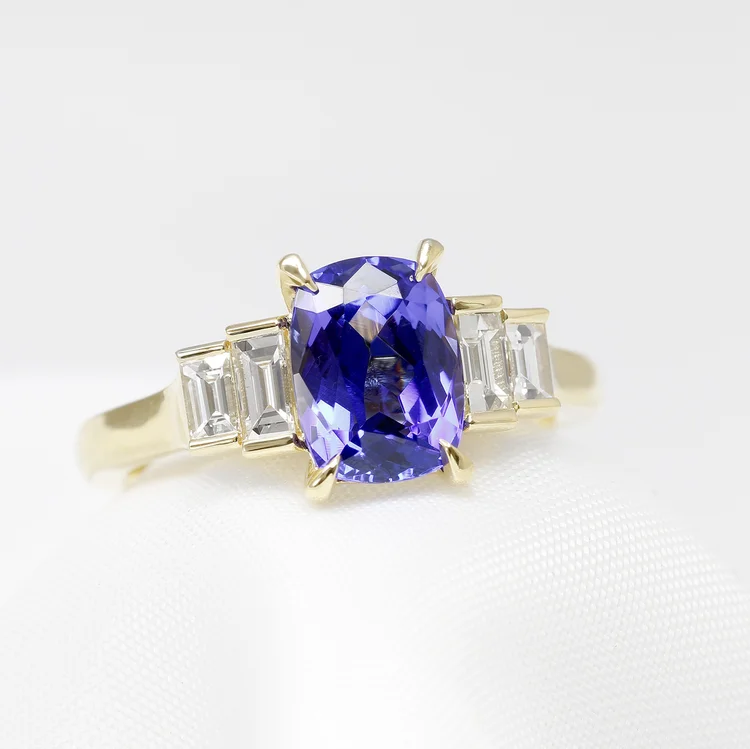
Zircon and Diamonds in Platinum
What is zircon?
Zircon is a naturally occurring mineral composed primarily of zirconium silicate (ZrSiO₄). It belongs to a group of minerals known for their durability and interesting optical properties, and has been admired as a gemstone for centuries.
One of zircon’s most appealing characteristics is its brilliance. It has a high refractive index, meaning that light entering the stone is bent at a smaller more drastic angle then reflected back towards the eye. It also has relatively high dispersion — the ability to separate white light into its spectral colours. This means it has a lot of sparkle and those mirror like flashes when light hits it!
Zircon is also doubly refractive, which means that light travelling through the crystal can be split into two rays. Together, these optical properties give well-cut zircon a lively and sometimes wonderfully fiery appearance. When you look into a zircon stone with a loupe the facet edges will look blurred and doubled due to this double refraction.
It is an easy gemstone to admire once you know what you are looking at.
Where does zircon come from?
Zircon forms naturally in igneous rocks as magma cools and crystallises, although it can also occur in metamorphic rocks. It is remarkably resistant to weathering, which means that when the surrounding rock eventually breaks down, zircon crystals can survive.
These crystals can then become concentrated in riverbeds, gravel and other alluvial deposits. Much gem-quality zircon is recovered from these secondary deposits.
Important sources include Cambodia, Sri Lanka, Myanmar, Vietnam, Australia, Tanzania, Madagascar and Mozambique. Cambodia is particularly well known for its blue zircon, while Sri Lanka produces zircon in an impressive variety of colours, including yellow, orange, brown, red and green.
Australia is also scientifically significant. Some of the oldest known zircon crystals on Earth have been discovered there.
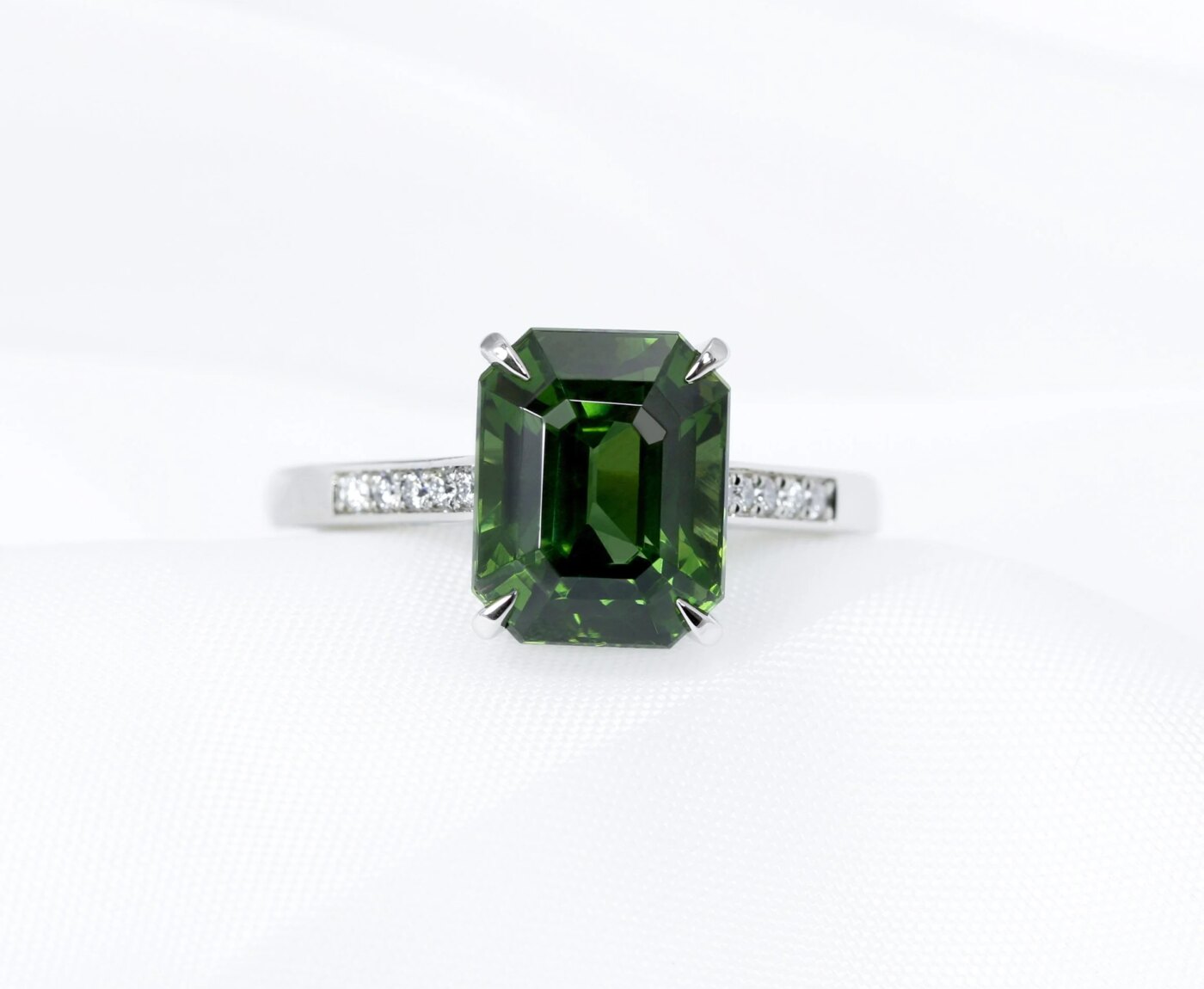
Green Zircon & Diamond Ring in Platinum
A rainbow of colours
One of the joys of zircon is its colour range. Unlike some gemstones that are strongly associated with one particular colour, zircon can be found in an extraordinary palette.
Natural colours include:
- Colourless
- Blue
- Green
- Yellow and golden
- Champagne
- Orange
- Pink and red
- Reddish-brown
- Brown
- Grey
The colour of a zircon is influenced by trace elements and changes within its crystal structure.
Blue zircon
Blue is probably the colour most people associate with zircon today. It is popular in jewellery because of its bright, vibrant appearance and impressive flashes of colour.
However, there is an important detail worth knowing: much of the blue zircon available in jewellery has been heat treated to produce or enhance its blue colour. Naturally blue zircon does exist, but it is considerably less common. Heat treatment is a permanent and widely accepted gemstone treatment.
Colourless zircon
Colourless zircon is another fascinating variety. Its high refractive index and dispersion can give it a wonderfully bright appearance, and historically it was sometimes used as a diamond imitation so it is common to find these in older vintage and antique pieces of jewellery.
Today, however, zircon deserves to be appreciated in its own right. It is a natural gemstone with its own optical character and geological story, rather than simply being an alternative to diamond.
Zircon is not Cubic Zirconia
This is perhaps the most important thing to remember.
Despite their similar names, zircon and cubic zirconia are completely different materials.
Zircon is a natural gemstone composed of zirconium silicate and formed naturally within the Earth. Zircon has a Mohs hardness of approximately 6.5-7.5 and is doubly refractive.
Cubic zirconia (CZ) is a laboratory-created material composed of zirconium dioxide. It is commonly manufactured as a colourless diamond simulant. Cubic zirconia is harder at around 8–8.5. It is also singularly refractive. It will not have that blurry doubled effect when you look through it.
So, if someone tells you that a piece of jewellery contains ‘zircon’, it is worth checking that they mean the natural gemstone — not cubic zirconia.
The distinction matters.
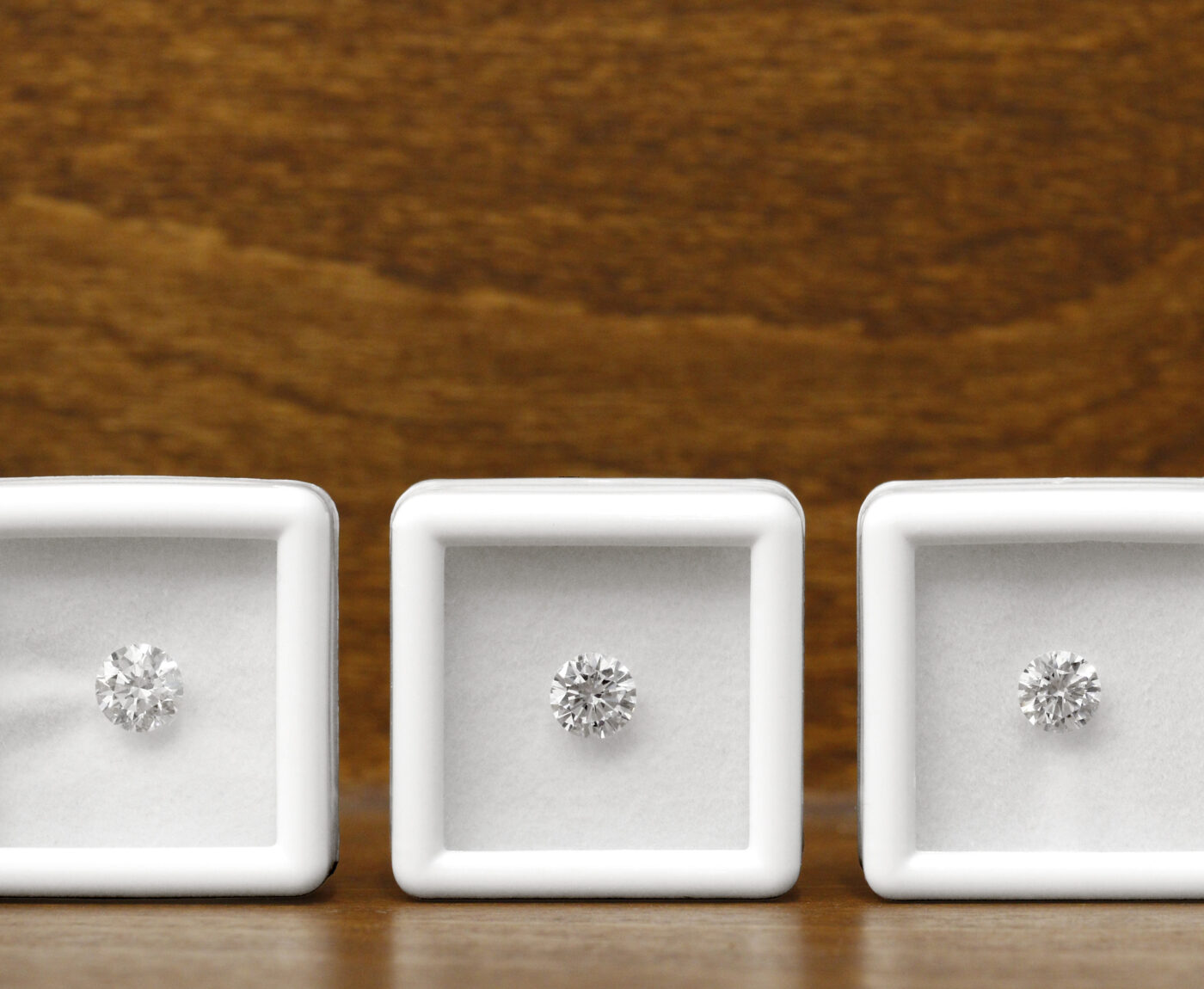
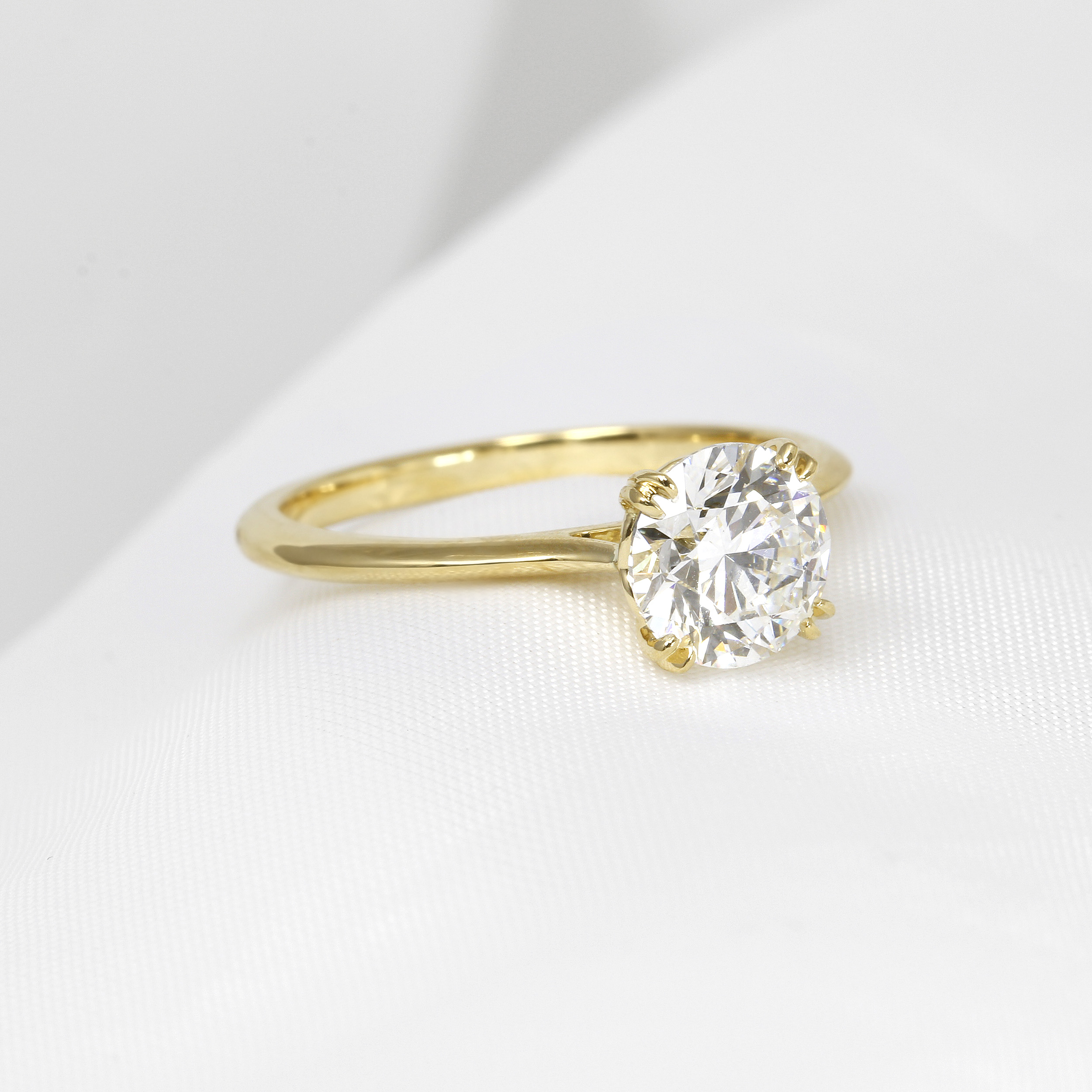
Can you tell the difference between diamond and cubic zirconia? Which one of these three stones is the diamond?
Is zircon suitable for a ring?
Yes, zircon can make a beautiful ring stone, but it is a gemstone that benefits from occasional wear.
With a hardness of around 6.5–7.5, zircon is not as hard as sapphire, ruby or diamond. It can also be relatively brittle, meaning a sharp knock can potentially chip or fracture the stone.
Another characteristic to be aware of is that zircon’s facet edges can become worn with repeated abrasion. Over time, this can give the edges a slightly ‘nibbled’ appearance, particularly on stones that are exposed to a lot of wear.
For this reason, the design of a zircon ring is important. Protective settings can help shield vulnerable edges and corners, while a little common sense about when to wear the ring will help keep it looking its best.
We would recommend removing zircon jewellery for activities such as gardening, sport, heavy manual work or anything where the stone could receive a hard knock. Ideally, zircons look lovely as dress rings, pendant necklaces and earrings.
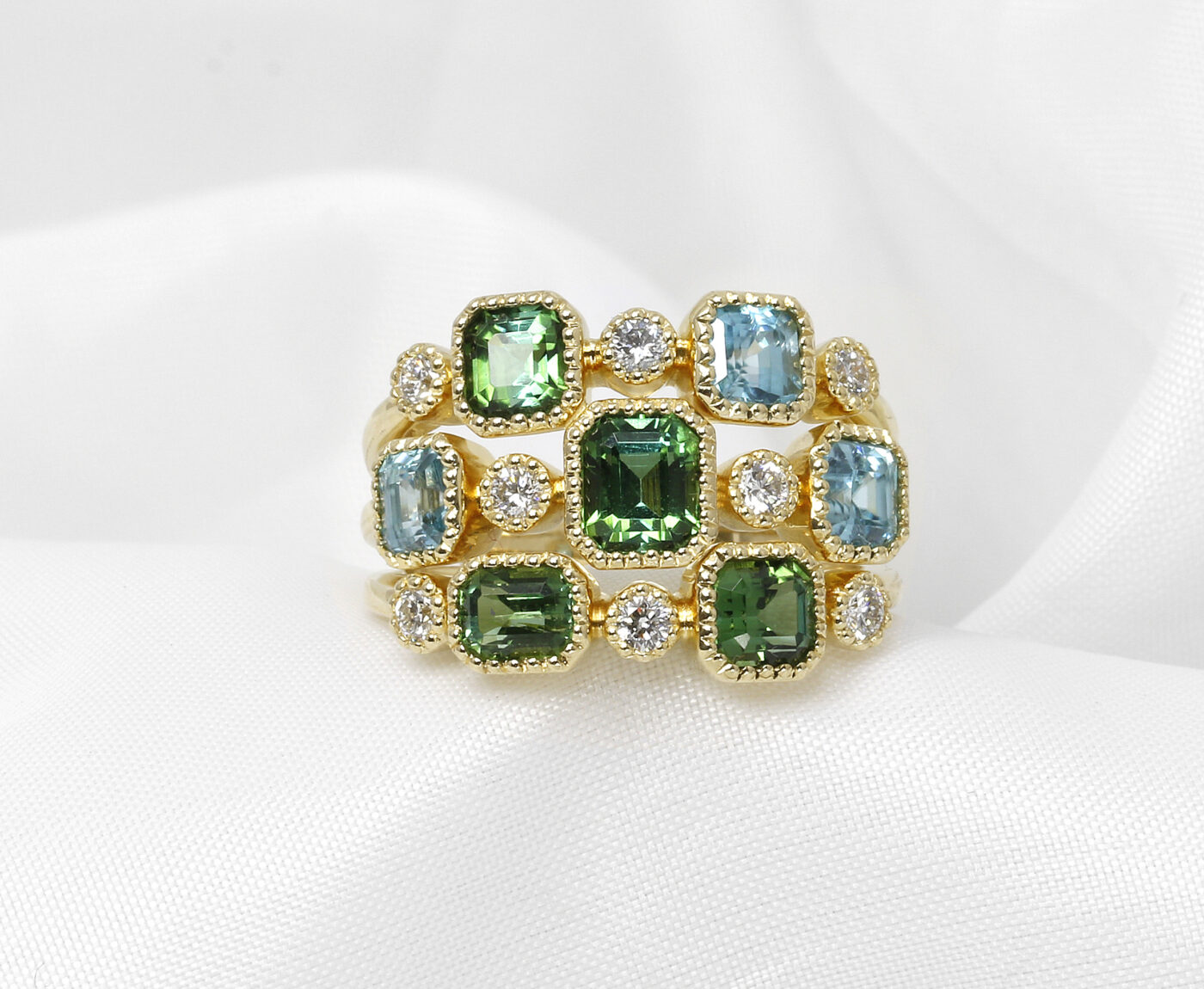
Tourmaline, Zircon and Diamond Multi-band Ring in 9ct Yellow Gold
Caring for zircon jewellery
Caring for zircon jewellery is relatively straightforward. For everyday cleaning, warm water, a small amount of mild washing-up liquid and a soft cloth are usually sufficient. A soft, lint-free cloth can then be used to dry and polish the piece. It is best not to use a brush as this gem is slightly softer.
Avoid abrasive cleaners and harsh chemicals, as well as sudden changes in temperature.
We would also recommend some caution with ultrasonic or steam cleaning. Zircon can be vulnerable to damage from heat or vibration, particularly if the stone contains fractures or inclusions, so professional advice is always sensible before using these methods.
When storing your zircon jewellery, keep it separate from harder gemstones such as diamonds to reduce the risk of scratching.
One of the oldest materials on Earth
Perhaps the most extraordinary thing about zircon is not something you can see at all.
Zircon crystals can preserve an extraordinary record of geological history. During their formation, they can incorporate small quantities of uranium into their crystal structure while largely excluding lead.
Uranium naturally decays into lead at a predictable rate. By measuring the ratio between uranium and lead within a zircon crystal, scientists can use a technique known as uranium-lead (U-Pb) dating to establish its age.
Some zircon crystals have been dated to approximately 4.4 billion years old.
To put that into perspective, the Earth itself is approximately 4.54 billion years old.
That means a tiny zircon crystal in a piece of jewellery can contain within it a history stretching back almost to the very beginning of our planet.
There is something rather special about that.
Zircon in history and gemstone lore
Like many gemstones, zircon has accumulated its own collection of historical beliefs and traditions.
Throughout gemstone lore, zircon has been associated with protection, prosperity and wisdom, as well as safe travelling and peaceful sleep. It has also traditionally been associated with protection from nightmares.
The origin of the word zircon itself is debated, with possible Persian or Arabic roots suggested.
Today, blue zircon is also recognised as one of the traditional birthstones for December, making its vibrant colours particularly appealing to those looking for a December birthstone with a little more individuality.
A gemstone worth discovering
Zircon may not have the instant recognition of diamond, sapphire or ruby, but it is a lovely gemstone in its own right and one we feel deserves a little spotlight on it.
Zircon combines exceptional brilliance with strong dispersion, an impressive range of colours and a geological history that can reach back billions of years. From vivid blue Cambodian zircon to colourful Sri Lankan stones, each has its own character and is affordable, accessible and abundant.
And, importantly, zircon is a natural gemstone in its own right — It is not a factory made cubic zirconia.
For those who enjoy jewellery with a story behind it, zircon has plenty to tell. Its flashes of colour may catch your eye first, but its remarkable journey from ancient geological crystal to beautiful piece of jewellery makes it a gemstone worth looking at a little more closely.
Be inspired by our previous projects and learn more about our bespoke design process. Would you consider a piece of zircon jewellery?
Related Posts