All About Tanzanite: Tiffany’s Gemstone
The Rare Blue Gemstone from Tanzania
Tanzanite: Beautifully blue, richly violet and sometimes displaying flashes of hot pink in its facets and found in only one place on Earth, this relatively young gemstone has already earned a remarkable reputation in the world of fine jewellery.
Unlike diamonds, sapphires and rubies, which have been admired for centuries, Tanzanite has a very short history. It was only discovered in 1967, yet within a remarkably short period it has become one of the most desirable coloured gemstones in the world.
Part of its appeal lies in its colour, but there is much more to Tanzanite than meets the eye. Its extraordinary rarity, fascinating optical properties and very particular care requirements make it a gemstone worth getting to know.
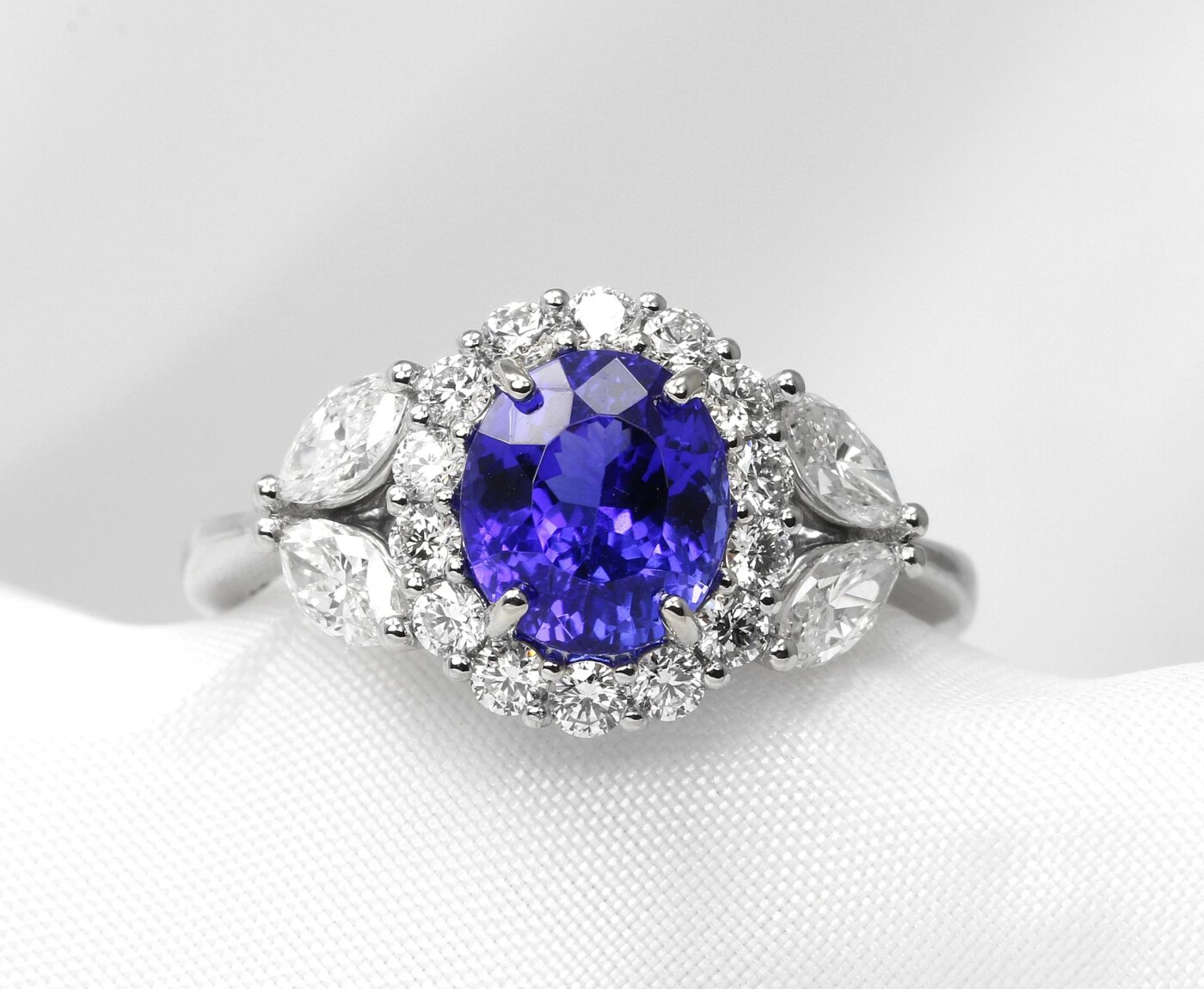
Tanzanite and Diamond Cluster Ring in Platinum
Browse our Tanzanite Jewellery
What’s in a Name? From Blue Zoisite to Tanzanite
Tanzanite belongs to the mineral family zoisite and, when it was first discovered, was simply referred to as blue zoisite. It was not long, however, before the gemstone attracted the attention of the jewellery world.
Tiffany & Co. was one of the first major jewellery houses to recognise its potential. The company saw an opportunity to introduce this unusual blue gemstone to a much wider audience and began an extensive marketing campaign.
The name “Tanzanite” was chosen in reference to its country of origin, Tanzania. It was considerably more memorable — and, perhaps, more glamorous — than “blue zoisite”.
Tiffany described Tanzanite as one of the most beautiful gemstones to have been discovered in generations, and its promotion helped establish the stone internationally. It is a wonderful example of how a gemstone’s story, rarity and presentation can all contribute to its place within the jewellery world especially when backed by a famous jewellery house.
Today, Tanzanite is recognised and treasured in its own right as a precious gemstone.
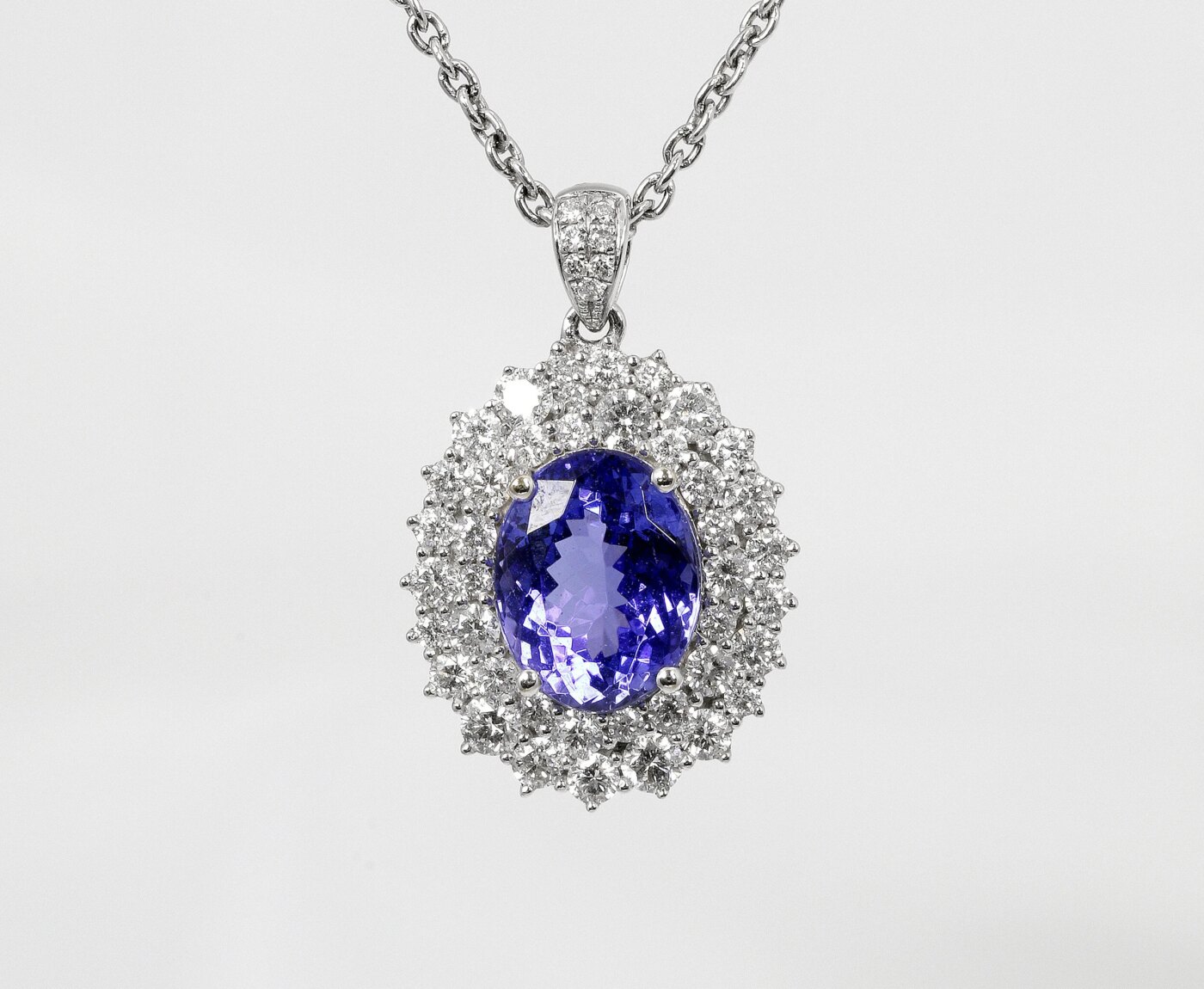
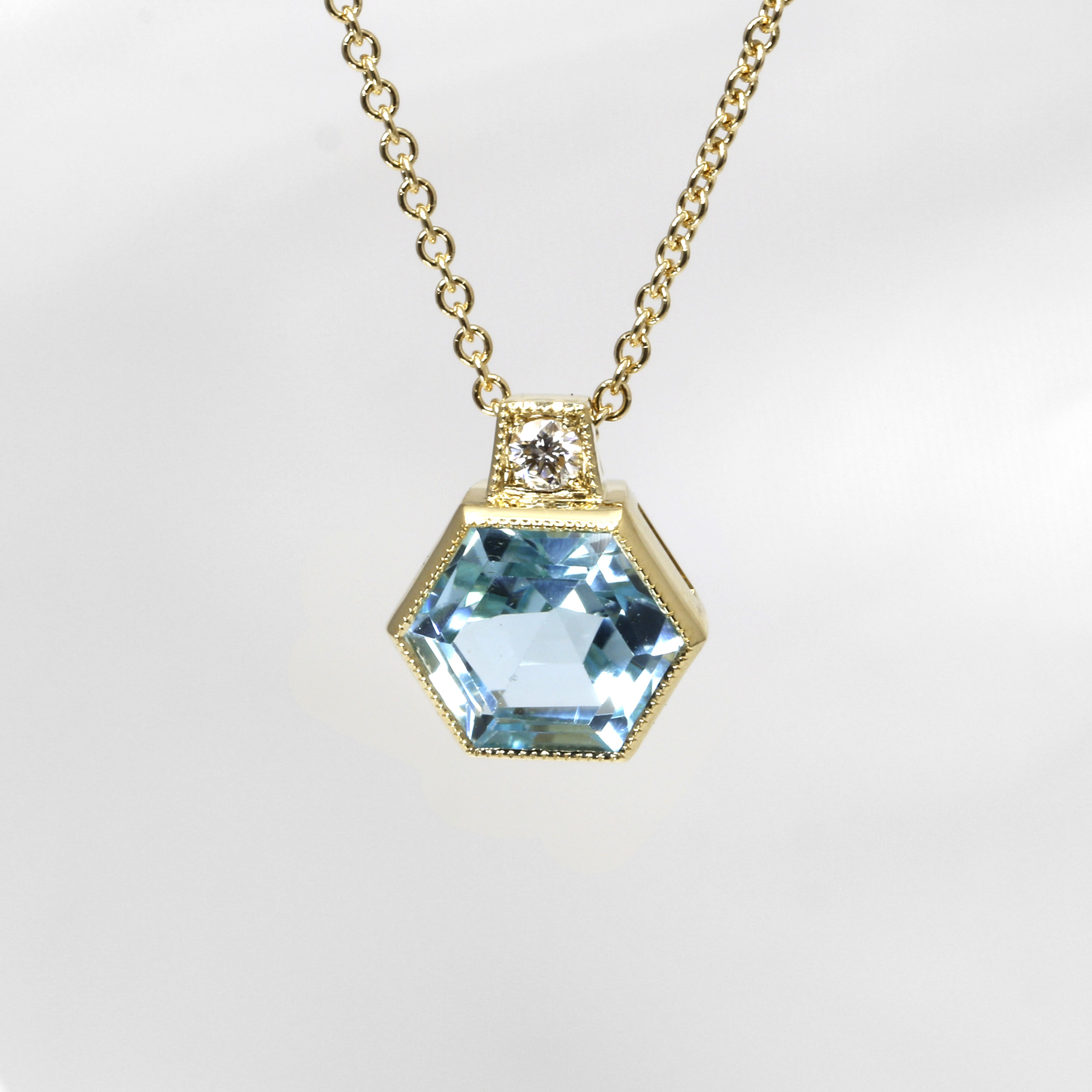
Tanzanite & Diamond Pendant
One Place on Earth
Perhaps the most remarkable thing about Tanzanite is where it comes from.
It is found exclusively in Tanzania, in a small mining area known as the Merelani Hills in northern Tanzania, close to Mount Kilimanjaro. The mining area is exceptionally small — roughly 7 kilometres long and just 2 kilometres wide.
This makes Tanzanite very different from many of the world’s other important gemstones. While sapphires, rubies and diamonds can be found across several countries and continents, gem-quality Tanzanite has only one known commercial source to date.
Mining in the Merelani Hills has traditionally been carried out on a relatively small artisanal scale, with many miners working using basic equipment and techniques. The geological conditions and remote location make extraction challenging, and the Tanzanite-bearing material occurs in very particular formations.
Underground, the gemstone can be found in sausage-shaped geological structures known as boudins. These are essentially pegmatitic veins that have fractured under geological stresses, creating smaller sections or pockets. Tanzanite crystals can form within these pockets as elongated, prismatic crystals with distinctive striations.
And there is no guarantee that a boudin will contain good-quality Tanzanite. Many contain little or no gem-quality material at all which is why finding a beautiful, clean, richly coloured Tanzanite is such a special occurrence. Interestingly, the bright green Tsavorite garnet gemstone is commonly found on the same East African geological belt. Both gemstones are hosted in the same ancient metamorphic rock formation running through Kenya and northern Tanzania and can be found near each other.
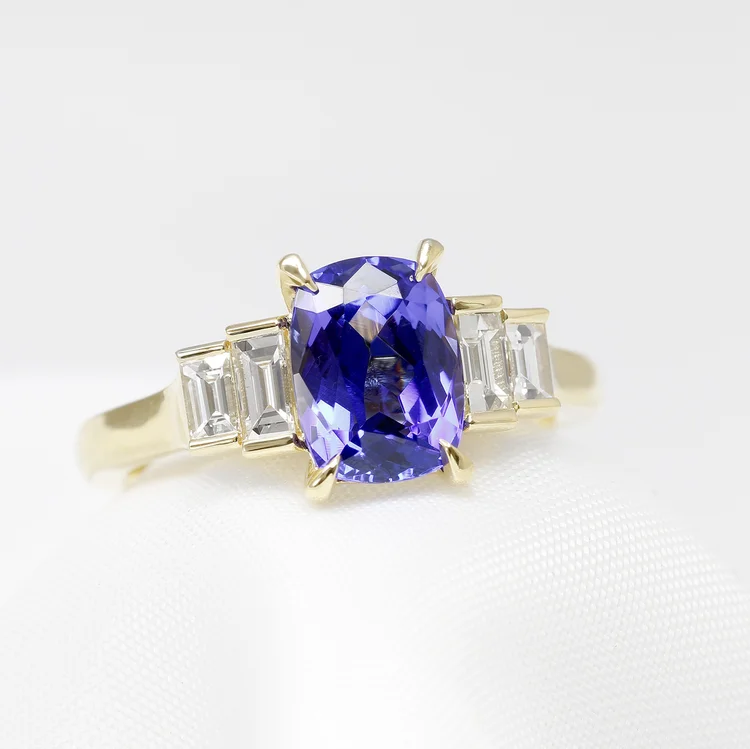
Bespoke Commission September 2022 – Tanzanite and Diamonds in Yellow Gold
A Gemstone with a Very Unusual Colour
Tanzanite’s most recognisable characteristic is undoubtedly its colour.
It can range from grey-blue, bright blue through violet to intensely saturated blue-violet, with the finest stones often displaying a captivating combination of both blue and purple.
Its colour comes partly from trace amounts of vanadium within the crystal structure, but the story becomes even more interesting when Tanzanite is viewed from different directions.
Tanzanite is strongly pleochroic, meaning that it can display different colours depending on the direction from which it is viewed.
In its natural, unheated crystal form, Tanzanite is actually trichroic, meaning that three different colours can be observed from different directions. These may include grey-blue, greenish-yellow and violet-brown tones. When it is heated to induce a slightly richer, intense vivid blue-violet colour it loses the greenish-yellow hue and becomes dichroic displaying then only two colours in different viewing directions.
It is one of the reasons cutting Tanzanite is such a fascinating process. The cutter must carefully consider the orientation of the crystal and how the finished gemstone will display its most desirable colours.
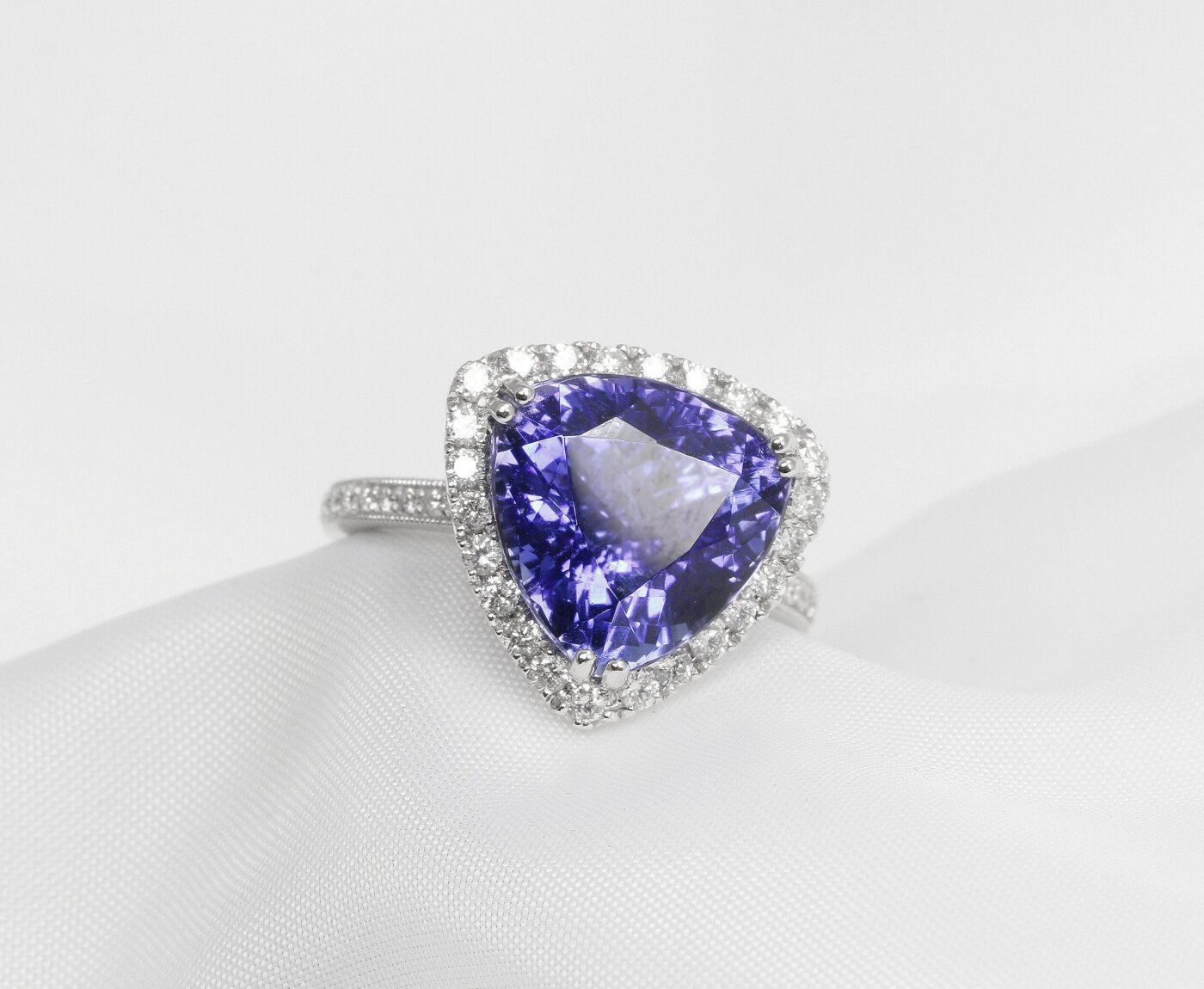
Tanzanite & Diamond Ring in White Gold
Why is Tanzanite Usually Heat Treated?
Most Tanzanite available in jewellery today has been heat treated. This is not something to be concerned about — heat treatment is an accepted and established treatment for the gemstone and the only treatment it will undergo.
Heating Tanzanite, generally at temperatures of up to around 500°C, can transform its appearance by removing the less desirable brownish and greenish tones and enhancing the beautiful blue and violet colours for which the gemstone is famous.
After treatment, the stone generally displays two principal colours rather than three, producing the characteristic blue-violet appearance we associate with Tanzanite.
Depending on the stone and the way it has been cut, you may also see flashes of pinkish-purple across the facets as the gemstone moves in the light.
This is part of Tanzanite’s charm. Rather than looking like a single, uniform block of colour, it can appear to change subtly as it moves.
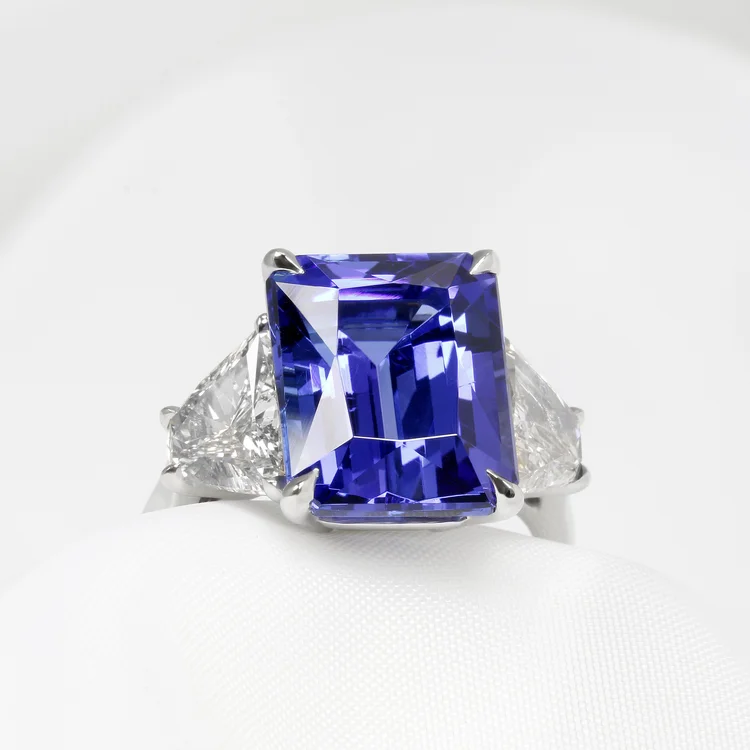
September 2022 – Tanzanite and Diamonds in Platinum
Is there a synthetic version of Tanzanite?
At present, there is no commercially available synthetic Tanzanite.
However, there are several gemstones and materials that can resemble it, including kyanite, blue sapphire, blue spinel, iolite and blue glass.
Some of these can look remarkably convincing at first glance, particularly when viewed in a piece of jewellery rather than as a loose gemstone. However, their physical, optical and chemical properties are quite different.
For a valuable Tanzanite, particularly a larger or exceptional-quality stone, professional identification can therefore be worthwhile.
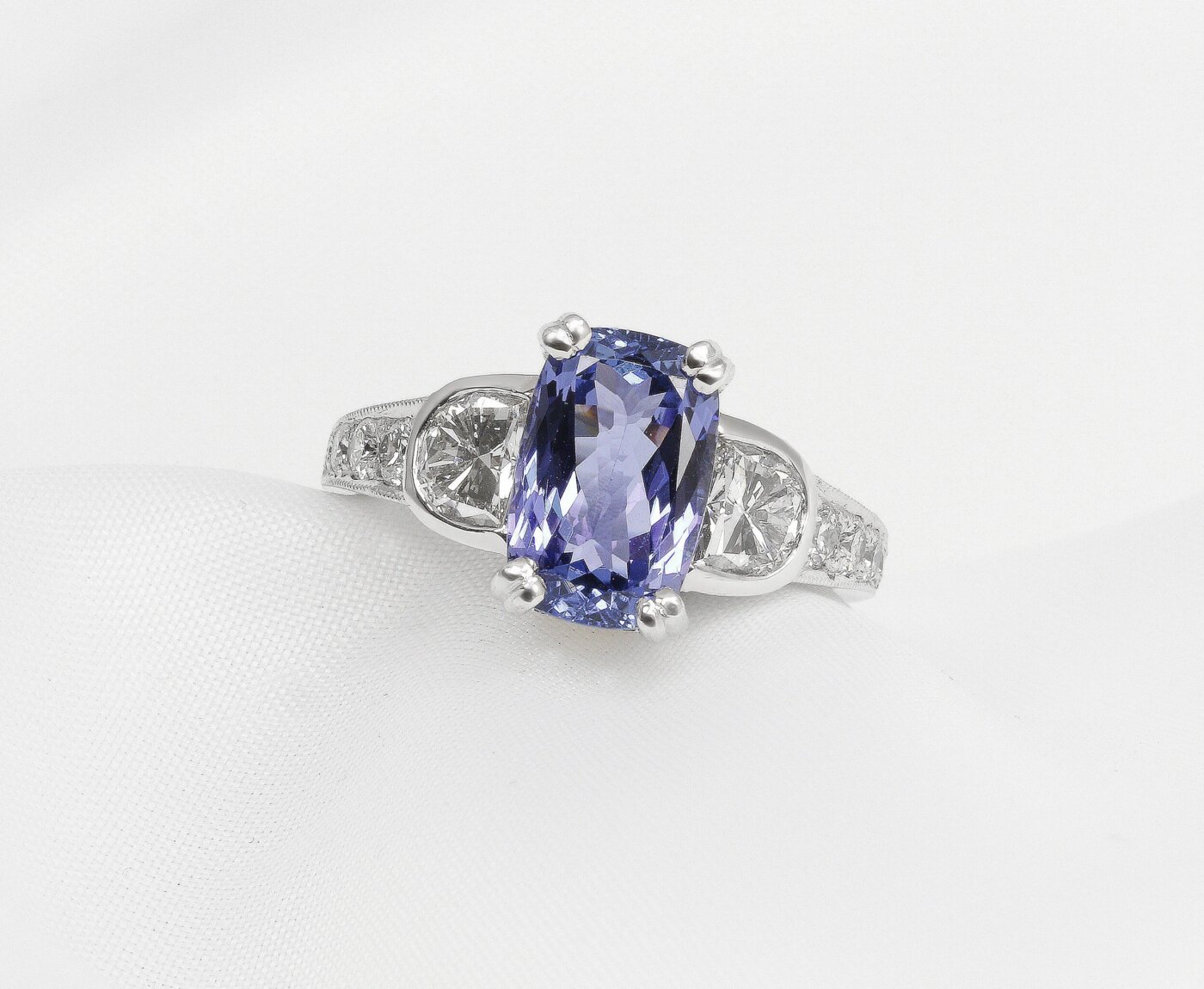
Tanzanite & Diamond Ring
How Rare is Tanzanite?
Because Tanzanite comes from a single, relatively small geographical area, its long-term availability is an important consideration.
There have been predictions that the known deposit could eventually become depleted by the end of 2028, although it is impossible to say with certainty exactly when that will happen. The geology of the deposit is complex, and future mining developments may affect what can be recovered.
What we can say is that gem-quality Tanzanite is inherently rare because of its extremely restricted geographical origin.
Changes to Tanzanian mining and export regulations have also influenced the market. In 2010, legislation was introduced restricting the export of rough Tanzanite over 5 carats, encouraging more cutting and polishing to take place within Tanzania.
For collectors and jewellery enthusiasts, this unique combination of locality, rarity and relatively recent discovery adds another fascinating dimension to the gemstone.
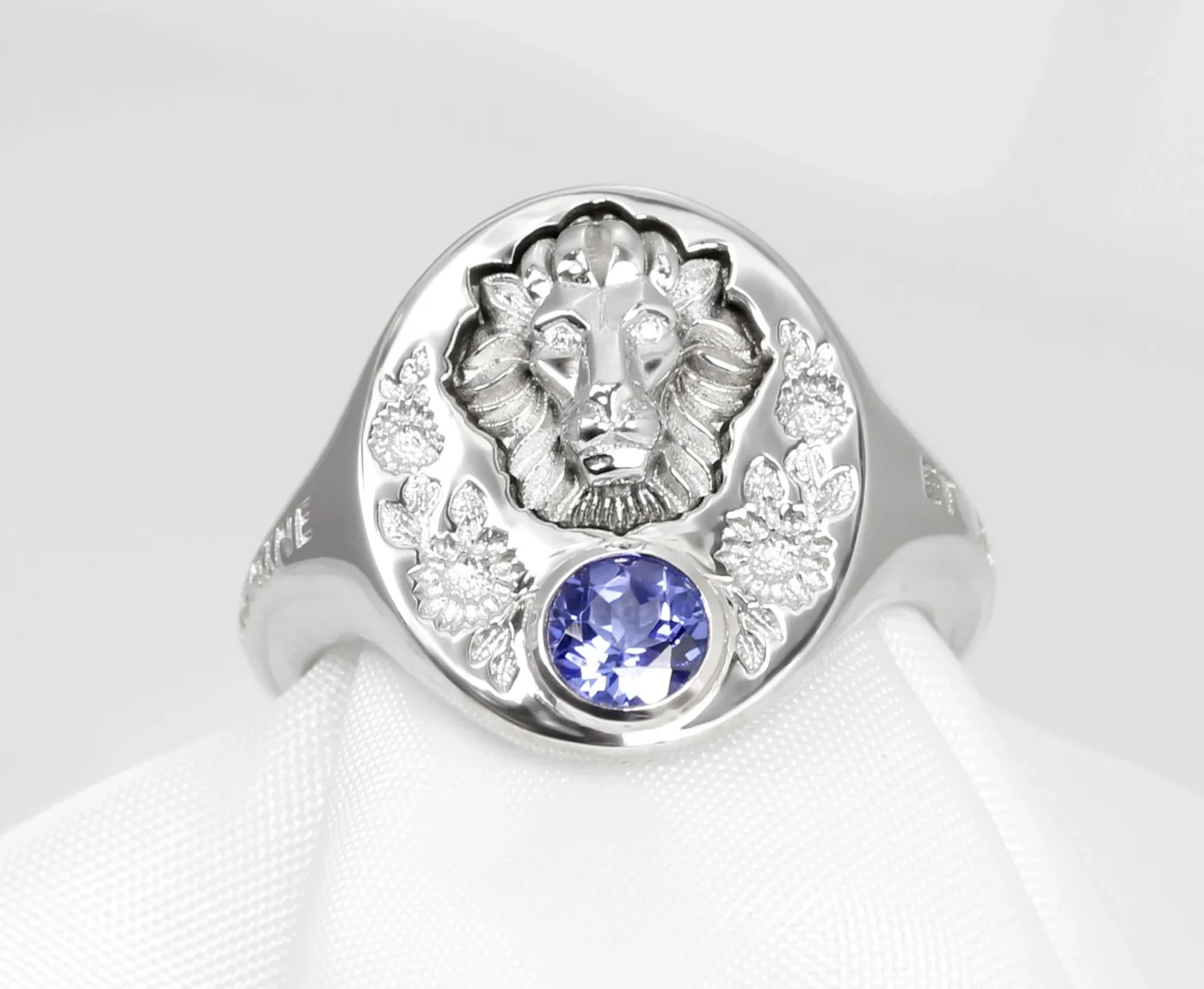
Bespoke Commission White Gold Signet Ring with Tanzanite Stone
Tanzanite is Beautiful — But It Needs a Little Care
One thing we always recommend customers consider when choosing a gemstone is how they intend to wear it.
Tanzanite has a Mohs hardness of approximately 6.5, which makes it considerably softer than sapphire or diamond. More importantly, it has a tendency to cleave and is relatively brittle.
This means that Tanzanite can scratch, chip or fracture if it receives a hard knock.
For this reason, we generally recommend Tanzanite for jewellery that receives a little less wear — such as a beautiful dress ring, pendant or earrings — rather than a ring intended to be worn every day.
If you own a Tanzanite ring, it is best to remove it before going to the gym, gardening, doing housework or carrying out manual work.
Tanzanite should also be treated gently when it comes to cleaning. Avoid ultrasonic and steam cleaners, as the vibration, heat or sudden temperature changes can potentially cause the stone to fracture.
Instead, use lukewarm water with a little mild soap and gently clean the gemstone with a soft, lint-free cloth. Avoid household chemicals, cleaning products and harsh detergents. Do not use hard brushes either.
It is also wise to avoid sudden changes in temperature — known as thermal shock — particularly with a gemstone that has a natural tendency to fracture.
A little care goes a long way, and a well-cared-for Tanzanite can remain a beautiful part of your jewellery collection for many years.
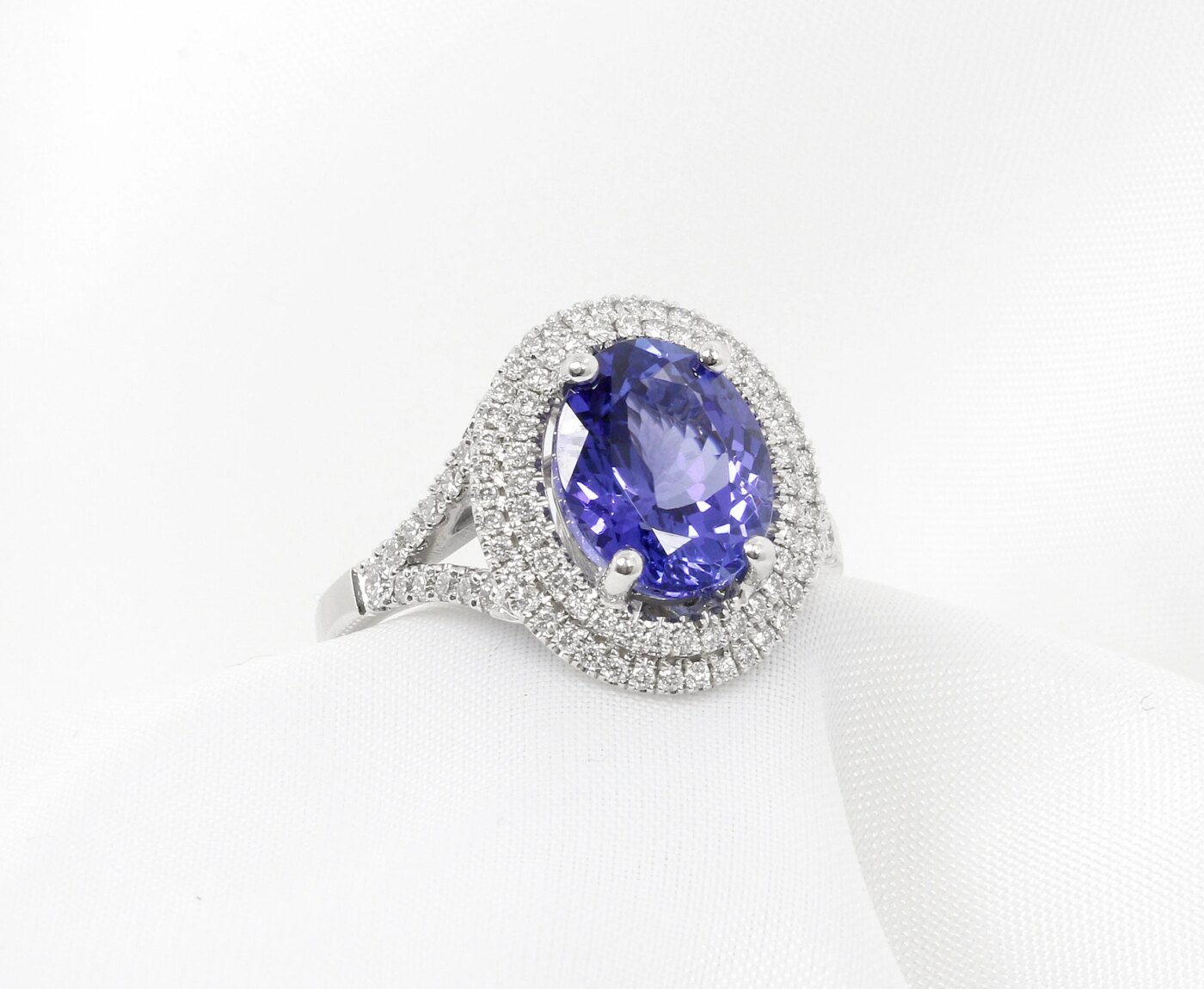
Tanzanite and Diamond Double Halo Ring in 18ct White Gold
Tanzanite is December’s Birthstone
Tanzanite is one of the recognised birthstones for December, making it an especially meaningful choice for a birthday, milestone gift or a Christmas present.
Because it is such a modern gemstone, it doesn’t have the centuries of folklore associated with stones such as sapphire, ruby or emerald. Instead, much of the symbolism surrounding Tanzanite has developed in more recent times.
It is often associated with wisdom, dignity and truth, while its beautiful blue-violet colour has also led to associations with calmness, communication and emotional balance.
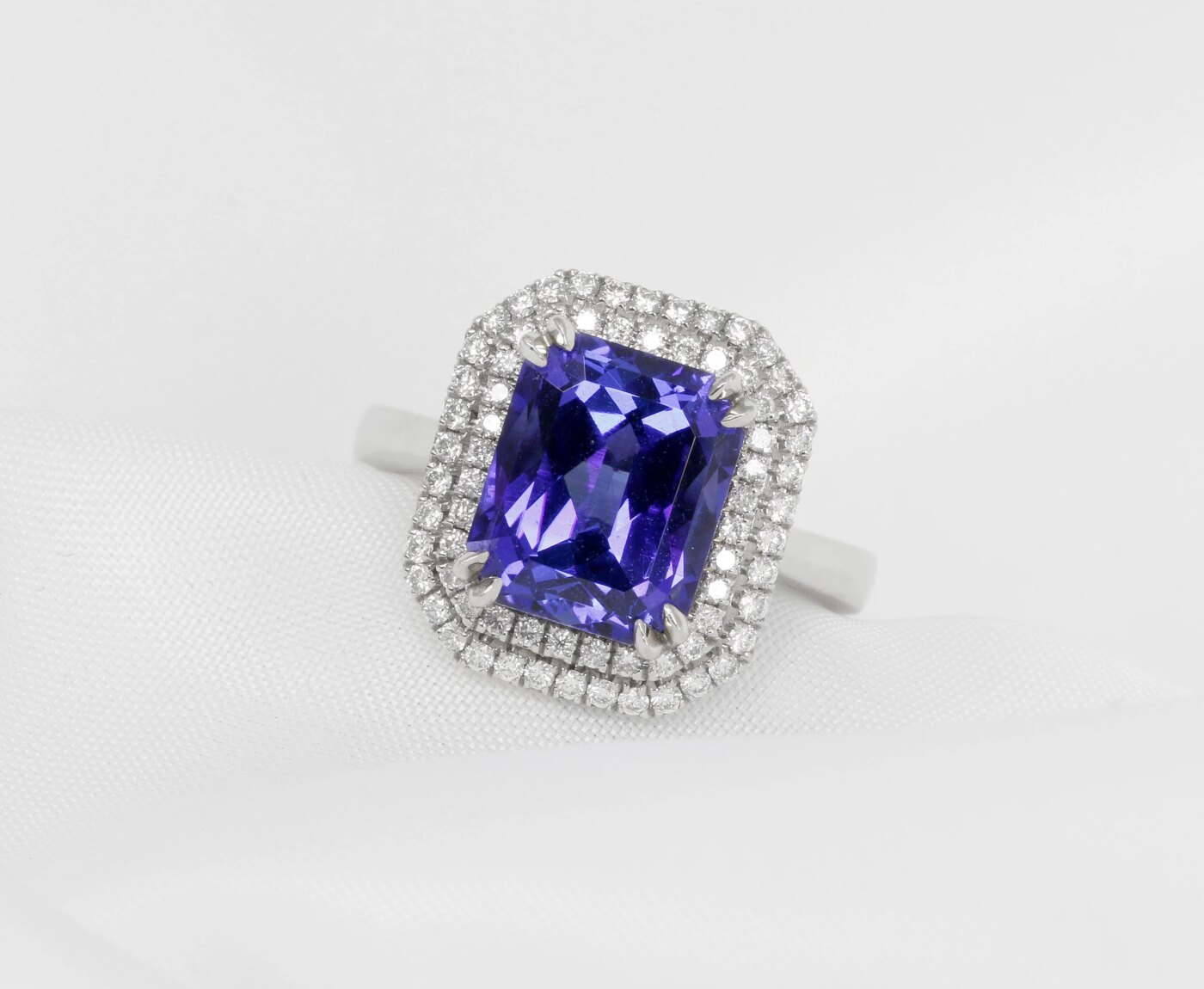
Tanzanite & Diamond Cluster Ring
A Truly Modern Classic Gemstone
Perhaps what makes Tanzanite so fascinating is that, despite being one of the youngest gemstones in the jewellery world, it has already developed such a strong identity.
It has a remarkable origin story, a single known source, beautiful pleochroic colour, an unusual geological formation and a fascinating journey from blue zoisite to one of the world’s most recognisable coloured gemstones.
And then there is the colour itself.
That wonderful combination of blue and violet can be difficult to describe accurately until you see it moving in the light. One moment it can appear intensely blue; the next, a rich violet with flashes of pink coming through the facets.
For anyone looking for something a little different from the traditional sapphire or diamond, Tanzanite offers something genuinely special.
Browse some of our stunning tanzanite pieces or book a free consultation to design your very own bespoke tanzanite jewellery. We look forward to welcoming you in our showroom.
Related Posts