What Does a 1.00ct Natural Diamond Look Like?
Could you spot a natural diamond from a tray of 30 colourless faceted stones?
We thought it would be fun to test our customers.
As part of our 30th anniversary celebrations, we decided to give someone the chance to win a beautiful natural 1.00ct diamond, G colour, VS2 clarity, worth £5,700. But there was just one question to answer first.
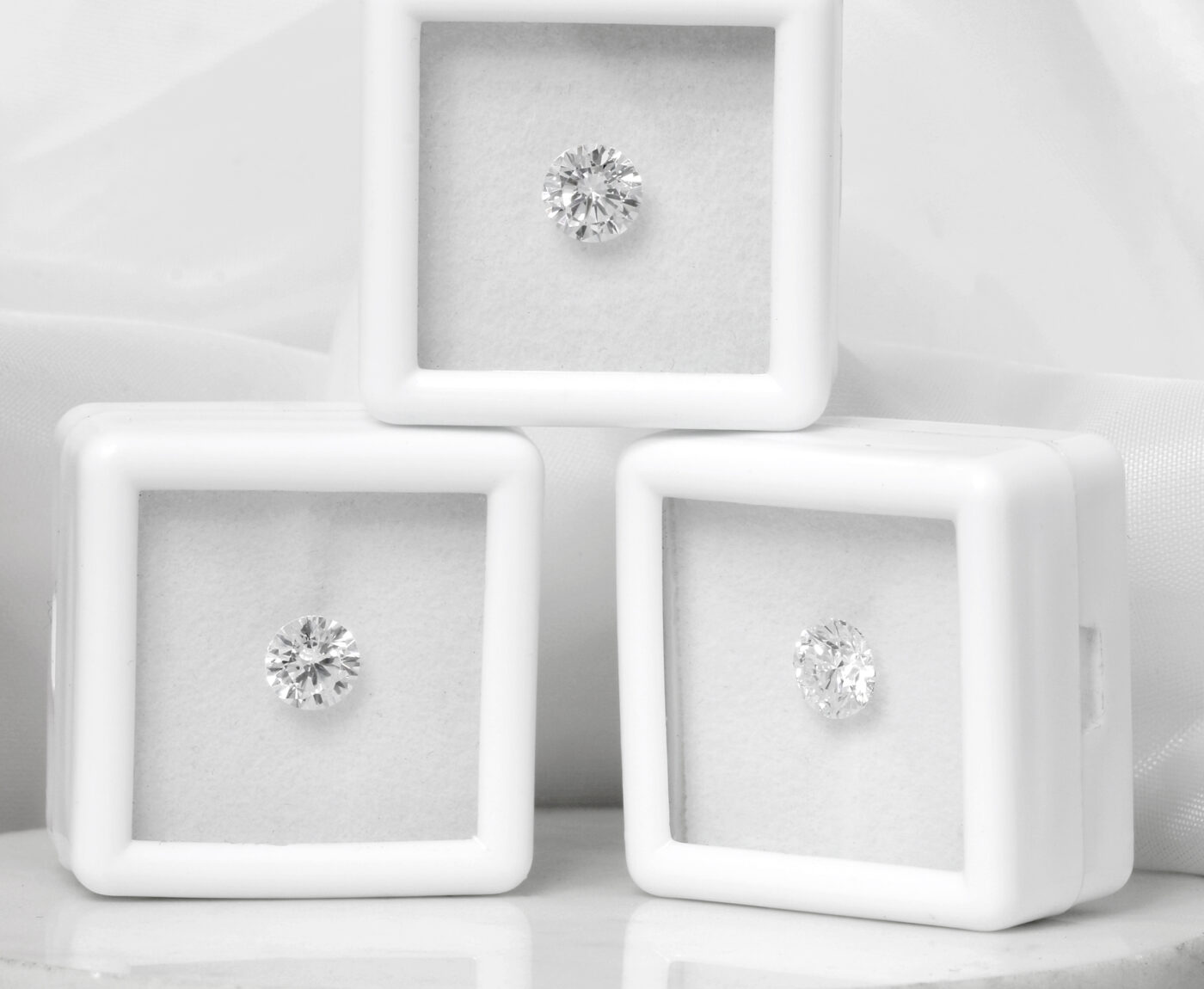
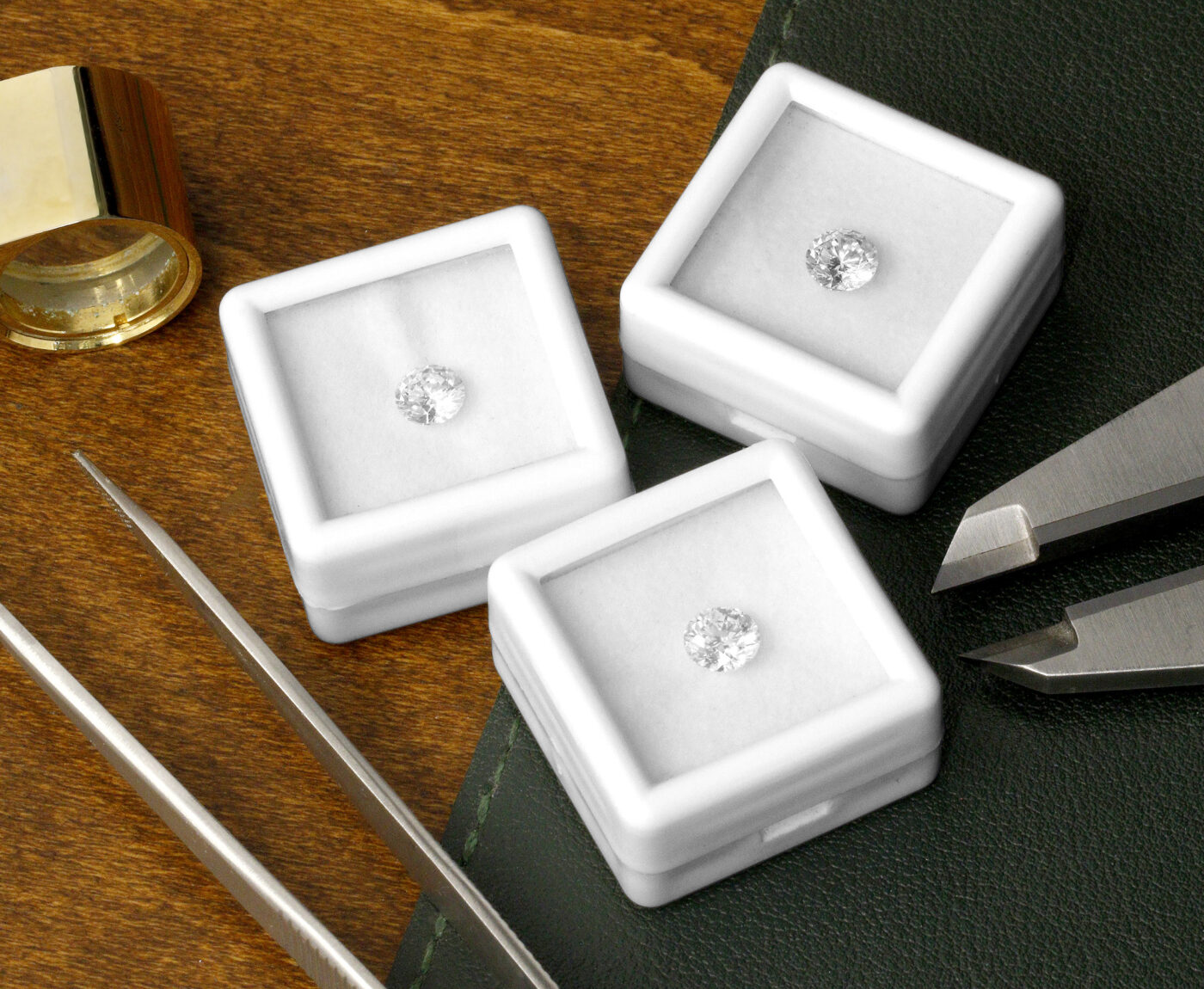
We placed 30 stones in individual stone boxes on a tray and invited our customers to choose which one they thought was the diamond.
There was no loupe, no testing equipment and no helpful label telling them what they were looking at. They weren’t allowed to touch the stones, open the boxes or ask the staff for clues.
Just 30 stones, numbered 1 to 30, and one simple question:
Which one is the natural 1.00ct diamond?
The answer was number 20.
And, as it turns out, our diamond game was rather more interesting than we expected.
Because during the six months that we were monitoring the results, we started to wonder:
What do people actually think a diamond looks like?
And what do they think a 1.00ct size looks like?
Only those who guessed correctly would go through to the prize draw. And there could only be one winner.
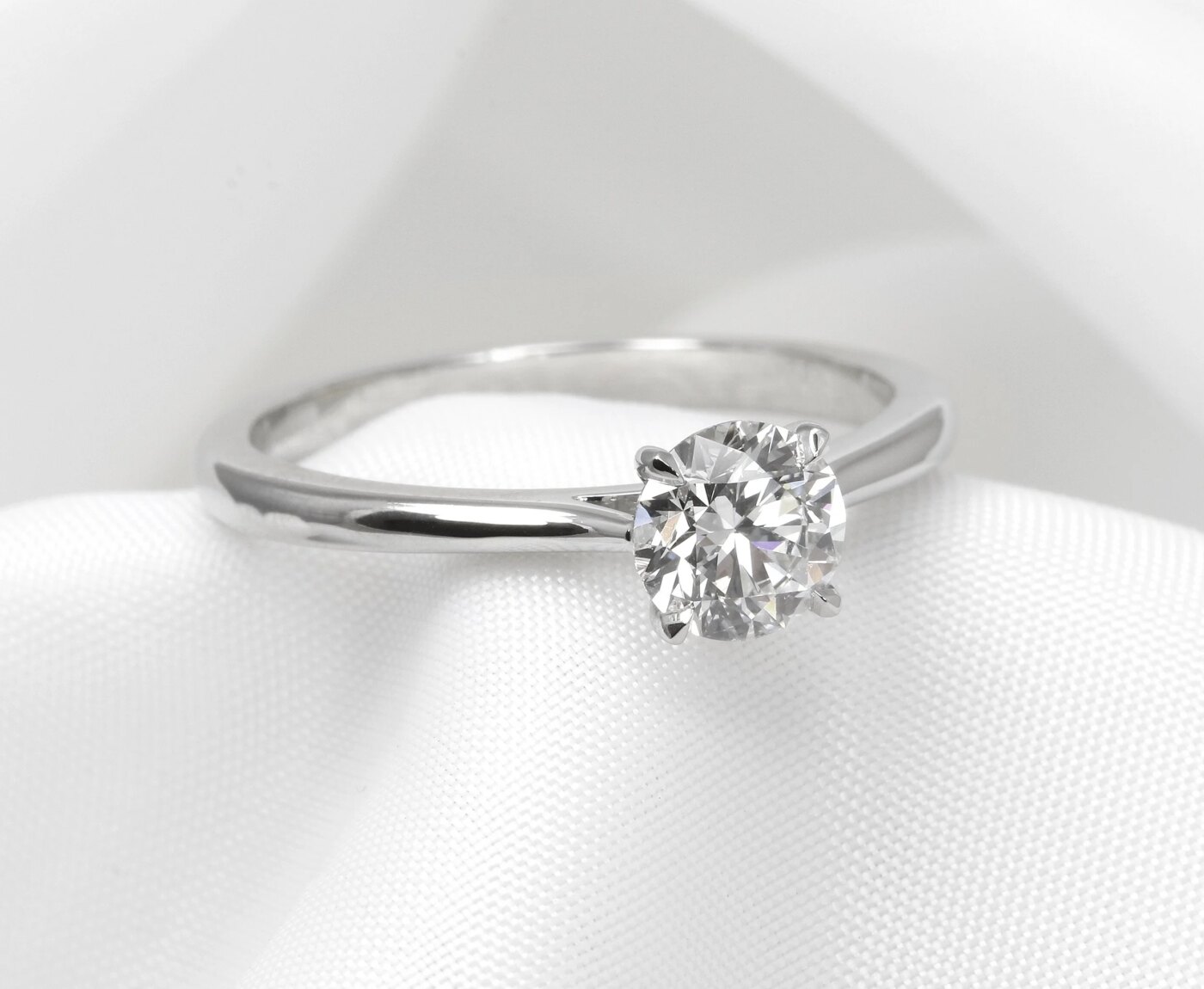
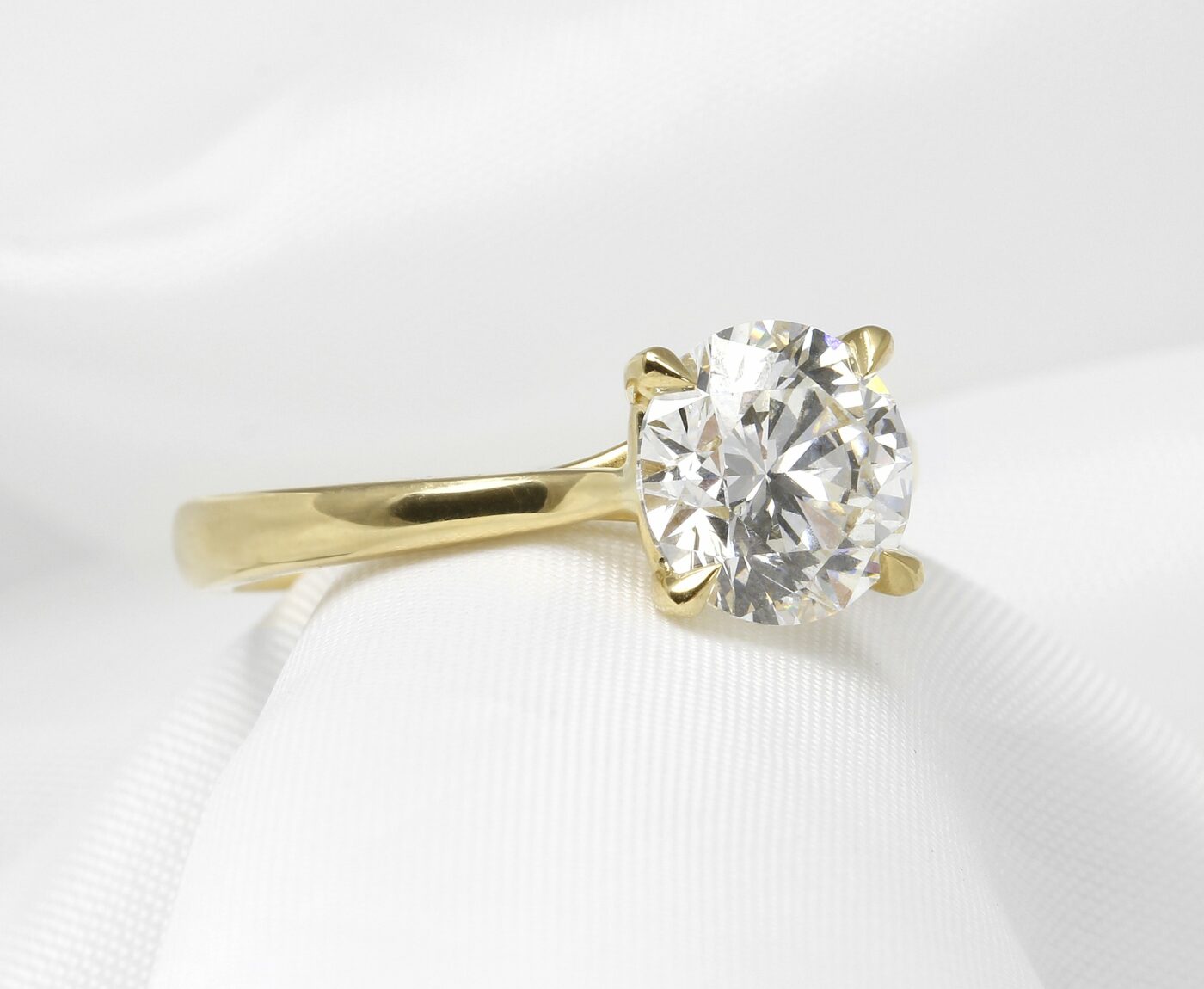
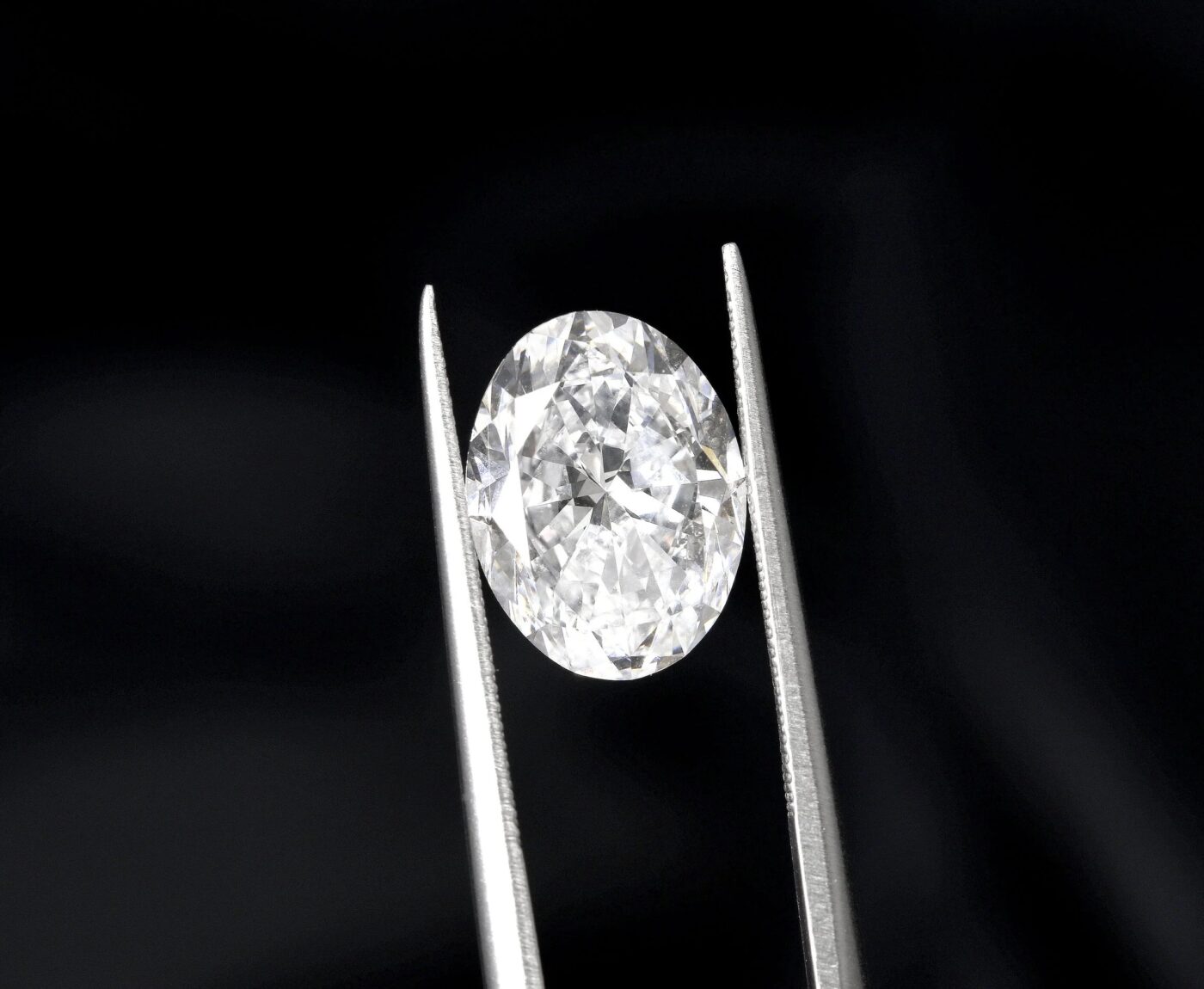
What does a 1.00 carat diamond look like?
A tray full of possibilities
Our tray contained a wide assortment of different materials.
There was one natural diamond — number 20 — alongside one 2.00ct laboratory-grown diamond, number 11.
The remaining stones were diamond imitations and other materials, including cubic zirconia (CZ), moissanite, white topaz, paste, glass and rock crystal quartz.
Some were deliberately very convincing. Some were larger. Some were smaller. Some were incredibly bright and sparkly. Others had a slightly darker or more yellowish appearance.
And our customers had to rely entirely on what they could see.
Number 20, the natural diamond, was chosen 117 times out of 566 attempts. Those 117 people went through to the prize draw.
The most convincing imitation
The stone that came closest to giving the natural diamond a run for its money was number 3: a 6.25mm cubic zirconia.
It was chosen 34 times.
In third place among the imitations was number 15, another 6.75mm cubic zirconia, which received 27 guesses.
Then came number 18 — and this one really surprised us.
It was glass.
Number 18 was a 6mm piece of glass, yet it was selected 25 times by our customers as the possible diamond.
That’s a wonderful illustration of just how misleading different materials can be when they are given the same style of cut. It also poses an interesting question:
What is sparkle?
When you’re looking at a stone sitting in a tray, your eyes don’t come with a little built-in laboratory. You see light, reflections, brightness, size and colour — and your brain makes a judgement based on what it knows.
And sometimes it gets it right.
Sometimes it doesn’t.
Glass has a vitreous, watery lustre. It reflects light well from its surface, but diamond has a bright, almost metallic adamantine lustre. It really pops.
When you move a diamond and catch that bright flash of light as it hits the facet faces at just the right angle, it can be almost blinding — a little like sunlight hitting a mirror.
Yet many people don’t look for this, and admittedly, it can be difficult to see without magnification.
Most people go for sparkle: that dispersion of colour, or ‘fire’ as we call it in the trade. Those little rainbow colours that catch your eye.
Cubic zirconia takes centre stage as the great diamond imitator
Looking at the results as a whole, one thing became very clear: cubic zirconia was the great impersonator of our Diamond Game.
Historically, it has always been one of the best-known diamond imitations, and it looks like it still is.
There were numerous CZ stones scattered throughout the tray in different sizes, and collectively they attracted a huge number of guesses.
The popular choices included:
- No. 3 — 6.25mm CZ: 34 guesses
- No. 15 — 6.75mm CZ: 27 guesses
- No. 6 — 4.5mm CZ: 24 guesses
- No. 10 — 5.25mm CZ: 24 guesses
- No. 23 — 6mm CZ: 24 guesses
- No. 30 — 6.25mm CZ: 23 guesses
So what was it about these stones that caught people’s eyes?
Size may certainly have played a part.
A 1.00ct natural diamond is roughly 6mm in diameter, but interestingly, many people also guessed the smaller stones. Perhaps they simply haven’t seen a 1.00ct diamond before.
Stones under a carat are measured in points, with 100 points totalling 1.00ct.
We also discovered that people tend to think of carat in diamonds as relating to volume and diameter rather than weight.
Incorrect, but interesting!
And what about the laboratory-created diamond?
The 2.00ct laboratory-grown diamond — a synthetic diamond created in a factory rather than formed naturally underground — received 19 guesses.
Many people thought it had the right amount of sparkle, but instinctively felt that it was too big. And they were correct.
Many people guessed that the diamond was around 6mm, but the hardest part was narrowing down the material.
Some people even said:
“Surely it must be the one with the least sparkle because it’s a trick!”
We definitely aren’t doing our jobs correctly as jewellers if the general public don’t think diamonds sparkle!
They absolutely do–and a lot!
What is cubic zirconia, and why does it look so close to diamond?
Cubic zirconia uses high-purity zirconium oxide powder mixed with stabilisers such as calcium and magnesium.
The mixture is heated to around 2,750°C (4,982°F) until it melts completely and impurities burn off. As the melted solution cools, crystals form and lock into a cubic crystal structure.
It is clear and colourless by default, although manufacturers can add other elements to produce different colours.
Cubic zirconia scores 8.5 on the Mohs hardness scale, making it tough enough for everyday jewellery, but it is softer than diamond and will abrade over time. Diamonds will not do this.
Unlike natural or laboratory-grown diamonds, which are made of pure carbon, cubic zirconia contains no carbon and is strictly a budget-friendly diamond lookalike.
It has a similar crystal structure to diamond and bends and splits light in a similar way. Interestingly, the refractive index of cubic zirconia is almost as high as that of diamond, which contributes to its sparkle and glittering effect.
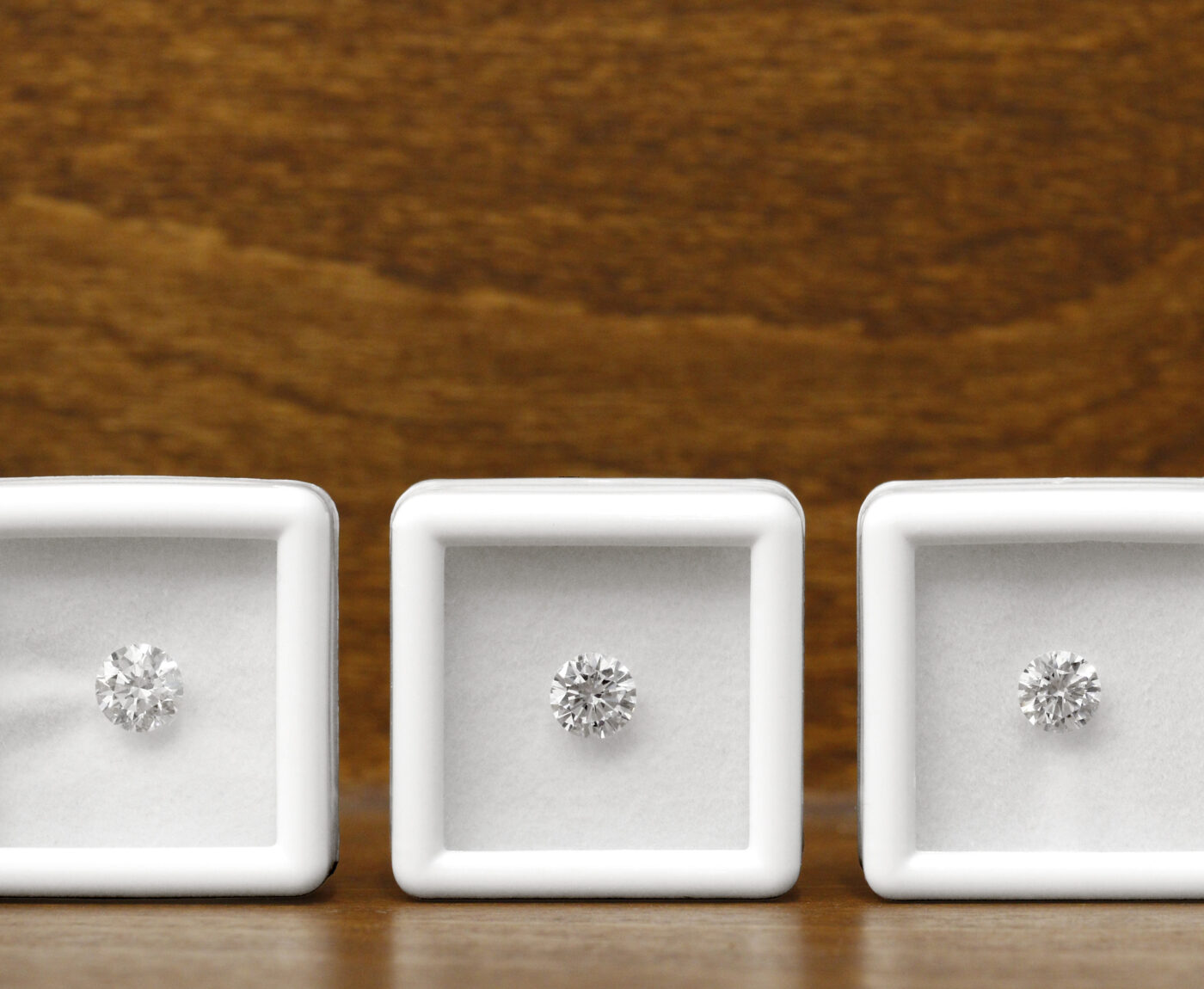
Can you tell the difference between diamond and cubic zirconia? Which one of these three stones is the diamond?
Why do moissanite, topaz, quartz… and glass look like diamond?
Twenty-five people looked at that 6mm piece of glass and thought:
“That could be the diamond.”
Glass has absolutely no similar qualities to diamond and is comparatively lifeless and dull. It does not split light into rainbow colours and does not have a particularly tough hardness, so it can chip easily.
Yet customers thought it looked like a diamond.
Moissanite, topaz, quartz and glass can all be colourless, transparent stones and shaped using the same types of faceting techniques.
When these materials are given a brilliant cut — the standard 57- or 58-facet pattern used for traditional diamond engagement rings — they manipulate light in ways that can mimic some of a diamond’s signature flash and sparkle to the untrained eye.
However, each diamond simulant interacts with light and wears down differently because of its own chemical and physical properties.
Comparison overview
| Material | Mohs Hardness | Refractive Index | How to Spot the Difference |
| Diamond | 10 (Extreme) | 2.42 (High) | Crisp, deep white light flashes and sharp, well-defined facet edges. |
| Moissanite | 9.25 (Very High) | 2.65–2.69 (Ultra High) | Disco ball’ rainbow flashes, with double-refraction lines and more purples and green colours. |
| White Topaz | 8.0 (Moderate) | 1.61 (Low) | Can look watery or glassy and lacks deep internal fire. |
| Clear Quartz | 7.0 (Low) | 1.54 (Very Low) | Can become cloudy over time and has very weak sparkle. |
| Glass | 5.5 (Very Low) | 1.50–1.60 (Low–Moderate) | Rounded facet edges and scratches incredibly easily. |
So, what does a diamond look like?
We often imagine a diamond as being brilliantly white, incredibly sparkly, perfectly clear and somehow unmistakable.
But place a selection of clear, faceted stones together under the right lighting and suddenly there are plenty of contenders.
A diamond’s appearance is the result of many things working together: its cut, proportions, clarity, colour, size and the way it interacts with light.
And our perception plays a part too.
We aren’t measuring refractive index or examining the stone through a microscope when we first see it. We’re simply looking at it and making a very quick judgement:
“That one looks like a diamond.”
Our Diamond Game showed just how subjective that judgement can be.
A faceted diamond looks like a clear, polished stone that disperses bright white light and tiny rainbow flashes in every direction when it moves.
‘Faceted’ simply means that the stone has many flat, polished surfaces cut into it. These flat surfaces act like tiny mirrors and, in a well-cut stone, will be sharp, crisp and well defined.
Other materials, particularly glass, can have more concave and rounded facet edges.
Lighting makes a difference, too.
The lighting conditions also play a large role in our visual perception.
Direct light: Under a bright lamp or direct sunlight, a diamond can sparkle intensely and show maximum fire.
Soft light: On a cloudy day or in a dim room, the stone will look less shiny and show mostly soft grey or white reflections rather than bright rainbow colours.
The more diamonds you see, and the longer you spend looking at them, the more you start to notice the differences. You can begin to pick them out more easily.
It’s all about training the eye and looking for the details.
The lesson behind the game
Our Diamond Game wasn’t intended to catch anyone out.
Quite the opposite.
It was a fun way to show that identifying a gemstone by sight alone isn’t always as straightforward as we might think.
There is a reason jewellers and gemmologists use specialist equipment and knowledge when identifying stones. A trained eye can certainly notice clues, but proper identification goes beyond simply asking whether something sparkles nicely.
Some of our customers also said that if the imitations look just as good as the natural diamond, it would be cheaper to simply use those instead.
Yes and no.
Imitations cannot stand up to the same longevity, durability and daily wear. They can be affected by chemicals and will abrade more easily, changing their appearance over time. They also cannot be subjected to heat, bench torches and ultrasonics which makes repairs and alterations nearly impossible.
When they are brand new, they may look remarkably like diamond. But compare them again after a few years — or even months of regular wear — and the difference can become much more obvious.
The imitation may look worn and require replacing.
A diamond doesn’t have to be the only stone that sparkles.
It doesn’t even have to be the brightest stone in the tray.
And apparently, sometimes a piece of glass can look surprisingly convincing!
But a diamond does need to last many years and still look as beautiful as it did when you first bought it.
Related Posts