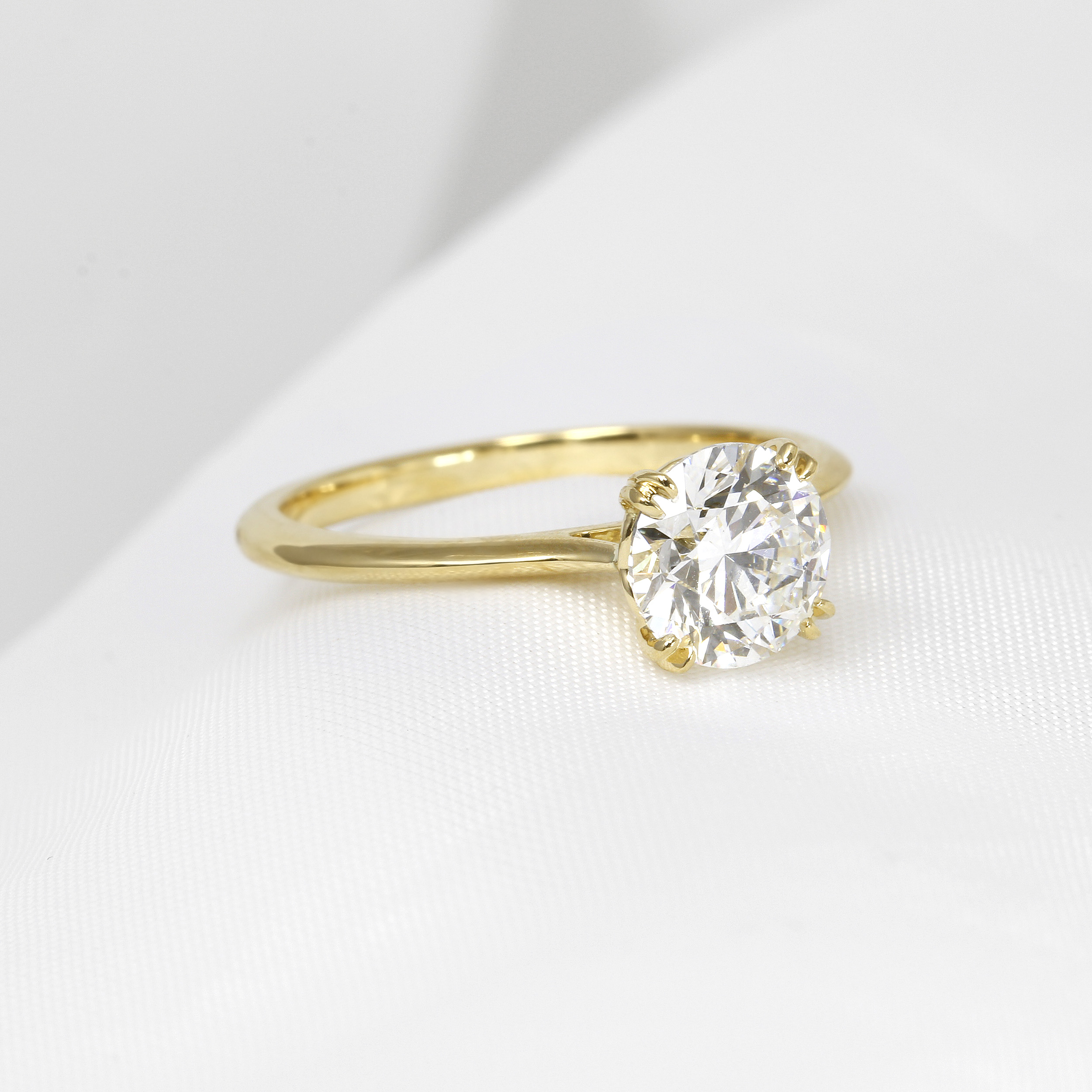
What Is The Difference Between Fine Jewellery And Fashion Jewellery?
When it comes to jewellery types and labels, you may know a couple, but do you know the difference? Can you call silver fine jewellery? What if a celebrity wears something that isn’t made of precious metals? Is it haute joaillerie, fine jewellery or just edgy fashion jewellery? What or who determines what label the jewellery is given, and are there clear distinctions? Read on to find out!
Key Points:
- Jewellery is distinguished by factors such as the quality and materials used, the craftsmanship and designer, the value and the intended occasion for wear.
- Fine jewellery is typically made from precious metals and gemstones, and involves greater attention to design, construction, stone setting and finishing.
- Fashion jewellery generally uses more affordable materials, and is often produced on a larger scale to respond to current trends.
- The boundaries between the different types of jewellery aren’t always clear-cut.
The Three Tiers of Jewellery
Jewellery is probably best split into four categories. Within those four, we can categorise them into three tiers: high, middle and low.
High-end: High jewellery (haute joaillerie)
Middle range: Fine jewellery
Low-end: Fashion jewellery
Demi-Fine, Costume, and Imitation Jewellery
There is a stark difference between the higher tier of jewellery and the lower tier imitation jewellery, but sometimes, where certain gemstones and precious metals are used, the lines blur between fine jewellery and fashion jewellery.
Recently, due to social movements and concerns about the environment, designers are choosing to experiment with other, more unusual or less expensive materials, like gemstones set in resin or acrylic. This has meant the lines overlapping further, making it harder to place certain styles, designs and pieces into set categories.
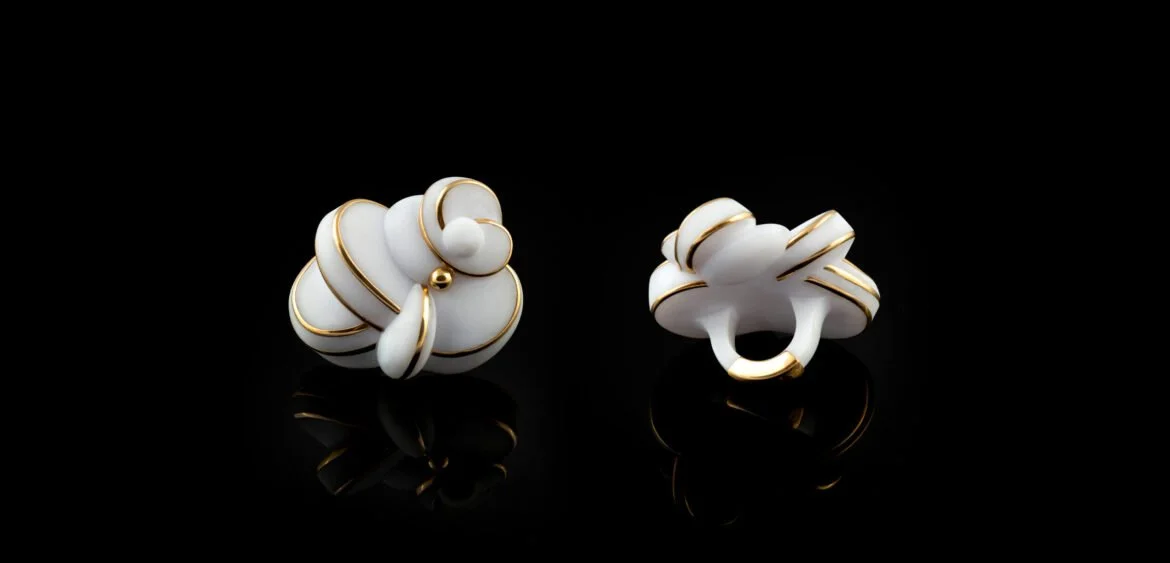
Wearable art: Pentozani sculpture ring in white resin and gold, 2022; Sophia Vari
How to Tell Which Category Jewellery Belongs In
The differences generally lie within the following four features:
Some pieces may share one or two of these features, but looking at all four for the overall picture is the key. We’ll address all four jewellery categories within these key areas and consider how they differ.
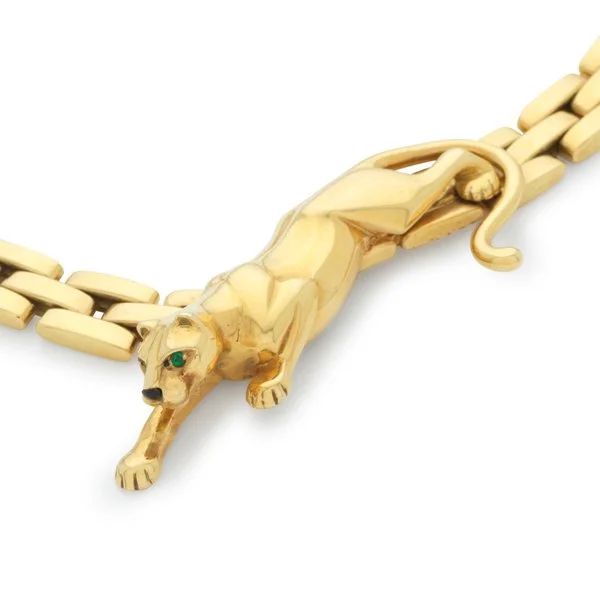
The famous Cartier Maillon Panthère necklace (circa 1980) in 18k yellow gold with circular-cut emeralds and enamel, estimate $8,500–$13,000 at auction
Materials and Quality
High Jewellery
High jewellery, also known as Haute Joaillerie, is crafted from the highest quality materials in the highest carat values. These can be precious metals such as gold in 18-karat and 22-karat and platinum.
It often features rare and valuable gemstones, often large carat weights with flawless or extraordinary colour and clarity, such as diamonds, rubies, emeralds, and sapphires, as well as other precious or semi-precious stones.
The craftsmanship involved in high jewellery is exceptional, with meticulous attention to detail and often intricate designs. High jewellery will also carry hallmarks and certificates to prove it is made of high-quality metals.
Fine Jewellery
Fine jewellery encompasses a broad range of high-quality jewellery that is crafted from precious metals and gemstones, but may not be as exclusive or unique as high jewellery. Materials used in fine jewellery include 9K, 14K, or 18K gold, sterling silver, and platinum, and these will also carry hallmarks as proof. Some larger stones will come with certificates.
At the lower end of the scale, fine jewellery can also include silver-gold plated, gold vermeil or gold-filled pieces in small accents. However,hallmarks will either differ or not be used at all if the precious metal content is too low.
Gemstones used can vary widely, but usually include diamonds, emeralds, rubies, sapphires, opals, pearls, and other semi-precious stones in various degrees of colour, cut, clarity and carat weight.
Fashion Jewellery
Fashion jewellery, also known as costume jewellery, is designed to complement current fashion trends and is typically made from less expensive materials than fine or high jewellery. Materials used in fashion jewellery can include base metals like brass, copper, or nickel. Some may include plated metals, but they will not have hallmarks.
As well as synthetic gemstones, glass, beads, and plastic, it can, however, include lower-quality natural gemstones.
Demi-fine, or semi-fine as it is sometimes labelled, is a term used by jewellery brands to describe and market attainable yet premium quality jewellery that sits halfway between cheaper costume jewellery and expensive fine jewellery items.
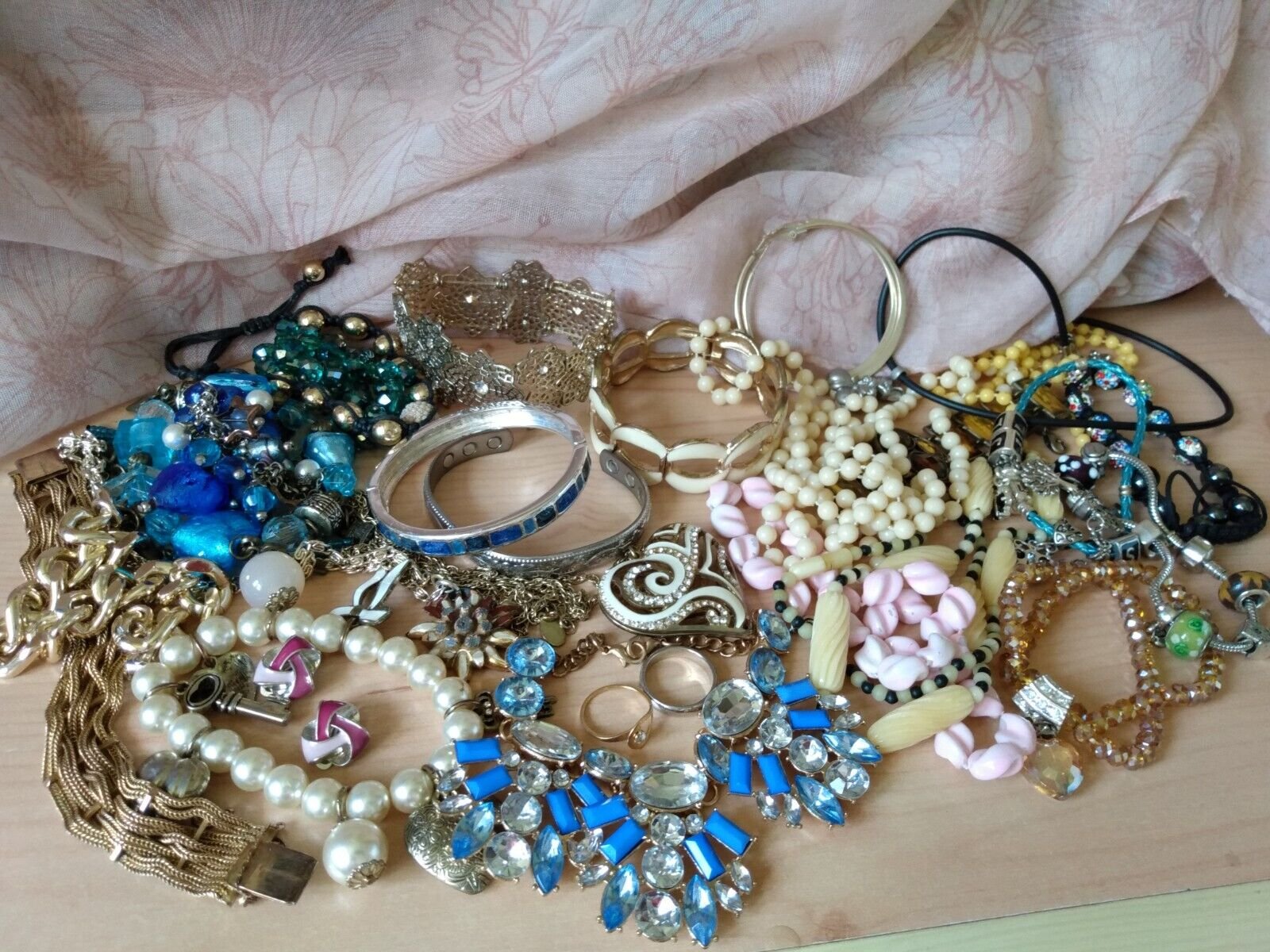
Vintage costume jewellery, source: 2010sweetart Ebay
Costume jewellery, on the other hand, is typically made from less expensive materials such as base metals, pewter, nickel, zinc, other metal alloys, glass, acrylic, lucite, rhinestones, and synthetic coloured gemstones.
While fashion and costume jewellery can be stylish and attractive, it generally doesn’t have the same level of durability or intrinsic value as fine jewellery. Costume jewellery is often used interchangeably with fashion jewellery and can also include silver-plated parts as well as organic leathers, textiles and other substances like resin or polymer clay.
Read more about gold types here.
Craftsmanship and the Designer
High Jewellery
With high jewellery, there is a story or meaning behind the piece. Several discussions have taken place to focus on a design; there is a person or small team of experts, from CAD designers to master goldsmiths, crafting the piece from beginning to completion and often by hand.
Many designs favour invisible-set stones, but intricate work is done by hand by stone setters. With much time and dedication, the jewellery being made is a unique and individual piece, often limited to a single piece or an incredibly small number to attract collectors and create high demand and exclusivity. The pieces take a long time to make, and only several designs and pieces are released each year. Once a jewellery piece has had its moment in the spotlight, it is usually not remade again.
It is not uncommon for these Maisons to have VIP waiting lists with impressive celebrity names on them. It’s all about status, image and prestige. The designer’s name and reputation are often at the forefront of the marketing campaigns rather than the piece itself, and no expense is spared when it comes to the highest quality marketing photos and videos. Brands like Tiffany’s will hire the best designers and skilled craftsmen to create their luxurious jewellery to arouse desire and publicity.
High jewellery is, therefore, associated with luxury brands and renowned jewellery houses known for their exceptional craftsmanship and ferocious detail and finesse. The high jewellery houses refer to their ateliers as Maisons, using the French word and quite often have roots stemming from or in Paris, which has always been considered the centre of the fashion and art world.
Simply studying the linguistics around the marketing ads of brands, the way they refer to themselves and describe their pieces, gives us clues as to the tier of jewellery class. More French terminology elevates their status, giving them more of an elegant, refined and exclusive appeal, reinforcing the reputation that the best designs come from Paris. This linguistic tactic is also based on social history, where in Europe French was considered the language of the gentry and nobility. Aristocrats in many European countries used French to distance themselves from the language of their peasant citizens and so that servants would not understand their conversations. It was spoken in all European courts. Catherine the Great of Russia (1729–1796) even made French the official language of the court, and it was considered the language of diplomacy, culture and romance. It reflected the importance of France from a political and cultural point of view. This way of thinking, this division and language barrier, and retaining the headquarters of the top famous jewellery houses in France, make the brands feel more superior, luxurious and unattainable for the common folk.
High Jewellery luxury brands include (not exhaustive):
- Tiffany & Co.
- Bvlgari
- Cartier
- Graff
- Chopard
- Harry Winston
- House of Garrard
- Boucheron
- Mejuri
- Faberge
- Belperron
- Mikimoto
- Piaget
- David Yurman
- Boochier
- Chanel
- Chaumet
- Van Cleef & Arpels
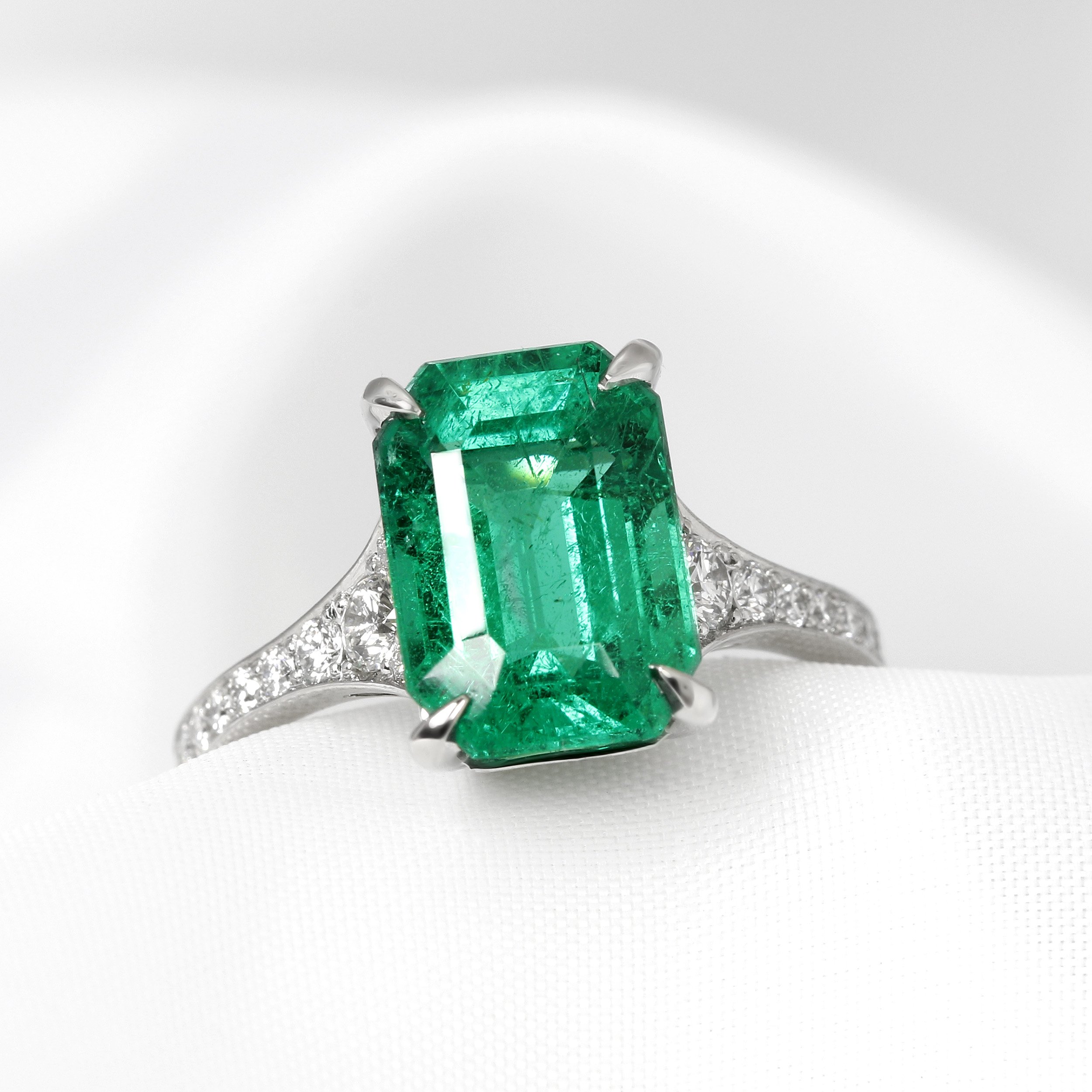
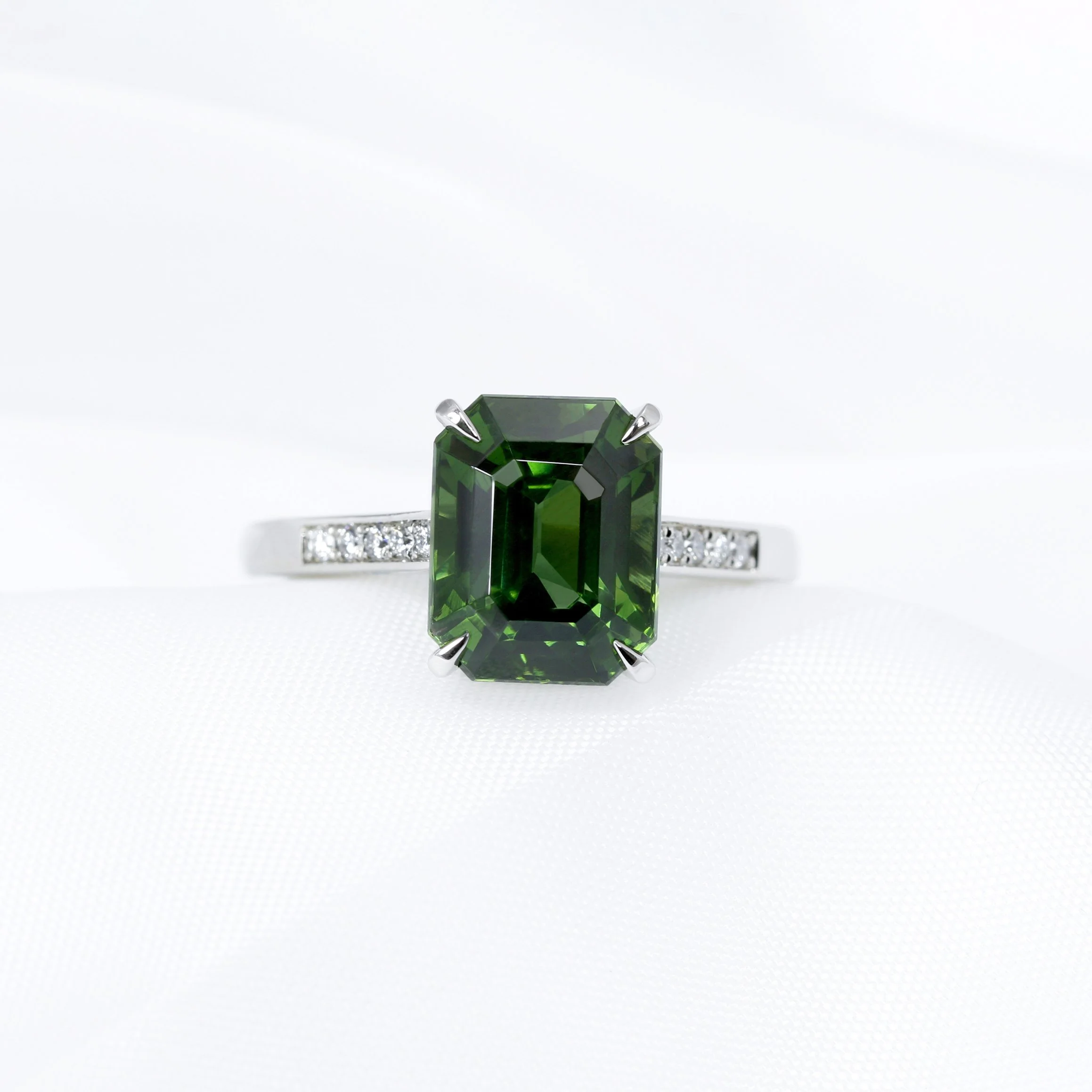
Timothy Roe Fine Jewellery, Emerald & Diamond Ring in Platinum
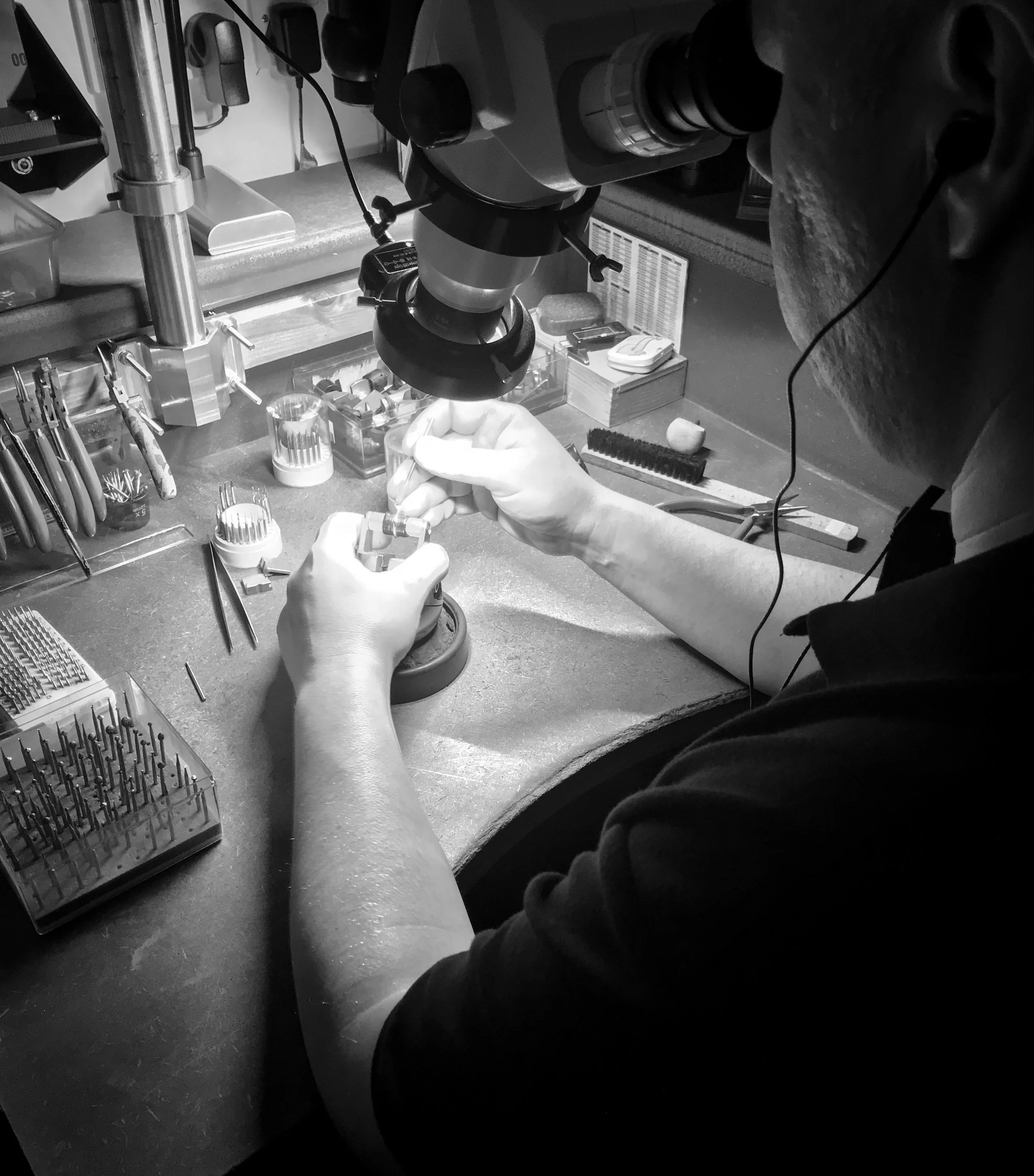
One of our skilled stone setters at work here at Timothy Roe Fine Jewellery
Fine Jewellery
Fine jewellery is often more accessible than high jewellery and is produced in larger quantities by reputable jewellery brands and bespoke designers. Like high jewellery, there is usually a design team or person who will draw up the pieces to be created using CAD design software, and they will meticulously select their materials and work out the concept.
The difference with high jewellery is that private commissions are rare. The Maisons may create pieces for extremely wealthy clients, but often they decide what they want to design and create the demand for it. Fine jewellers with their own workshops will take many commissions and sit down with their prospective client for a design consultation. They can create unique personalised pieces for an attainable price and realistic time frame of several weeks.
Pieces can be made by hand, be one unique piece or be cast, and they may create large collections at a time. Stones are usually intricately set by hand via stone setters like in high jewellery, but there may be several differences in finish and finesse amongst designers and brands within this category. Some designers may choose to set stones sharing claws instead of individually; others may use thinner shanks and collets; some may buy in pre-fabricated parts like mounts and assemble them via contracting third-party workshops, and others may custom build a piece but not go the extra mile on their final polishing method.
There is a wide difference between customisable pre-made jewellery, custom bespoke and hand bespoke. Within the fine jewellery category, technique, talent and skills can vary extensively, and often it comes down to the reputation and credibility of the designer for their work. It’s about all the fine little details that make a good quality piece stand out and knowing the behind-the-scenes of how they create and construct their jewellery. Here at Timothy Roe Fine Jewellery, we pride ourselves on our exceptional attention to detail and creating the highest standard of jewellery.
Internationally renowned fine jewellery designers might include (not exhaustive):
- Roberto Coin
- Georg Jenson
- Pomellato
- Missoma
- Annoushka
- Cece jewellery
and current individual designers (not exhaustive):
- Tomasz Donocik
- Rodney Rayner
- Shaun Leane and
- Harriett Kelsall
Popular chains that may or may not supply the work of certain designers include Goldsmiths, H. Samuel, Laings F. Hinds and Ernest Jones, amongst others. There will also be a range of individual artisans with four decades of experience and their own ateliers like us here at Timothy Roe Fine Jewellery.
Designers who still work with precious metals, but are more affordable, include Astrid and Miyu, Monica Vinada, Orelia, Lily and Roo, Ania Haie, Alex Monroe, Kit Heath, Auree and Alighieri, with some of their pieces fitting into the fine luxury category for silver, gold-plated, gold vermeil or gold-filled items.
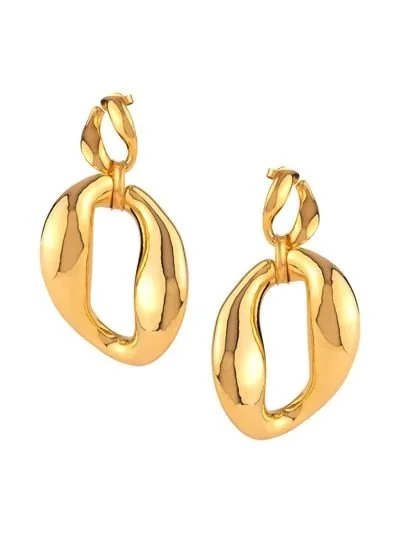
Misho earrings gold–plated for under $650
Fashion Jewellery
We start to see stark differences with fashion jewellery when it comes to the craftsmanship and design. The process for fashion jewellery begins with conceptualising trendy and appealing designs that appeal to the current market. It is usually big chains and brands that do not have workshops accessible to customers, and they do not do bespoke commissions. Their goal is to make as many pieces for a big profit turnaround.
Designers may sketch ideas by hand or use computer software with pre-designed CAD files they can buy online, but the goal is to create pieces that reflect current fashion trends and are attractive to a broad audience. Customers won’t know or learn of the designers as individuals; it will be the shop where they bought it that they remember.
Manufacturing components of the jewellery can be done by casting or en masse with the help of machines shaping metal parts, casting resin or acrylic pieces, moulding plastic sections, or assembling beads and stones into patterns. Fashion jewellery is often assembled using techniques like soldering, wire wrapping, hot glueing, or sewing. Pieces may be hand-assembled or mass-produced using machinery, depending on the scale of production.
To enhance the visual appeal of fashion jewellery, decorative elements such as rhinestones, crystals, enamel, or painted details may be added. These elements help create a glamorous or artistic look without the high cost of using expensive natural gemstones. Of course, some fashion jewellery can include lower-value natural gemstones and some gold plating. Middle-range fashion jewellery you’d expect to find base metal and cut glass or cubic zirconia stones, whilst the lower end of the category would include jewellery from chains like Accessorize and New Look mixing textiles into their base metal pieces. Unlike high and fine jewellery, you will often see huge discounts and offers on fashion jewellery as they move to clear seasonal stock to bring in the next ones as trends dictate.
Costume Jewellery
Costume jewellery is made en masse to satisfy trends and is often machine-made in bulk. Some parts may be finished by hand, but mostly it is basic, simple pieces that can be recreated easily.
Fashion stores with non-labelled jewellery on simple card packaging may offer costume jewellery, and some arts and crafts stores may offer handmade pieces by hobbyists who are practising with non-precious metals.
There are no house names behind the pieces. Just the factory or company that produced it on the back of the packaging. It is not personal or unique and is made available to cater to the demand of marketing trends seen often on social media. The lack of finesse, fine details, the increased use of relief impressions rather than carved details and the frequent use of hot glue and steel wires will be apparent, and the materials will not be durable or hold up over time with regular wear. In parts of Europe, costume or lower quality jewellery is referred to as Bijoux jewellery.
Bijoux
“Bijoux” in French means jewels, something small and elegant or a delicate piece of metalwork. But the English translation has adopted this word to mean small and elegant, like a trinket. It refers to something intricately and finely made.
High jewellery Maisons will often use the word joaillerie to distance and distinguish their boutiques and jewellery pieces, whereas other jewellers will use the adjective bijou (singular) and bijoux (plural). However, some European countries have since taken this French word bijoux and applied it with a negative tone to insinuate an item is not of good quality; it is cheap, a knock-off made of less expensive materials. Therefore, depending on which country you are in, costume jewellery for fashion purposes may be referred to as bijoux and sold in a Bijouterie,e used in a condescending negative tone depending on who you are talking to and where you are. The discussion and debate around the word bijoux is fascinating and complex.
That said, there are top designers who create luxury premium range costume jewellery based on period jewellery using similar cost-effective materials but make it by hand. The expertise, time of handcrafting and exquisite finesse on the finished product will be apparent, and these pieces are likely to last much longer than mass-produced machine-made costume jewellery pieces.
Depending on the reputation, demand and the background of the designer, the price will increase, and it is not uncommon to find limited pieces of expensive costume jewellery that have next to no precious metals or gemstones. For these pieces, you will be paying for the designer’s name, their time and the quality finish, so items like these could potentially fit into the fine jewellery category despite being labelled as costume or fashion jewellery. The designer and craftsmanship, therefore, dictate the category in this example.
Read more on the difference between bespoke made jewellery vs mass-made jewellery here.
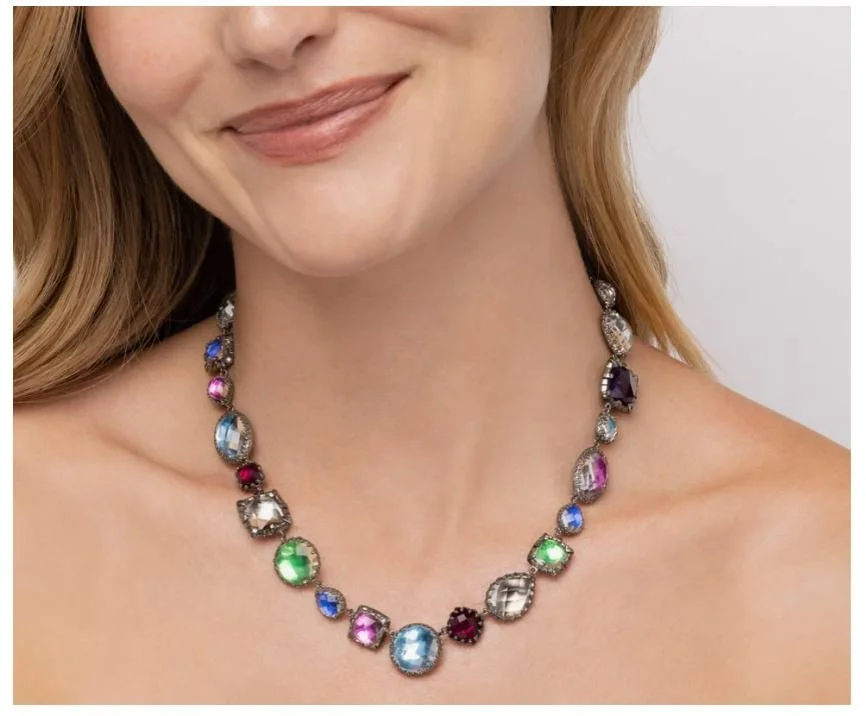
Larkspur and Hawk Foil backed jewellery: Sadie Large Rivière (Black Rhodium or Yellow Gold Wash) Black Rhodium Washed Sterling Silver with Box Clasp. White Quartz (155ct) lined with Multi-Crazy Quilt Foil. $5300. Jessica Sarah Parker and Helena Bonham Carter both wear and enjoy Larkspur and Hawk jewellery pieces.
Value
High Jewellery
Certain high jewellery pieces are considered investments due to their rarity, quality, and enduring appeal. As with fine art, high jewellery can appreciate in value over time, particularly pieces associated with renowned designers or significant historical periods. They may carry historical or cultural significance, such as heirloom pieces with royal provenance.
Overall, the value of high jewellery transcends mere material worth, encompassing artistic vision, craftsmanship, rarity, and the allure of luxury. High jewellery represents a pinnacle of jewellery artistry and is treasured by collectors and enthusiasts for its beauty, exclusivity, and lasting value. Most pieces are acquired through auctions via top houses like Sotheby’s, Christie’s and Bonham’s or are invitation-only from the current owners or Maisons. The prices range from several hundred thousand to several million and will need hefty insurance. Some items may be uninsurable due to being so expensive and rare that they are priceless.
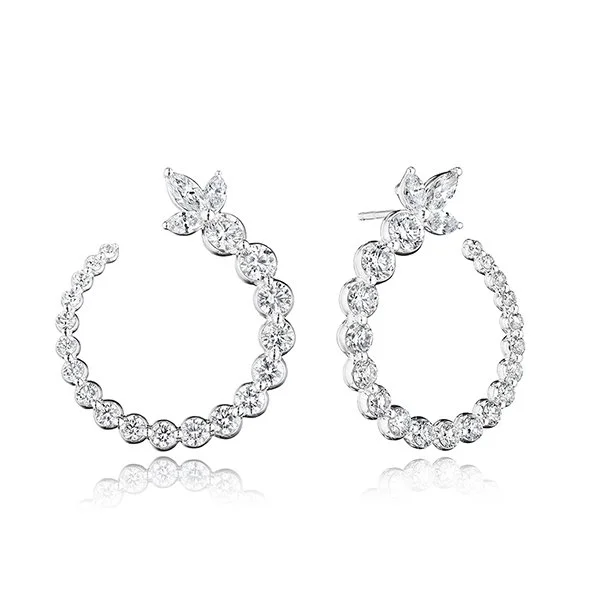
Sophia Macris, Verragio Vanguard Hoops in 18k white gold Circle earrings ($15,000), with 3.79 cts. marquise and round diamonds, inspired by New York’s landmark Chrysler and Chanin buildings
Fine Jewellery
Fine jewellery is often more accessible than high jewellery and can range from several hundred to several thousand. It is rare that fine jewellery will venture into the hundreds of thousands, and whilst made of precious metals and stones, it will not increase in value as much as high jewellery will unless previously owned by someone famous. People love a story and a claim to fame.
Fine jewellery, though, is great for family heirlooms, and metals like gold and platinum are continuing to increase in price, so there is a chance the value will increase over time. Some items that hold higher value need to be insured, and listing them on insurance policies may result in paying premiums. Fine jewellery from renowned brands or certain designers carries a premium due to their reputation for quality, innovation, and style. Established brands with a heritage of excellence often have loyal collectors and customers who value the prestige associated with their jewellery.
The condition of a fine jewellery piece also affects its value. Vintage or antique jewellery in excellent condition may be considered rare and collectable, thus commanding higher prices. Limited edition or one-of-a-kind pieces also tend to be more valuable due to their rarity. Professional appraisal and certification from reputable gemmological laboratories (e.g., GIA, IGI) can provide documentation of the quality and authenticity of the materials used in fine jewellery, thereby establishing its value in the market.
Fashion Jewellery
Fashion jewellery is, for most people, the affordable option ranging from double figures up to low four figures. It would be unusual to see fashion jewellery for more than a thousand pounds. As soon as it heads into this price range, it moves into fine jewellery, and better quality materials are used. Due to the less expensive materials used and how the pieces are mass-made through machines and factories, prices will be lower.
Fashion jewellery from reputable brands or designers may command a higher value due to brand recognition and consumer trust, but ultimately you will not get this back if you try to resell it. These pieces are not investments but should be worn for enjoyment. Sometimes celebrities love to wear fashion pieces, and they can really drive sales for companies if seen sporting them, but it doesn’t make the items fine jewellery unless precious metals and gemstones are used.
Costume jewellery was really popular during the Great Depression and the First and Second World Wars; eras of low income when times were hard. It also allowed lower classes of society to experience buying and wearing jewellery, something they previously were not privileged to do. Foiling, coloured foil or glass set jewellery imitated real gemstones and gave a sheen and sparkle, boosting people’s self-esteem and allowing them to have a taste of what real jewellery looked and felt like.
This is something still apparent in modern society, with people wanting to wear stunning pieces but for an affordable price. Pieces will range from double figures up to a couple of hundred and usually do not hold value nor contain precious materials worth anything. That said, some costume pieces made in certain eras like the 1920s and 1930s and by particular designers are sought after by collectors who will pay larger sums to acquire these.
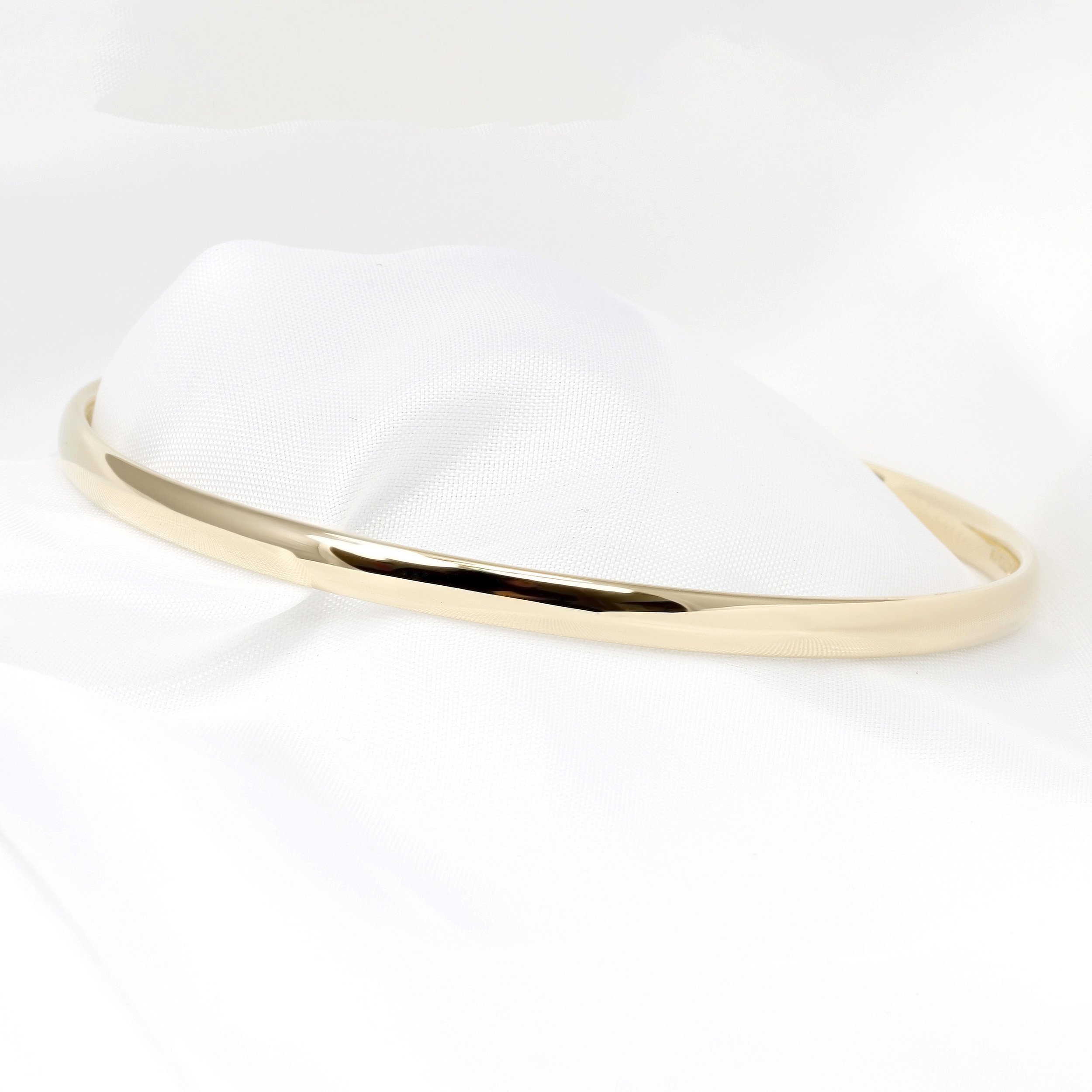
Quiet luxury: simple but stunning Court Yellow Gold Bangle at Timothy Roe Fine Jewellery
Occasion
High Jewellery
High jewellery or Haute Couture pieces are not for everyday wear. Most of the time, these key investments are only brought out on high days and holidays and mostly for the exposure.
The Oscars, Galas, prize awards, televised events, celebrity parties and photoshoots will feature red carpets dripping in diamonds and oozing Hollywood Glamour. These occasions are all about the status, the press and getting celebrities to model big labels and designers’ latest creations, which in turn lead the way for fashion companies to mimic, creating trends lower down the line. When not worn, these stunning and incredibly expensive pieces are stored safely away in vaults, safes and deposit boxes for most of the year.
Fine Jewellery
Fine jewellery is typically worn more frequently and can add a touch of sophistication and elegance to an outfit. Some higher value pieces are usually saved for special occasions like formal black tie events, charity dinners, weddings, dinner parties and cocktail evenings, any time where you’re required to dress more formally or elevate your look with some sparkle.
Some people love to wear dazzling fine jewellery every day, and ultimately it is personal preference or perhaps part of your cultural and religious background. Others may feel they will stand out too much wearing fine jewels and prefer to dress more modestly most of the time except for special occasions. Fine jewellery pieces like classic gold bangles, solid gold hoops, natural pearls or diamond stud earrings and a beautiful pendant or gold chain can be worn and enjoyed daily without looking overdressed. Even simple plain pieces made in exceptional quality materials still create a statement and are quiet luxury.
Fashion Jewellery
Fashion jewellery is popular for everyday wear and can be found in a wide range of styles and designs. It caters to the masses, and the chance of someone else owning and wearing the same piece is pretty high.
It’s valued for its versatility, affordability, and ability to provide a trendy and expressive accessory option for a wide range of consumers. This jewellery, if worn daily, will not last and will need to be replaced often. It can be classed as seasonal, and companies expect you to buy new pieces often to keep up with trends but also to replace items that break or tarnish quickly. These pieces, however, are great for holidays and regular wear because if they do get damaged or go missing, they can be replaced easily and affordably and do not need to be insured.
Costume jewellery is similar to fashion jewellery and is primarily used to accessorise or complement a particular costume or outfit. Costume jewellery may be mass-produced and is often used for theatrical purposes, costume parties, or as affordable fashion accessories without that significant financial investment. It allows the wearer to change up their jewellery boxes more often without breaking the bank and might be a good way to test out new looks or narrow down on a piece of fine jewellery before committing to a large financial purchase.
Fine Jewellery vs Fashion Jewellery: A Summary
When it comes to knowing what category your jewellery falls in, just look at the materials and the price. Those two things usually go hand in hand. If there are precious metals, it will be high or fine jewellery; if there is plating or other non-precious metals or synthetic materials, it will be either fashion or costume jewellery. The more you inspect and look at all those little details, the clearer the category will become.
Ask yourself or the sales assistants the following questions when looking at jewellery:
- What materials is it made of?
- How was it made?
- What is the finesse or finish like?
- Who made it? Is there a name or brand behind the piece and what is their status or reputation?
- How much is it and is it going to need insuring?
- Where and when would you wear it?
Remember, materials and quality, craftsmanship and designer, value and occasion determine the jewellery categories. The answer is always in the details.
At Timothy Roe Fine Jewellery, we pride ourself in our attention to detail, fine finishes and excellent craftsmanship. We would love to show you and walk you through what makes our jewellery fine and show you our on-site workshop. Watch our master goldsmiths at work, ask us questions and let us show you the difference in our premium quality pieces.
For inspiration, please visit our gallery, then schedule a complimentary consultation or pop in and visit us.
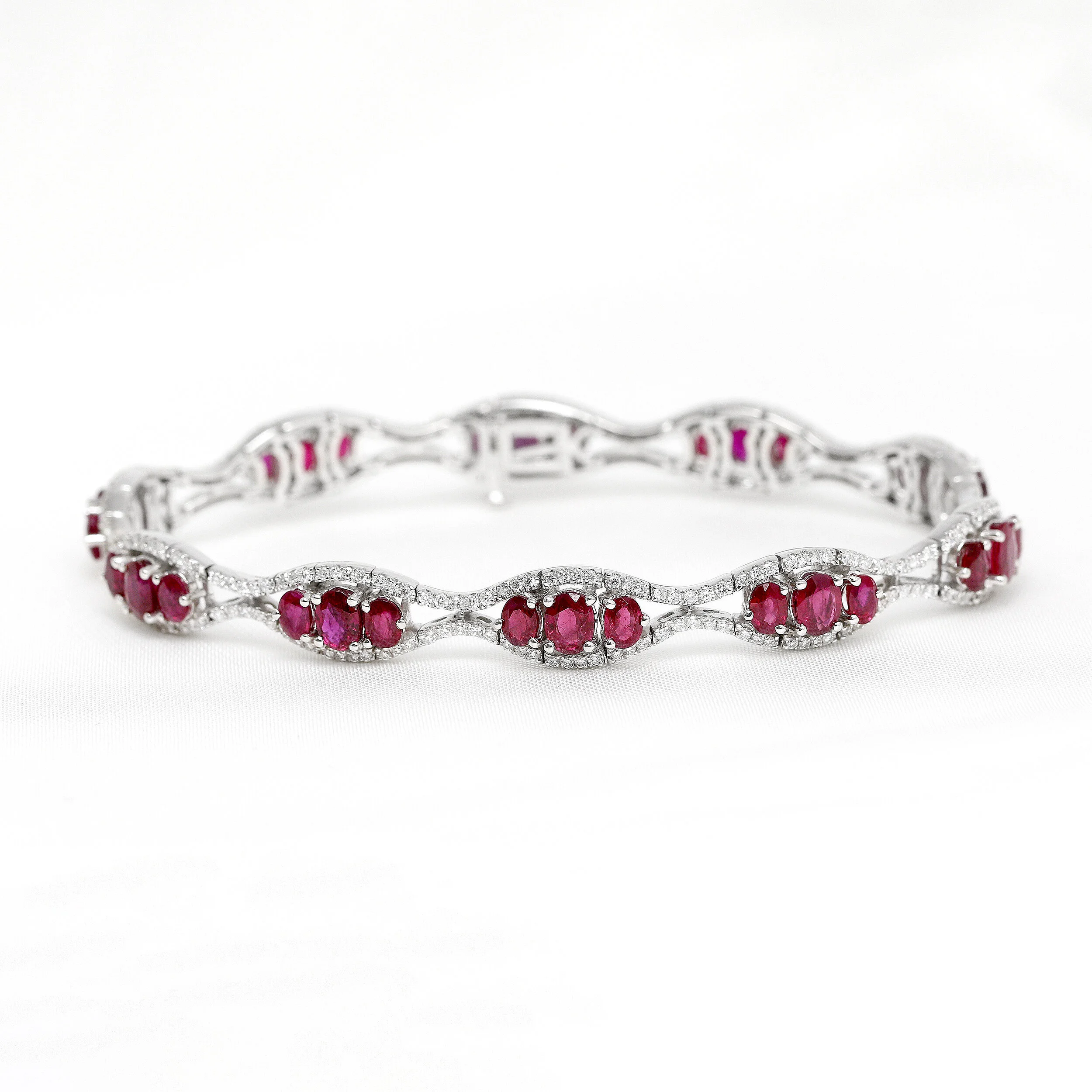
Timothy Roe Fine Jewellery, Ruby & Diamond Line Bracelet
Related Posts