How Often Does White Gold Need Rhodium Plating?
What is rhodium?
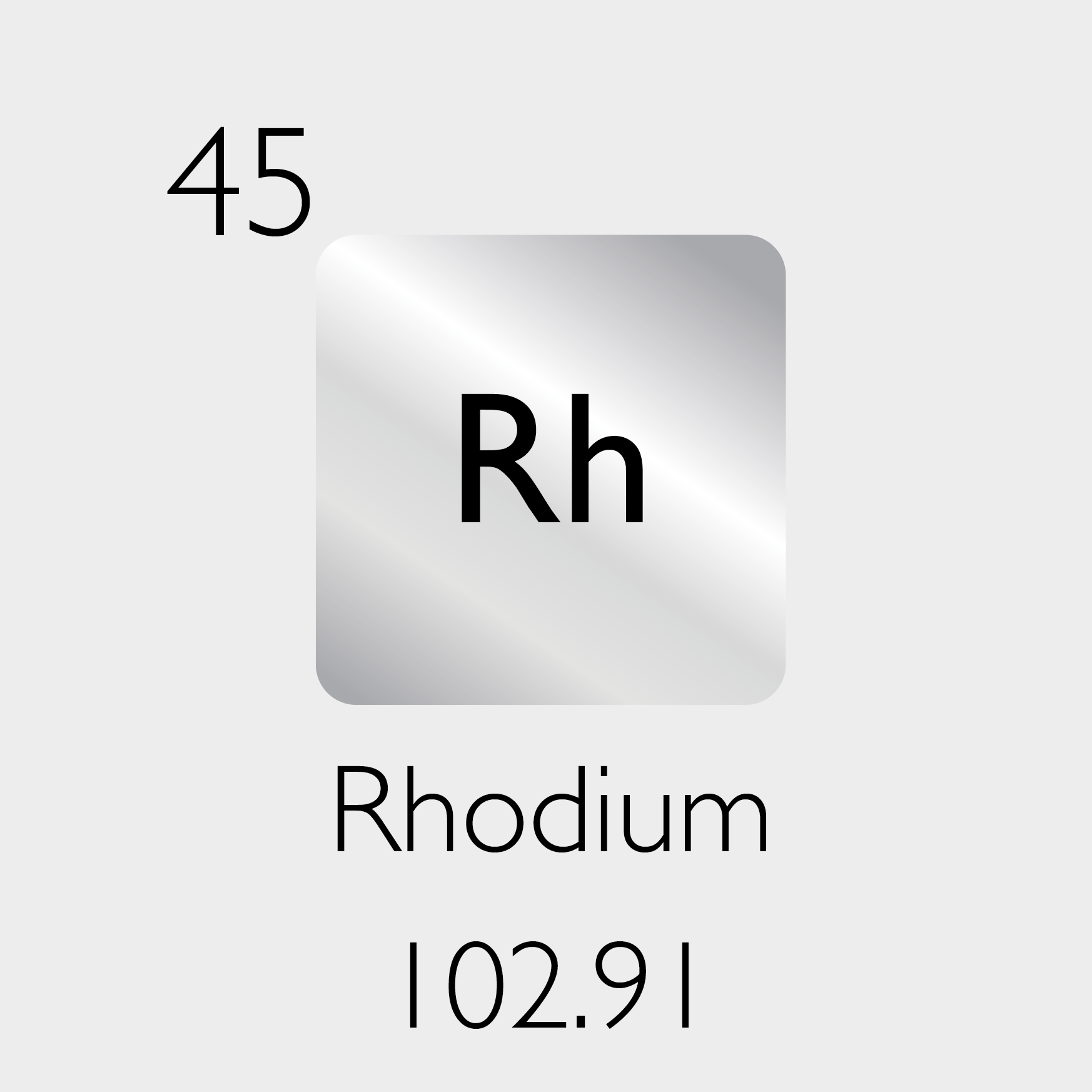
Rhodium is a silvery-white metal belonging to the platinum family. It is harder than gold and extremely durable as well as being allergy-friendly. If someone is allergic to a particular metal the rhodium plating will act as a barrier allowing them more options for wearing jewellery. It has a beautiful reflective quality allowing jewellery to shine brightly and have a stunning lustre. Gold or silver coated in rhodium will be less prone to scratches, tarnishing and dents. It does not corrode and helps the metals beneath it to really shine.
Can you get rhodium jewellery?
Rhodium is one of the most expensive and rarest metals hence why you will never find jewellery made entirely out of it. It is only ever found as a by-product of mining for platinum. Also, on its own in its pure state it is very brittle and malleable and financially it fluctuates dramatically and is unstable so not a reliable choice for investment. Due to its scarcity it is only ever used as a top thin layer coating to make silver and white gold really shine. You may have heard other terms for rhodium plating like dipping and flashing but ultimately they all mean the same thing.
Why do we rhodium plate silver and white gold?
Silver is already a white metal but it is prone to tarnishing. It oxidises with moisture and air and leaves a black tarnish over the surface. This can be removed with a silver cloth (impregnated with tarnish remover) but you don’t want to over polish the jewellery because you end up stripping the silver away. Rhodium, therefore acts as a barrier to this tarnish to keep it looking beautifully white and tarnish free. Not many jewellers rhodium plate silver now due to the additional cost but Kit Heath is a brand we work with and sell and their silver jewellery is always rhodium plated giving you excellent quality and shine.
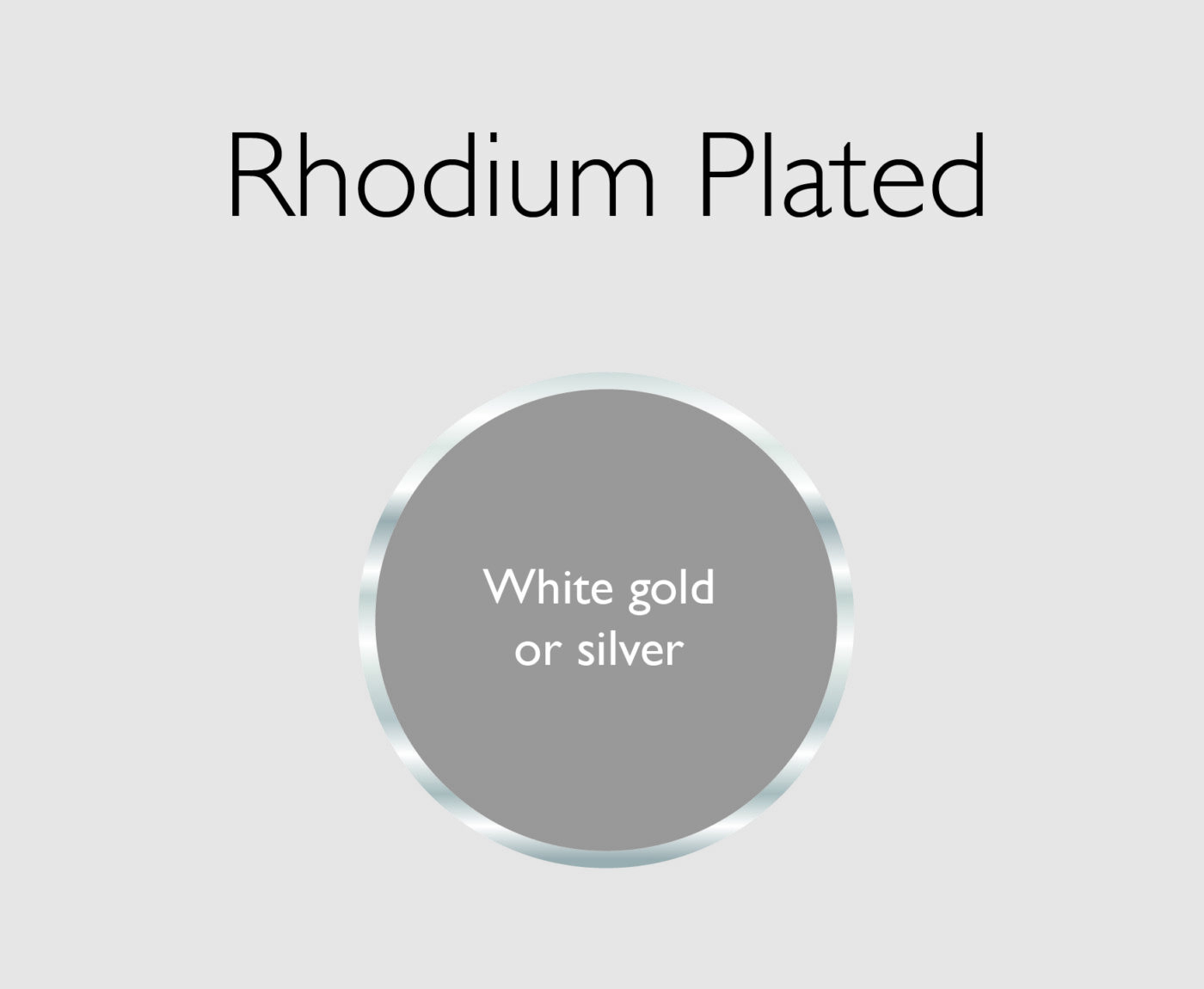
White gold is not white. It is essentially yellow gold with other white metals like silver amongst others mixed in with it to make it look whiter. In reality it is a light buttercream colour. So to make it completely white with a beautiful reflective finish it is then plated in rhodium to give it that platinum or bright silvery appearance. This plating, however, will fade over time and you’ll see evidence of that creamy yellow colour coming through. Depending on the amount of gold in the piece or the types of white metals used will depend on how stark the yellow colour shows through on fading.
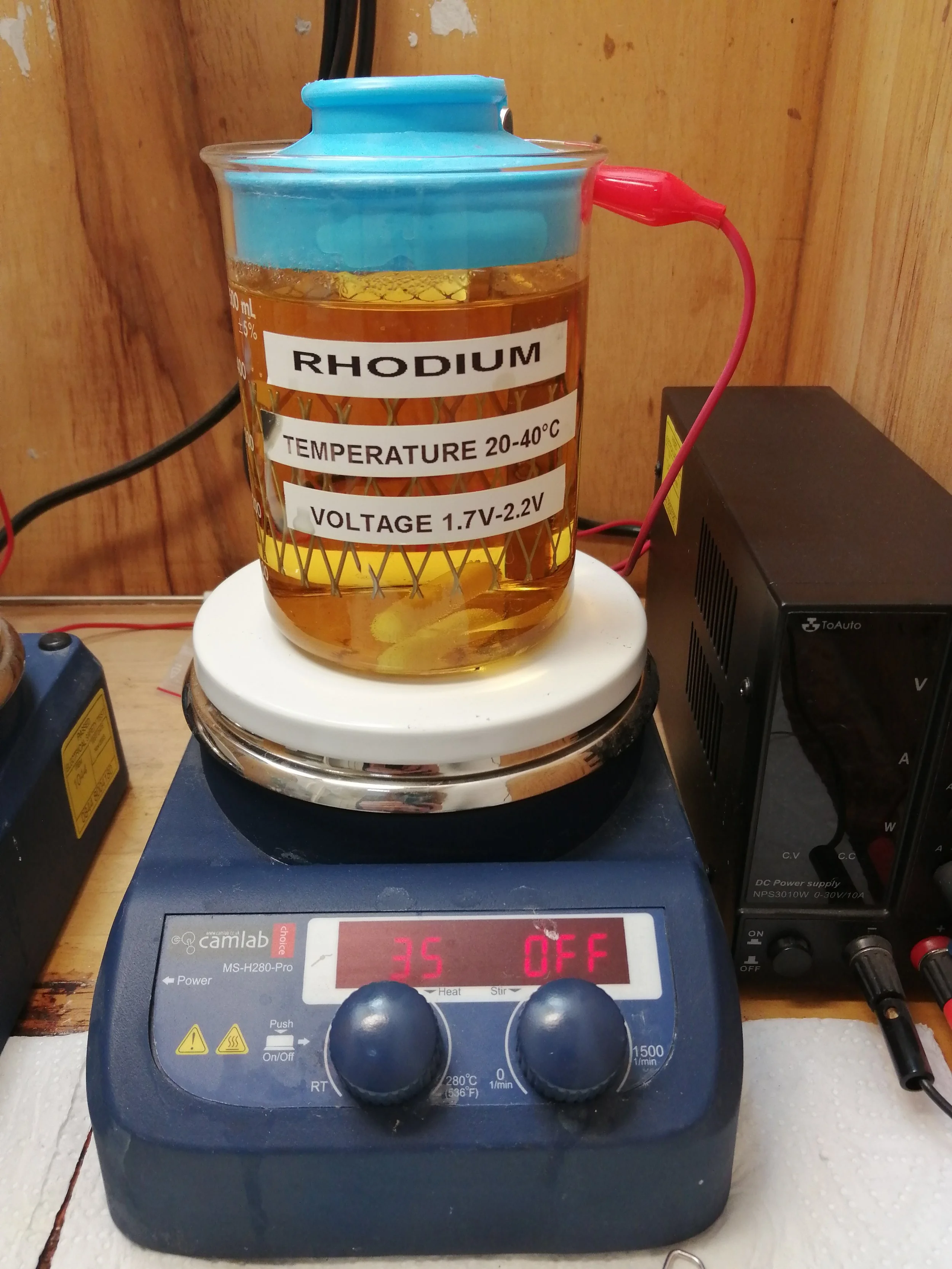
Rhodium plating equipment
Rhodium and Electroplating
Most rhodium plating is applied through electroplating but chemical plating also exists. In order to plate jewellery they must first be cleaned thoroughly. Using an ultrasonic and steamer any grease, dirt, and contaminants that can affect a successful finish are removed. By adding a positive charge to the pieces the rhodium can bond to the surface layer of each jewellery item. To do the plating well it needs approximately a minute and to be really clean and it is important that the electrical current is just right or it can turn the metal black or damage the item entirely. The plating should not be thicker than 1.0 microns otherwise it may be susceptible to cracking.
Once plated though it will look like new, polished, shiny and has that beautiful silver-like metal lustre, if only slightly darker. Diamonds, rubies, sapphires and other harder gemstones will not be affected by rhodium plating and will not need to be removed beforehand. For other softer gemstones it is always best to consult a professional jeweller who can advise you on rhodium plating your jewellery.
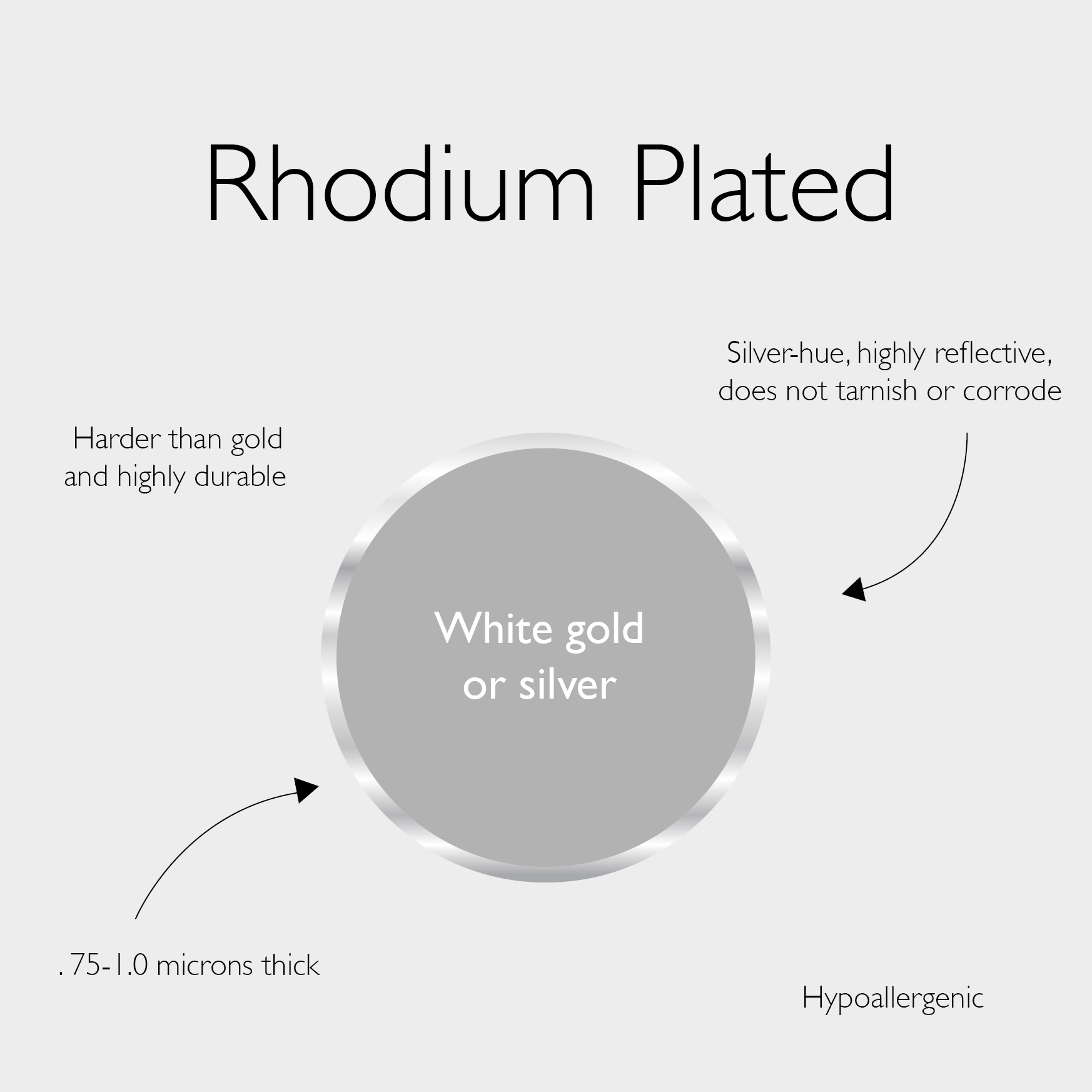
Rhodium plating and durability: How long does it last?
Rhodium plating on jewellery will eventually wear away. Like any gold plated jewellery you might have owned, you’ll notice with every day wear it will start to fade. With white gold, once the rhodium layer has gone you will see more of the yellow gold shining through or a dull dark grey depending on the alloys it is mixed with. Abrasive chemicals, pool chlorine, sweat, oils, hairspray and perfume and general wear including friction on towels when you dry after showering will wear down the rhodium layer faster. Taking off your jewellery and wearing gloves for certain tasks will help reduce the process. Avoid harsh chemicals and if you spray perfume, hairspray and make up setting sprays make sure to wipe off residue with a damp soft cloth as soon as possible from your jewellery items or ideally put on your jewellery last after your grooming routine.
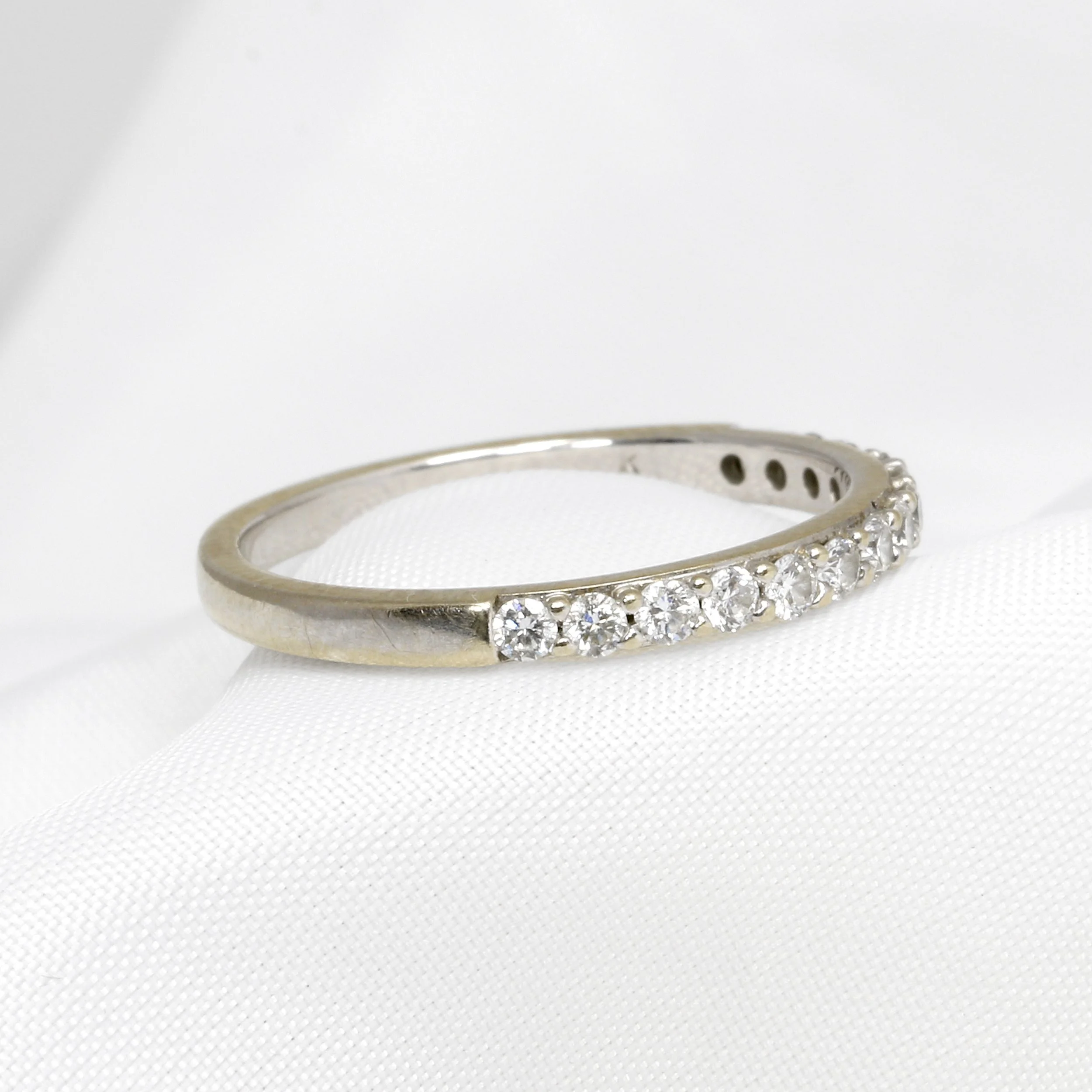
White gold half eternity ring before clean, polish and rhodium plating
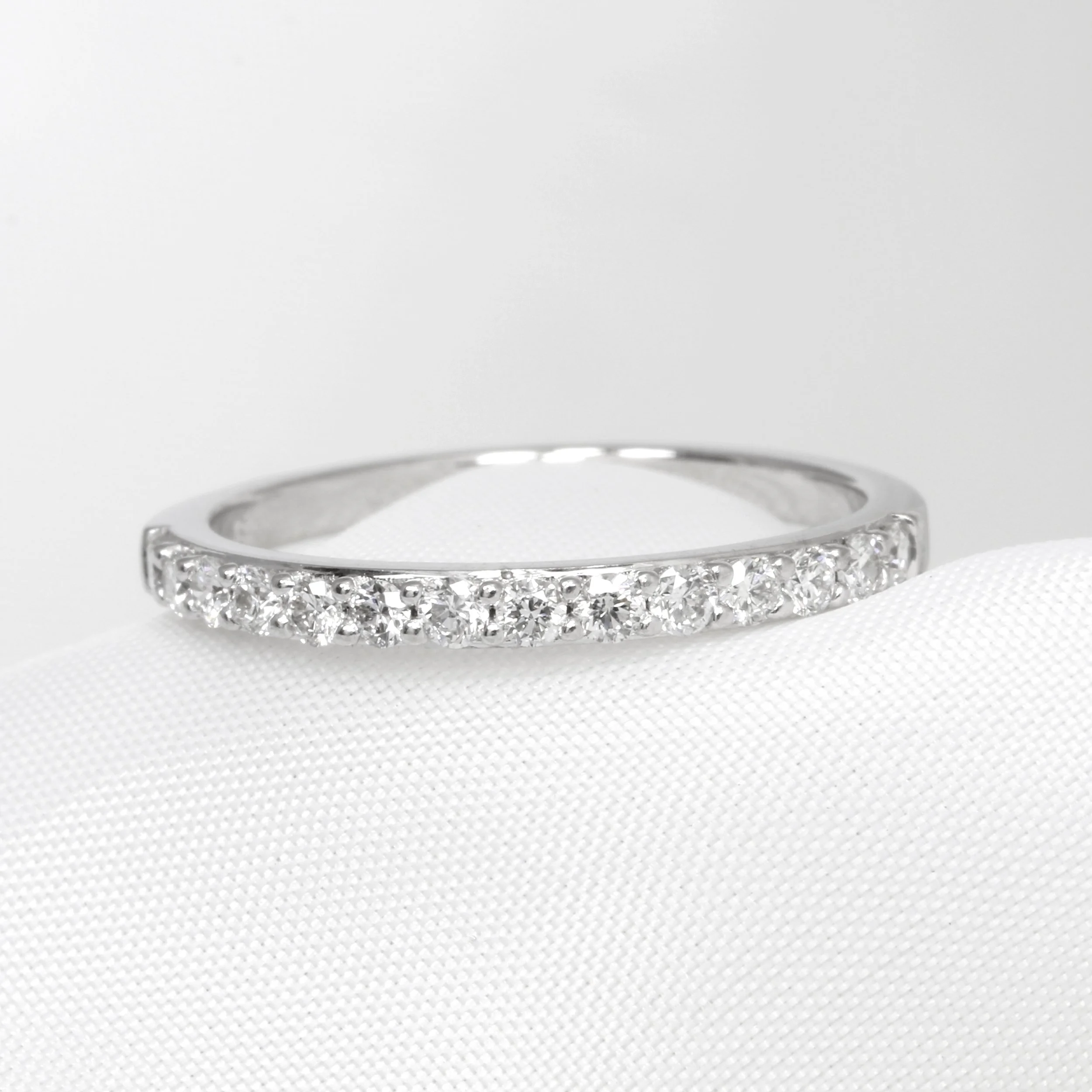
The same white gold half eternity ring after professional cleaning, polishing and rhodium plating
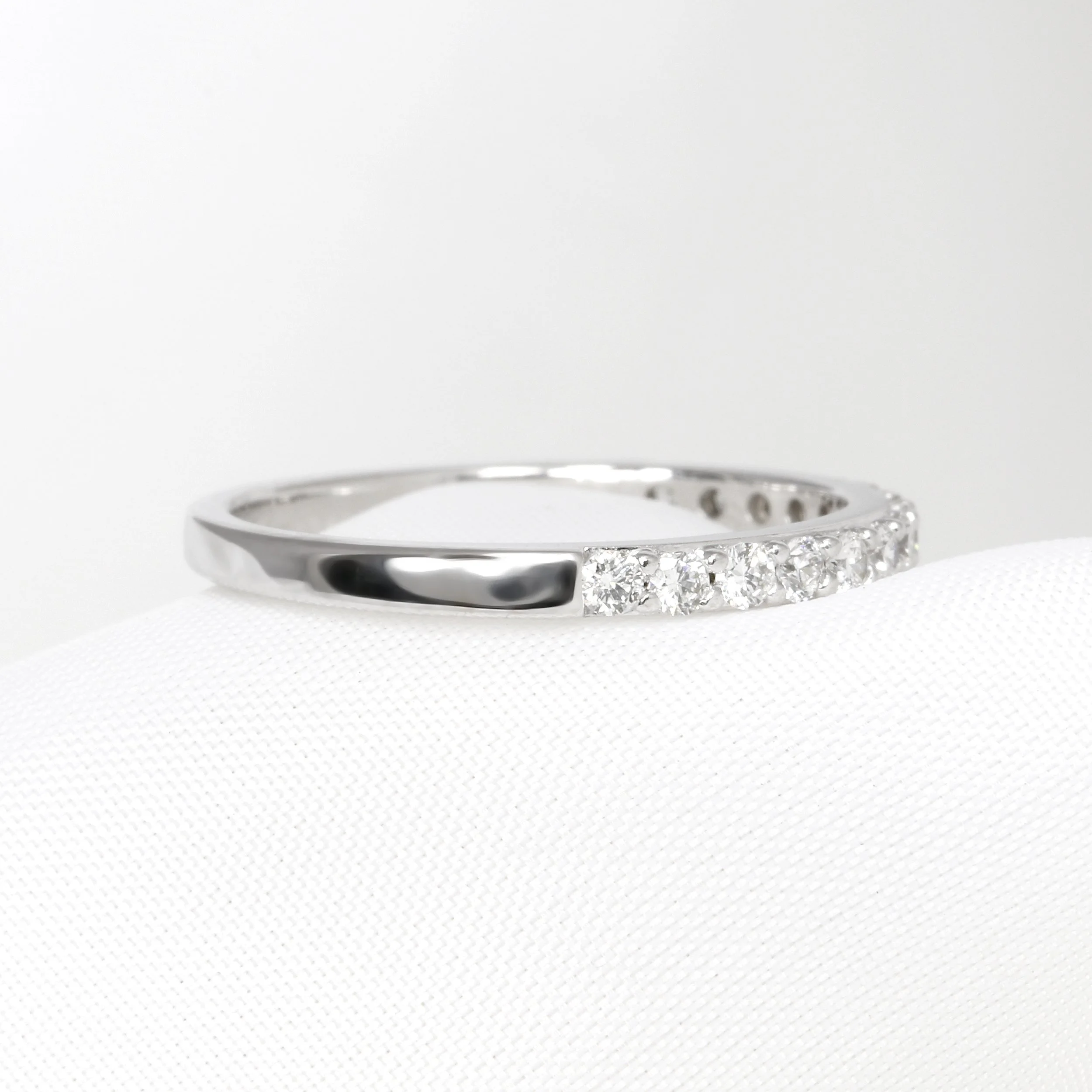
The silvery white finish of the rhodium plating restores white gold rings so they look like new again
How much does rhodium plating cost?
Rhodium plating can be costly over time and this maintenance is something to consider when buying white gold jewellery in particular. Whilst 9 ct white gold is cheaper than platinum rhodium plating averages at £45 – £55 jeweller depending and if worn daily probably will need to be replated every 12 – 24 months. See our cleaning and repair services for prices.
Silver typically doesn’t need rhodium plating as often as white gold because it already has a brilliant white finish but if you wanted to prevent scratches and tarnishing or if you need hypoallergenic jewellery this might be something to do more regularly. Silver typically doesn’t cost as much as white gold so you would have to work out if it would be worth rhodium plating based on what you originally paid for the item and how sentimental it is to you.
How often is often? How often do you wear your white gold or rhodium plated jewellery? Some items might be able to go 10 years if they aren’t worn frequently whilst others may need annual dips. The best thing is to ask us, your trusted jeweller, we’ll be able to see if the plating needs redoing and why not get us to professionally clean and check any stones and claws simultaneously to ensure your loved treasures stay looking beautiful like new. If you have any questions or want to know more please get in touch—we are here to help.
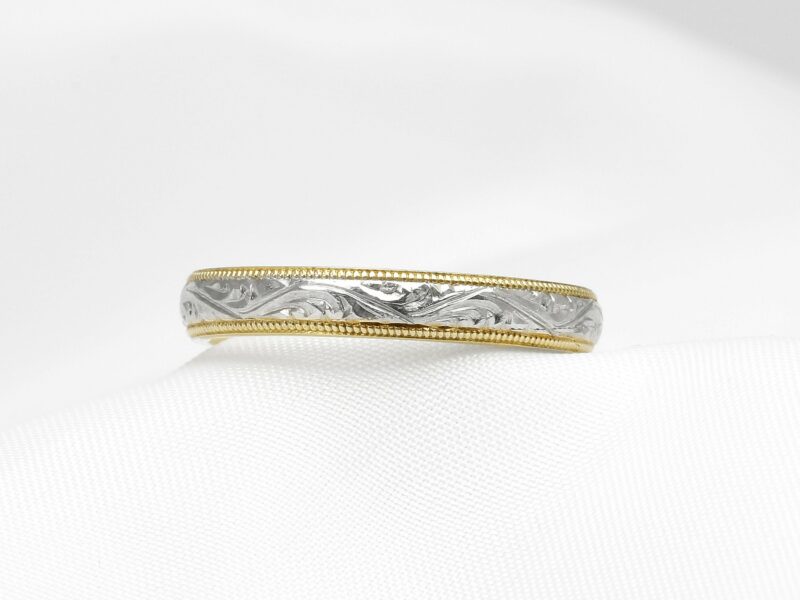
Engraved Wedding Ring in 18ct White & Yellow Gold
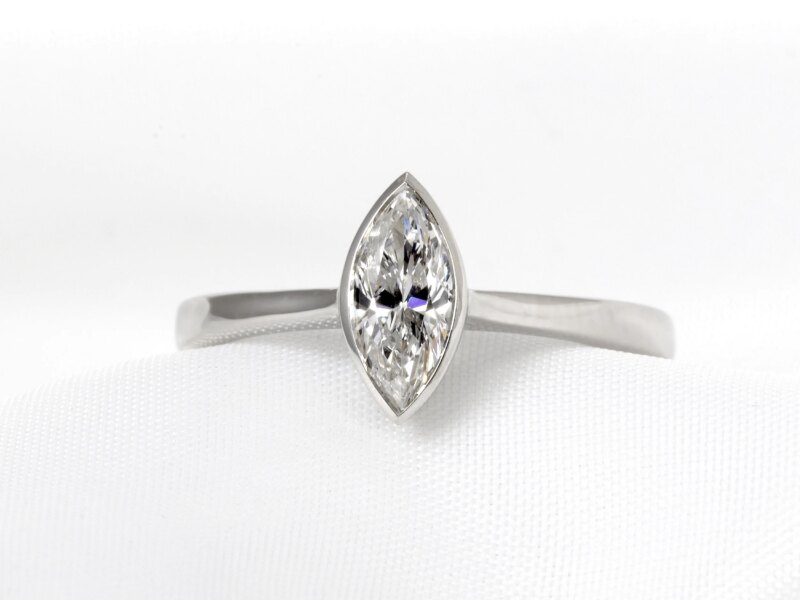
Marquise Diamond Ring in White Gold
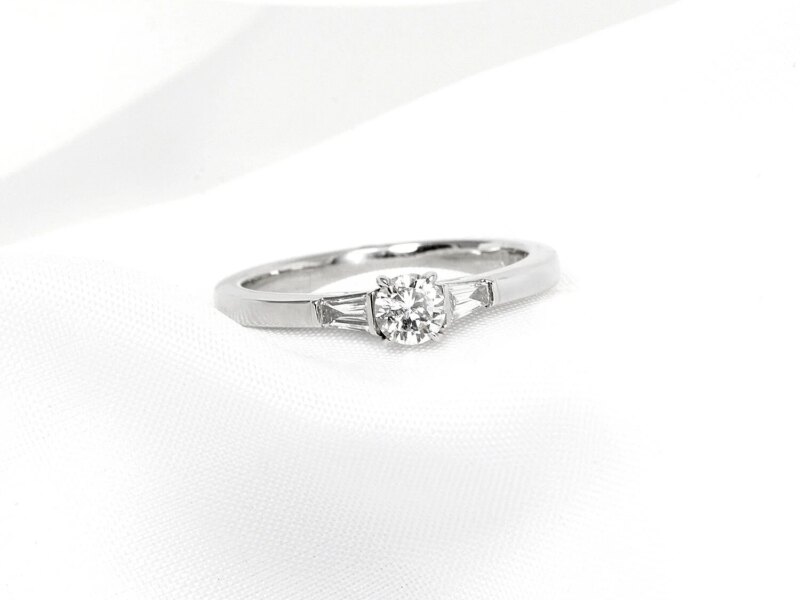
Diamond Ring in White Gold
Related Posts